

As fleet operations and fleet safety enter a new era, they’re moving beyond fragmented systems and reactive decision-making toward connected intelligence that can understand, prioritize, and act in real time. As everyday demands become more complex, the advantage moves away from just having more data, toward having AI in action: systems that can turn data into immediate, meaningful action.
The next generation of AI tools is bringing context to operational data, helping teams move faster, improve safety, and create rulesets so AI can intervene and help teams carry out tasks. By bringing context to operational data across safety, spend, equipment, and workforce operations, AI can surface emerging risks, reduce friction, deliver more effective coaching, and help teams take action earlier.
Here are some definitive ways AI is rewriting the playbook for fleet safety and physical operations as a whole.
Defend your profit margins with AI that surfaces issues before they become losses
Managing a transportation fleet means constantly balancing high fuel and maintenance costs in the face of an unpredictable labor market. Hundreds of potential small risks may unfold across the day. Together, they can add up to a number of profit-draining leaks across your business.
AI can help defend your profit margins against the hidden inefficiencies, minor delays, and unaddressed risks that quietly erode revenue. For example, AI can automatically detect excessive idling across your fleet, flag the specific vehicles and locations where it’s happening, and quantify the fuel cost so managers know exactly where to intervene.
By providing deep visibility across every segment of your operation, AI can surface issues sooner, help you respond faster, and prevent avoidable loss before it compounds.
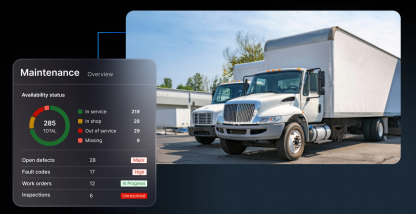
And in unifying the parts of your operation that often work in silos, you get full context into everything that’s happening. That’s where the Motive Integrated Operations Platform comes in. Whether it be driver safety, equipment monitoring, workforce management, AI vision, spend management or fleet management, all of them sit on one integrated platform instead of split across disconnected tools.
Unity like this matters, because AI is only as useful as the context it has. When your vehicles, equipment, workers, and spend all sit on one platform, your AI has full context — into what happened, and why it matters for your operation at that moment.
When [an AI-powered platform] can connect vehicles, equipment, workers, and spend, it actually can make smarter decisions. Not just flagging events per se, but also understanding what they mean in the context of your operation at that point of your day.
Make safety a shared goal through gamification and rewards
The organizations seeing the biggest safety gains treat recognition as part of everyday business, not as a one-off perk. They use Safety Scores, challenges, and tailored rewards to make safe driving visible, tangible, and worth striving for.
And data backs up this approach. Research from Gallup and Workhuman shows that when organizations double how often they recognize employees, they see higher productivity and fewer safety incidents. When you combine that kind of insight with what you already know about your drivers and managers, you can design recognition programs that actually change behavior.
Those seeing the biggest impact reward progress as much as perfection. They call out the driver who drops unsafe behaviors and improves their Safety Score by 10 points, even if they’re still trailing others. Because they know that reinforcing consistent effort matters.
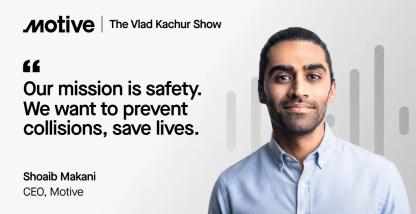
“We want to show everyone on the team that you don’t have to be number one, you don’t have to be perfect. All you have to do is make an effort.
Build trust through compassionate accountability
Compassionate accountability starts with a simple belief: You can be firm about the behavior and still care about the person. When leaders are trained to balance firmness with empathy, they approach coaching as an opportunity, a chance to foster growth and trust rather than a moment to assign blame or instill fear. They stay tough on the problem, take risk seriously, and at the same time support the driver as much as possible.
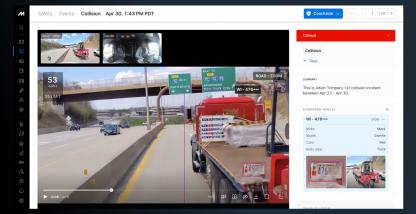
That balance is only sustainable when leaders have accurate data they can rely on. When video from AI dash cams surface clear, trustworthy evidence, leaders can coach confidently and consistently instead of arguing over “what really happened.” Over time, that changes how employees perceive coaching and leadership. Accountability starts to feel less like enforcement — and more like guidance.
“You’ve got a tremendous amount of data coming in — understanding your fleet, your drivers, mid- level, senior level…. And if you marry them together and put in the resources, you actually are going to significantly move the needle on safety culture.
Move from chatbots that talk to AI that acts
Chatbots are probably the most familiar example of AI at work. You ask a question and get an answer in seconds, saving hours of research and analysis. The time-saving impact of that is powerful.
Now, AI is taking a bigger leap. Instead of simply answering questions, AI assistants can do the work for you. You set a goal, ask follow-up questions, and refine what you want to accomplish. The agent can then reason through the task, plan the necessary steps, and take action on your behalf.
At Motive, this change has sprung to life through our new AI assistant, Atlas. Instead of asking for a single data point, such as “What’s my Safety Score?” you can ask more strategic questions:
- “What happens if nothing changes?”
- “Which risks are building?”
- “What should happen next?”
AI becomes more contextual, more useful, and far more embedded in how work gets done. For businesses, that means moving from understanding what happened to actively shaping what happens next.
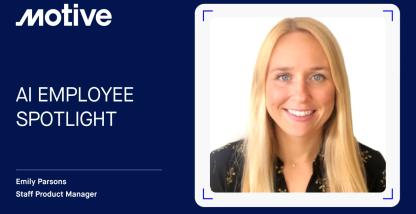
“Taking those really manual tasks that take a lot of time, and actually having the system do that for you, is exactly where Atlas is gonna come to play.
Scale coaching with AI-powered avatars that power a more comprehensive workflow
For organizations that have struggled with driver coaching, the issue isn’t a lack of commitment so much as a time-consuming process that’s difficult to scale. To help bridge that gap, Motive customers are turning to AI-powered coaching avatars like AI Coach.
By delivering personalized, AI-powered coaching at scale, AI Coach lets you coach drivers without needing every touchpoint to be live — whether that coaching happens in the cab, in the office, or over the phone.
Though Motive’s current avatars focus exclusively on safety, customers will soon be able to coach on compliance, fuel efficiency, and other performance areas, with more ways to personalize the experience.
And with custom avatars, you can create a coaching experience where a familiar face — possibly your own — delivers the message. No matter which avatar you use, coaching stays consistent, helping drivers focus on the situations that put people and the business most at risk.
“Having the AI Coach has significantly reduced the administrative burden our frontline managers were having to deal with on a regular basis.
Turn AI into your next safety advantage
The organizations getting the most value from AI aren’t simply using it to save time. They’re using it to uncover hidden inefficiencies, strengthen safety cultures, scale coaching programs, and identify risks before they become costly problems.
Across every part of the operation, the pattern is the same. Better visibility helps protect margins. Better coaching helps improve performance. Better context helps leaders make smarter decisions. And AI assistants help teams spend less time on routine work and more time focusing on what drives the business forward.
As AI becomes more embedded in day-to-day operations, the opportunity isn’t just to work faster. It’s to operate more proactively, prevent more losses, and build a stronger, more resilient business.
Put AI to work in your operation
Ready to see what’s possible?
- Watch theFuture of Safety sessions and AI in Action sessions to learn how leading fleets are applying AI across safety, operations, and spend.
- Explore Motive AI solutions, including the AI Dashcam Plus, Atlas, AI Coach, and Spend Management.
- Discover practical ways to identify operational risks earlier and take action before they impact your bottom line.
The future of AI isn’t just about improving safety. It’s about helping your business take the right action at the right time.