


Put a camera in the cab and most crews think the same thing: now they’re watching me.
It’s a fair reaction. Operators who’ve run trucks, mixers, and equipment for years without anyone second-guessing them don’t love the idea of a lens on the dash. It can feel like a lack of trust — or like Big Brother riding along. That fear is real, and ignoring it is the fastest way to lose a crew.
But the fear misses what the technology actually does. AI dash cam footage exonerates drivers in more than half of insurance claims and nearly half of court cases. The camera protects a crew far more often than it catches them out. Here’s the honest case for why safety tech is on the operator’s side — and how to roll it out so crews believe it.
The fear is about being watched. The reality is about being protected.
The loudest objection to in-cab technology is rarely about the camera itself. It’s about what the operator thinks the camera means: that a bad day becomes a permanent mark, that every hard brake gets used against them.
Flip that over and the real value shows up. The most powerful thing a camera does is prove when a crew did everything right.
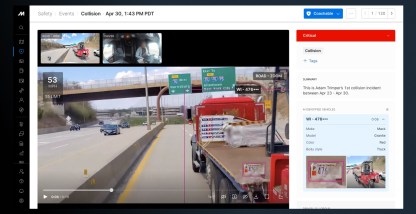
Consider what happens after an incident on a tight two-lane road. Without footage, it’s one person’s word against another’s — and the operator is guilty until proven innocent. With footage, the truth is the truth. When a Staker Parson dump truck driver slowed for a turn and the car behind tried to overtake and hit them, the manager brought the footage to the officer, who shared it with the other driver. The lawsuit was deterred on the spot. Staker Parson now runs a 96% incident exoneration rate. Tilcon resolved an incident that would have dragged on for months in 17 seconds.
That protection is worth more to the operator than to anyone else in the company. It’s also why the operators who fight installation hardest often become the loudest advocates. As Tilcon’s Concrete Division Manager Don Penepent put it: “Since we’ve gotten our cameras operational with Motive, we’ve had so many drivers saying they’re glad we have cameras in our trucks.”
The false choice: safety versus privacy
Crews assume they have to give up privacy to gain safety. They don’t. Modern systems are built so they don’t have to.
Video isn’t constant monitoring. Good fleet safety is configurable down to the setting: what the cameras capture, when they record, who sees footage, and how long anything is kept. Motive offers road-facing and dual-facing cameras, and administrators can turn on driver privacy mode to disable the driver-facing lens for select drivers. The move that disarms skepticism is simple: show a crew exactly how the inside lens works and what leadership can and can’t see. Privacy controls, clear retention limits, and role-based access are how a fleet earns trust.
Safety and privacy can coexist. A fleet can protect operators’ privacy and protect them on the road at the same time.
The most important shift: from managing crews to empowering them
Trust grows fastest when the technology helps operators before a manager has to. In-cab alerts that flag a following-distance issue or an unbuckled seatbelt in the moment let crews self-correct — no supervisor, no coaching session, no record.
Most people would rather get a quiet nudge from the cab than a conversation in the office. Giving operators the chance to fix it themselves signals respect, not suspicion. That’s the whole difference: technology that manages people versus technology that empowers them.
How to roll it out without losing the room
Getting the technology right is half the job. Introducing it well is the other half. A few things separate rollouts that build trust from ones that blow up:
- Lead from the front: put the technology in leadership and supervisor vehicles first. When the people asking crews to adopt something already run it themselves, most of the argument disappears.
- Be radically transparent: tell crews what’s happening and why before installation, not after. Be ready to pull up the settings and show anyone who asks exactly what the system captures. Hidden intentions breed suspicion; open ones build buy-in.
- Lead with the operator’s benefit: open with what crews actually care about: protection, exoneration, getting home safe. Save company liability and fleet scores for later.
- Start small: begin with one location, one crew, or one high-risk behavior. Prove it out. Expand. Trust builds with each win.
- Recognize the good, not just the bad: positive driving recognition does as much for trust as any coaching conversation. The tone set over months matters more than the memo sent on day one.
What this means for the crew
When Ernst Concrete switched to dual-facing AI Dashcams, the cameras protected drivers better than the old system. That drove higher driver acceptance fleetwide and better retention, alongside an 81% drop in distracted driving in 13 months. That’s the pattern: crews trust the technology once they see it’s built for them.
With transparency, strong privacy controls, and a benefit-first message, fleet safety technology becomes proof that leadership has the crew’s back — and a tool that protects operators when it matters most.
The crews most convinced it’s Big Brother are often the ones who end up defending it hardest. The job is simple: show them it’s on their side.
Additional resources