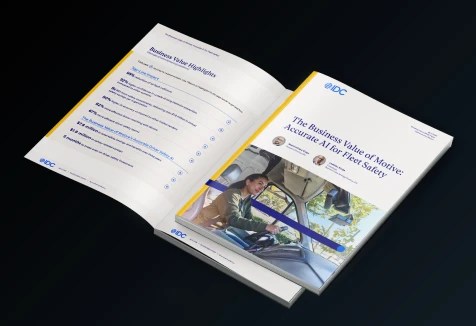



A new ABI Insight report examines how Motive’s Atlas, Automations, and Operations Intelligence products bring analysis and action together for organizations running physical operations.
ABI Research recently published an Insight report examining Motive’s latest AI announcements and what they signal about the direction of the market. The report follows Vision 26, Motive’s annual conference, where the company introduced a set of AI product updates built for physical operations customers across transportation, logistics, field services, construction, and utilities.
As reported by ABI Research, enterprises still move inefficiently between siloed systems, review workflows by hand, and react after issues have already surfaced. Motive’s new releases are designed to bring sensing, analysis, and workflow execution together in a more integrated environment.
AI moves deeper into physical operations
According to the report, the core challenge across physical operations is rarely a shortage of data, but the fragmentation between digital platforms. Organizations often have telematics, video monitoring, dispatch capabilities, and maintenance data on hand, but the systems that hold this information are frequently disconnected.
That fragmentation slows how quickly a business can identify safety risk, service exceptions, and build workflows around bottlenecks. It leaves managers dependent on manual review in environments where speed and precision matter. The report describes AI assistants, automations, and computer vision as ways to close the gap between observation and execution, surfacing context faster and supporting quicker responses to events like unsafe driving or service anomalies. According to ABI Research, the most immediate gains show up where manual inspection is slow or inconsistent — including safety monitoring, waste operations, dispatch exceptions, and asset verification.
Three launches that turn data into action
The report highlights three product announcements from Motive’s Vision 26 conference. Motive leaders demonstrated all three on stage during the opening keynote, running through how integration and automation come together across the platform.
1. Atlas AI-powered assistant
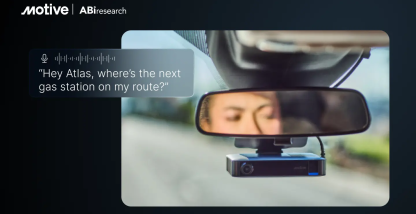
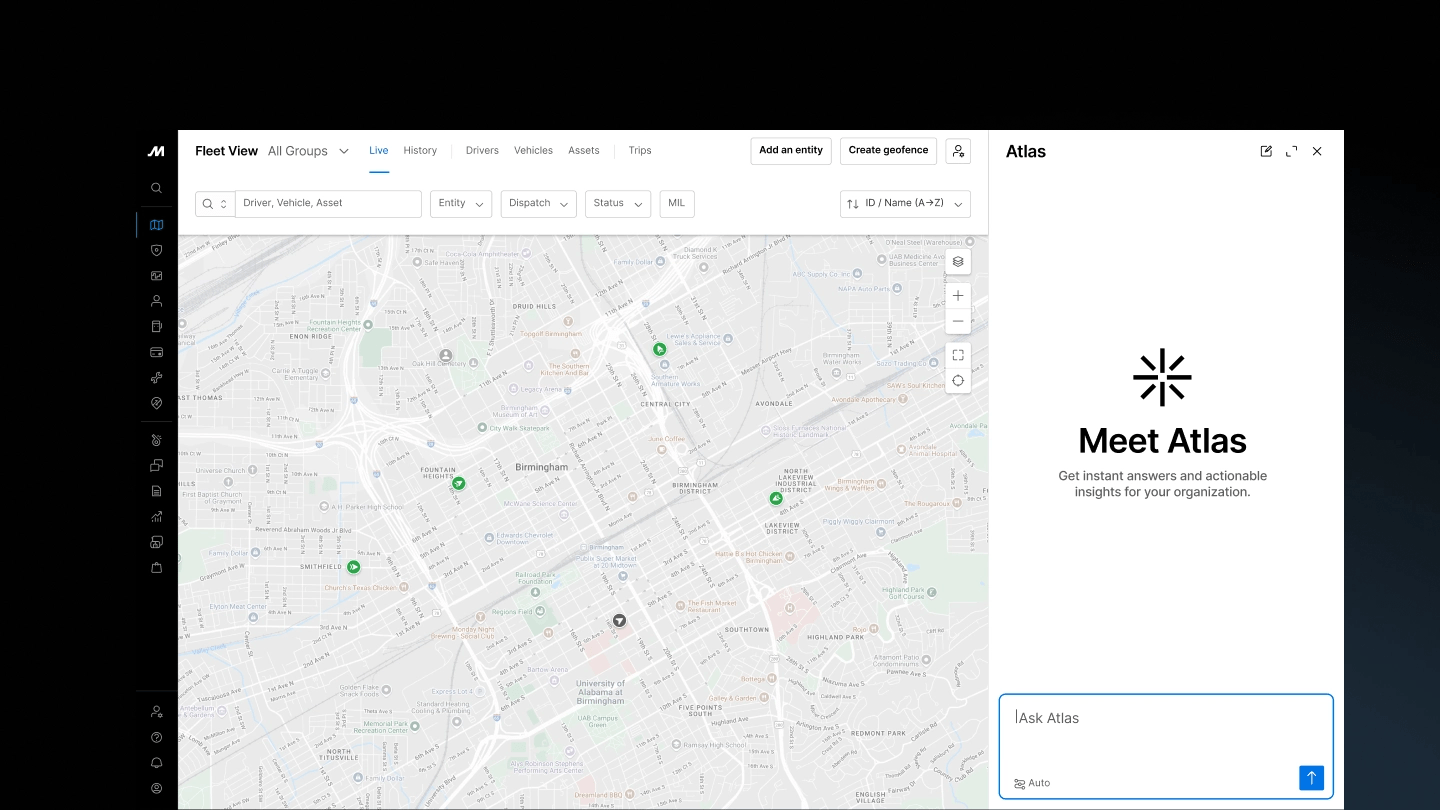
Atlas is Motive’s AI-powered assistant. ABI Research notes that Atlas is embedded across Motive’s platform and designed to help users ask questions, analyze operational data, and act from a single interface, with contextual insights spanning the platform and use cases such as reviewing safety events, checking vehicle health, and resolving compliance issues. Atlas is currently available through the Motive MCP Connector for AI tools like Claude and ChatGPT. It securely connects live Motive data to the AI tools teams already use, allowing them to ask operational questions and get answers based on Motive data. Voice and chat assistants will be released later this year
2. Automations for repetitive tasks and real-time insights
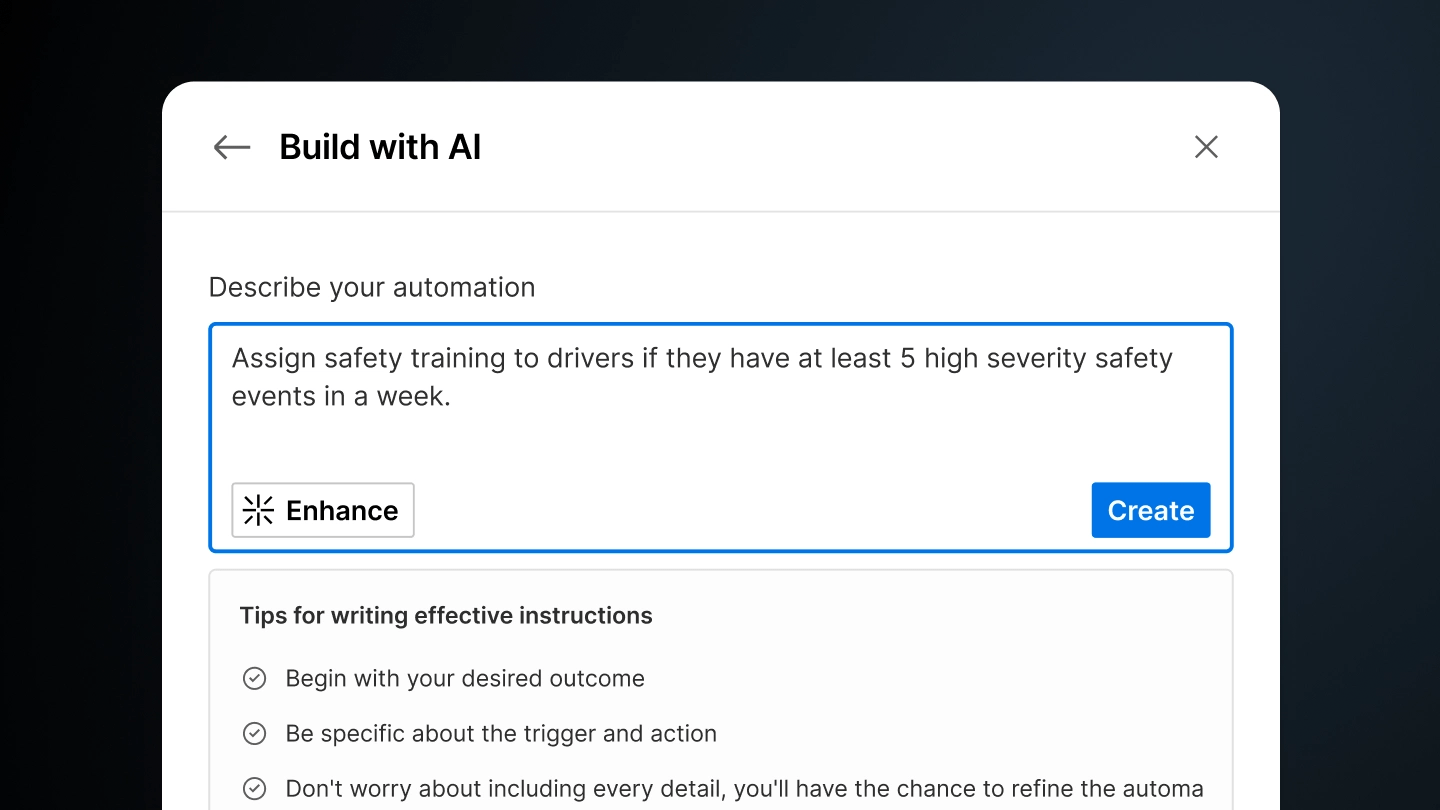
Automations moves teams from insight to action by triggering responses based on real-time information. The feature reduces manual monitoring and lets organizations respond the moment specific conditions are met, rather than waiting for managers to catch issues themselves. The product is part of a broader effort to cut time spent on repetitive tasks and redirect attention toward higher-value work.
3. Advanced AI computer vision for many industries
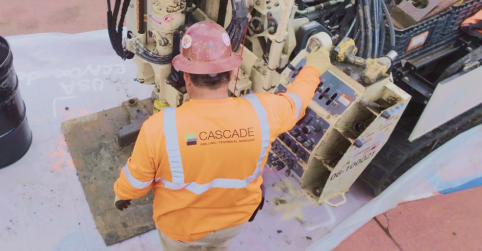
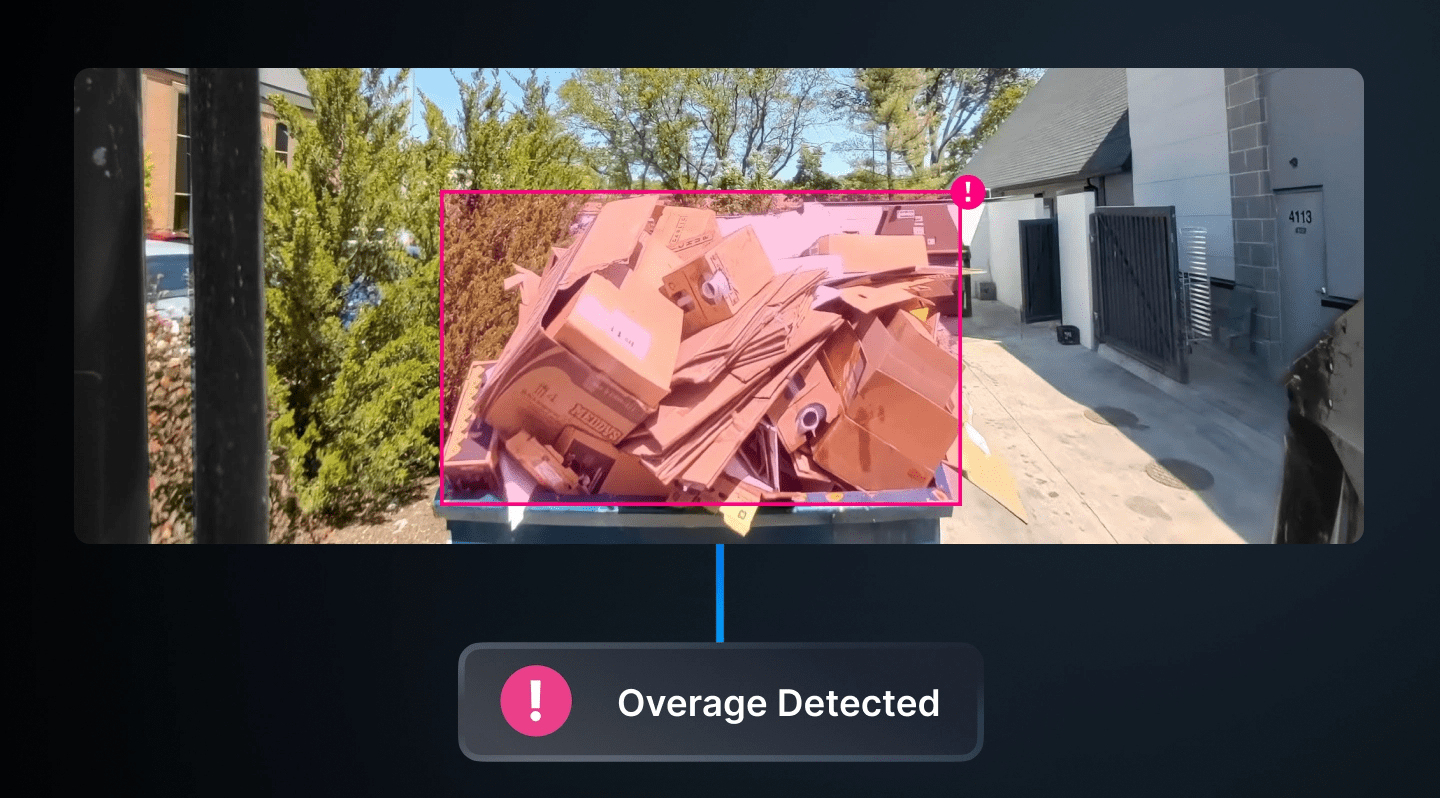
Operations Intelligence expands into new use cases for physical operations, including utility and waste services. In waste, for example, models can detect overages, flag contamination or unsafe load and unload practices, and verify service events using computer vision. Additional use cases are in development across safety, cargo security, and passenger monitoring.
Accuracy and trust drive adoption
The report clearly states the value of these tools depends heavily on accuracy and trust. Systems that generate too many false alerts create noise and reduce adoption; systems that miss important events undermine the workflow they’re meant to support. ABI Research explains that operators require AI that is precise enough to support real-world decisions and reliable enough to be embedded in daily operations.
For teams evaluating these tools, that raises a practical question worth asking any vendor: how does a system keep alerts accurate as it scales across drivers, vehicles, and sites? The answer shapes whether frontline teams come to rely on the technology or start to work around it. Accuracy is what turns an alert into an action a manager will actually take, and what keeps drivers engaged rather than fatigued by noise.
What it means for physical operations teams
For customers, ABI Research recommends a phased approach: start with a few high-value use cases that show clear benefits, then expand once frontline teams trust the workflows. A phased rollout tends to build confidence faster than a broad deployment that floods operators with alerts or adds another layer of complexity to the day.
If you run a physical operation and are weighing how AI like this fits your business, the report points to a few practical steps:
- Pick a first use case where manual work is slow or inconsistent today. Safety monitoring, waste operations, dispatch exceptions, and asset verification are the areas the report calls out as ready for early wins.
- Set a clear before-and-after measure. Track response speed, hours of manual work removed, and how consistently the same situation gets handled, so the value is visible to the teams doing the work.
- Earn frontline trust before you scale. When drivers and managers see that alerts are accurate and actions are useful, adoption follows, and the next use case is an easier decision.
- Connect the tools you already run. The value grows when data and alerts feed the planning, dispatch, and compliance systems your teams use every day, rather than sitting in a separate screen.
The through-line is that the payoff comes from workflows people actually adopt, not from the number of features switched on. Teams that move deliberately tend to see faster response loops and less repetitive work, and they build the internal case for the next step as they go.
Where the industry is heading
ABI Research closes by pointing to the bigger picture. Motive’s product strategy reflects what organizations that run physical operations increasingly want: to run on one platform rather than a patchwork of separate tools. Together, Atlas, Automations, and Operations Intelligence continue a strategy built on turning operational data into action, which matters as customers increasingly expect real outcomes over standalone tools. The payoff shows up when safety, maintenance, spend, and compliance sit in a single view instead of separate screens, and teams will judge that platform on response speed, reduction in manual work, and consistency of decisions. ABI Research expects the broader market to move in the same direction.
The takeaway for operations leaders: the shift from AI that reports on the past to AI that acts in the moment is already underway. The organizations that get ahead of it will be the ones that pick the right first problem, hold their tools to a high bar on accuracy, and give their teams the room to trust the technology before they scale it.