


Being falsely accused of an at-fault collision can have far-reaching consequences. A driver’s job, heavy payouts, and your company’s reputation are all at stake if you can’t prove what really happened.
With objective evidence from a fleet dash cam, your organization is armed with a powerful tool to defend against false claims and their repercussions.
What is driver exoneration and why is it important?
Driver exoneration is the process of using objective evidence to prove your driver wasn’t at fault in an incident — clearing them of blame, protecting their record, and reducing your legal and insurance exposure.
False claims are common in fleet operations. Commercial fleets are perceived as being highly insured, with deep pockets, so criminals target commercial vehicles as a payout opportunity. False claims, intentional collisions, and insurance scams can lead to unfair indemnity payments and higher premiums for businesses with fleets.
To protect your business, reputation, and drivers in this environment, fleets need high-definition dash cam video footage to definitively prove what happened and who was at fault.
Having AI dash cam footage in your corner clears up any question about who’s responsible. You have recorded video that shows, indisputably, that your driver isn’t to blame. As AI dash cams exonerate more commercial drivers, the greatest savings will come from the payouts fleets don’t have to make.
Clear video footage provides a mechanism to exonerate drivers, whether it’s through:
- Falsely disputed service claims
- Real-time roadside exoneration
- Litigation and insurance savings
- Protecting a driver’s reputation and career
The 4 most common ways dash cams support driver exoneration
Discover how dash cams support driver exoneration and safety with these examples from Motive customers.
1. Roadside exoneration
Dash cams give organizations that run fleets the ability to quickly — almost immediately — exonerate a driver in the event of a not-at-fault collision. Instead of having to rely on one driver’s word against another, police officers can use dash cam footage to see what happened. The result can be determined at the roadside or on the same day, not later in court or during a claims process.
See how these Motive customers used dash cam footage to support driver exoneration on the spot:
- Custody avoided. A Cargo Network Solutions truck with a dash cam had a serious collision on I-294. CNS management sent the video to the officer for review. Instead of being taken into custody, the driver was able to go home. He was exonerated by the time he got there.
- 17-second clarity. Tilcon was able to discover what happened after an incident and exonerate the driver within 17 seconds.
- Lawsuit deterred. In one incident, a Staker Parson dump truck driver slowed to navigate a turn. The car behind tried to overtake the dump truck, causing a collision. The manager went to the site with dash cam footage in hand and showed it to the officer, who shared it with the other driver, deterring a lawsuit.
2. Litigation and insurance savings
The impact of dash cam footage goes further than exoneration at the roadside. When a collision or dispute happens, having an objective account of the facts gives insurers and attorneys objective proof about who was really at fault. American Transportation Research Institute (ATRI) data suggests that dual-facing dash cams exonerate drivers in more than half of insurance claims and nearly half of court cases.
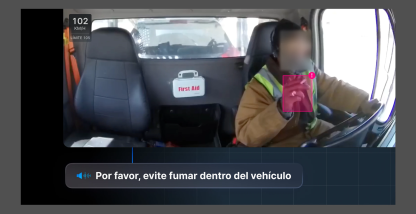
Dual-facing dash cams demonstrate real driver behavior, including before the collision and how they responded after. The dual-facing view adds context to the road-facing footage in these ways:
- Shows the driver was attentive. Footage can confirm the driver wasn’t on their phone, drowsy, or distracted when a collision occurred.
- Supports compliance with policy. Video shows seatbelt use, eyes on the road, and hands on the wheel, helping refute false claims of negligence.
See how these Motive customers used dash cam footage to avoid large legal payouts, inflated claims, and expensive litigation:
- Millions in litigation avoided. Duncan Oil used dash cam video to exonerate drivers in multiple critical collisions, saving an estimated $4M in legal costs.
- Six‑figure claim defused. Sabel Steel used dash cam footage after a multi‑vehicle collision on I‑10 to vindicate their driver, avoiding roughly $200,000 and months of litigation.
- Multi‑million exposure reduced. A line-haul freight carrier credits Motive technology for capturing footage of not-at-fault collisions, which they believe could have added up to $5M in possible claims.
3. Protecting drivers’ careers and livelihoods
While the financial savings are evident, the human impact of driver exoneration is even more profound. A conviction for a single not-at-fault collision can unfairly tarnish a driver’s professional record, lead to job loss, or make them uninsurable. Dash cams help fleets protect their drivers — which builds trust and supports long-term driver retention.
See how Motive customers use video evidence to stand behind their drivers:
- Record and career saved. Western Express used dash cam footage to exonerate a driver who was falsely blamed in a traffic collision. According to leadership, the video saved his record, and maybe even his career.
- Job preserved. For Aspen School District, clear camera footage proved a school bus driver wasn’t at fault in an incident, preventing a citation that could have made the driver uninsurable and cost them their job.
- Culture and trust strengthened. Ernst Concrete and CoolSys show that when dash cam footage exonerates drivers, drivers feel valued and protected.
Since we’ve gotten our cameras operational with Motive, we’ve had so many drivers saying they’re glad we have cameras in our trucks.
4. Resolving disputes and proving service
Driver exoneration extends to the daily interactions that protect a company’s reputation and revenue. Whether it’s a disputed pickup or a customer complaint, dash cams provide the video evidence needed to clearly settle disagreements.
See how Motive customers use video to resolve disputes and protect their reputation:
- Customer service verification. Prairie Disposal uses another form of video evidence (from a 360° camera) to resolve disputes. When a customer claims a pickup was skipped, the company can review the footage to show the bin wasn’t out when the truck arrived — resolving the dispute and protecting the driver.
- False claims disputed. For Roush Industries, dash cam video validated driver professionalism three times in a single year. In one instance, a motorist claimed a Roush driver hit him at a gas station, but the footage proved the car had actually pulled in front of the truck. “It was an open-and-shut case,” says DOT Compliance Manager ReShonda Spears.
- Stop‑arm violations documented. Aspen School District uses dash cam footage and audio to capture license plates when vehicles pass school bus stop‑arms.
Does Motive help with driver exoneration?
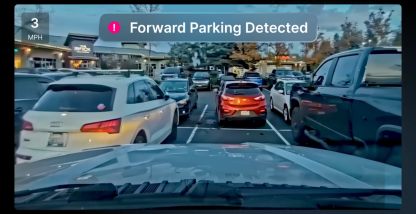
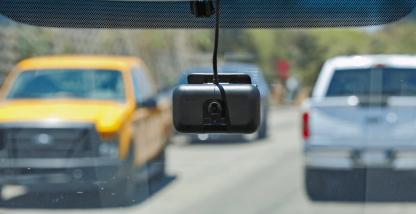
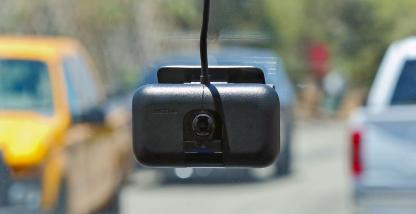
The Motive AI Dashcam Plus helps customers exonerate drivers by capturing incidents in high-definition (HD) with a wide field of view, leaving little doubt about what took place or who’s liable. Motive’s dash cams also offer precise collision detection, detecting 99% of severe collisions within seconds.
| Motive AI Dashcam Customer | Impact on Driver Exoneration |
| Staker Parson | 96% incident exoneration rate50% reduction in review time, resolving disputes faster |
| Roush Industries | 100% exoneration rate |
| Sabel Steel | 100% driver exoneration rate for not-at-fault collisions$200k+ saved through driver exoneration$10k+ saved annually by preventing fraudulent claims |
| Estes Forwarding Worldwide | 98% exoneration rate |
Motive AI Dashcam Plus: High quality, reliable evidence for driver exoneration
When it comes to the consequences of not being able to exonerate your driver, you need to know your AI dash cam is reliable. Motive’s AI Dashcam Plus can:
- Capture 15-second HD clips and sync them with telematics, so safety teams can reconstruct what happened immediately and share it with police or insurers. Videos can also be shared with drivers for roadside exoneration.
- Record in HD at up to 30 frames per second (fps) with a wide field of view and night vision, so critical details like lane position or license plates are visible even in low light.
- Be relied on. Collision footage captured by the AI Dashcam Plus are vetted by a 400+ person Safety Team to remove false positives and improve model performance.
- Alert safety managers when an incident happens. They receive instant alerts accompanied by video and detailed automatic collision reports. These reports, crucial for understanding the accident, can readily be shared with insurance providers.
- Retain evidence even in extreme collisions where power is lost. The AI Dashcam’s battery backup ensures footage is saved. And because video is uploaded within seconds, it’s captured even in the case of fire.