

Landscaping fleet safety is more than a risk-management responsibility. A consistent program can help protect margins.
A damaged vehicle, unavailable mower, repair delay, or manual incident review may increase operating costs, reduce asset availability, or put customer commitments at risk. These disruptions can raise labor, insurance, and repair costs, reduce asset availability, and put customer commitments at risk.
Fleet safety software should help teams set standards, identify meaningful risk, coach drivers, document incidents, and connect safety data with operating costs. It should help teams create consistent safety standards, identify meaningful risk, coach drivers, document incidents, and connect safety performance to the operating costs that affect profitability.
What a landscaping fleet safety program should cover
A complete program should help landscaping companies:
- Reduce preventable collisions, claims, repairs, and related disruption.
- Keep vehicles, trailers, and equipment available for scheduled work.
- Help reduce idle crew time and unnecessary trips caused by poor visibility.
- Give managers a consistent coaching process across branches and supervisors.
- Support seasonal and multilingual crews with clear, accessible guidance.
- Respond to incidents with organized evidence and documented follow-up.
- Measure safety trends alongside downtime, claims, repair costs, and productivity.
Safety is the foundation. Leaders should evaluate the program against downtime, claims, repair costs, and productivity.
Where landscaping operations lose margin
Landscaping crews face a mix of on-road, equipment, and jobsite risks. Each one can create a different type of financial exposure.
Collisions and preventable incidents
Landscaping employees travel between headquarters, supply yards, customer properties, and job sites. Speeding, distracted driving, close following, unsafe lane changes, backing incidents, and rushed decisions can put people and property at risk.
The financial impact may include vehicle repairs, claims, legal expenses, higher insurance costs, replacement transportation, and time spent managing the incident. A strong program should identify meaningful risk early, give drivers timely feedback when appropriate, and route validated events for manager review and coaching.
Vehicle, trailer, and equipment downtime
Vehicles are only one part of a landscaping operation. Trailers, mowers, skid steers, and other equipment also need to be available, inspected, secured, and ready for the next job.
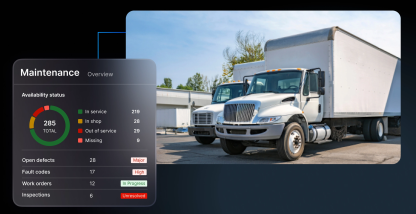
When a vehicle or piece of equipment is unavailable, the result may be a rushed substitution, an idle crew, a delayed job, or an unnecessary trip back to the yard. Visibility into asset location, movement, utilization, inspections, and maintenance readiness can help managers identify these issues before they disrupt the day.
Idle crew time and lost productivity
A landscaping company sells the work its crews complete, not the hours employees spend waiting for a vehicle, equipment, or replacement part. Delays can reduce the amount of work a crew completes in a day and make it harder to keep customer commitments.
Fleet safety data should therefore be reviewed alongside operational measures such as vehicle availability, equipment readiness, downtime, response time, and crew productivity.
Manual reporting and administrative work
After an incident, managers may need to gather video, trip information, location data, inspection records, driver accounts, and follow-up actions. When that process is spread across different systems, it can consume time and make it harder to identify recurring risks.
A more organized process can help managers spend less time reconstructing what happened and more time addressing the behavior, asset, or jobsite condition that needs to change.
How to build a fleet safety program that protects profitability
1. Establish consistent standards across every branch
Written expectations should cover more than road safety. They should address:
- Driving and backing procedures
- Trailer hitching and securement
- Loading and unloading mowers and other equipment
- Pre-trip inspections and defect reporting
- Parking near pedestrians, customers, and property
- Jobsite behavior around slopes, curbs, trees, uneven terrain, and active traffic
- Incident reporting, escalation, and follow-up
Add these expectations to new-hire and seasonal onboarding. Reinforce them during team meetings, coaching conversations, and regular safety reviews. This gives every crew the same baseline, even when branches or supervisors work differently.
Motive’s Safety Hub can provide a central place to review safety insights, event activity, and performance tracking. Safety Scores can give leaders a high-level view of performance over time, while Coaching Sessions can help managers document follow-up when a driver’s behavior needs attention.
2. Create visibility across drivers, vehicles, trailers, and equipment
Protecting margins starts with knowing what is available, what is in use, and what may cause a delay.
A visibility program should help managers:
- Track vehicles, trailers, and equipment as they move.
- Identify assets that are unavailable, underused, or moving unexpectedly.
- Confirm that vehicles and equipment are inspected and ready before departure.
- Review safety events in the context of a trip, location, and assigned asset.
- Use utilization information to identify opportunities for redeployment.
Location alerts and geofences can help teams identify unexpected movement. Equipment monitoring can extend visibility beyond powered vehicles to trailers, mowers, and other assets. Connected inspections and maintenance information can help managers determine whether an asset is ready for the next job.
Better visibility can help teams identify availability problems earlier and address them before they disrupt work.
3. Use AI-powered safety detection to focus manager attention
Managers cannot directly observe every route, driveway, and property. AI-powered safety detection can identify potentially risky driving behavior for review.
A useful risk-detection workflow should:
- Identify potentially risky behavior.
- Validate whether the event is meaningful.
- Give the driver timely feedback when appropriate.
- Route meaningful events to a manager for review and coaching.
- Track whether the behavior improves over time.
The technology should support prevention, but alerts alone do not create a safer or more profitable operation. The value comes from the complete process: accurate detection, event validation, timely feedback, coaching, and follow-up.
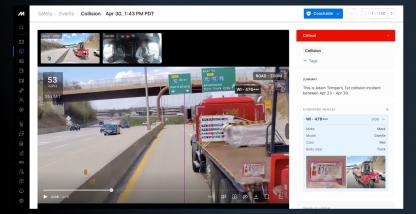
Motive’s AI-powered safety detection and Event Validation Engine are designed to help teams focus on events that require attention. Real-time driver alerts can provide feedback while an event is happening, and managers can review validated events as part of Coaching Sessions.
4. Make coaching part of daily operations
Coaching turns safety data into an opportunity to change behavior.
A repeatable coaching process should help managers:
- Identify the behavior that needs attention.
- Review the event and surrounding context.
- Discuss what happened with the driver.
- Set clear expectations for improvement.
- Document the conversation.
- Review future behavior to see whether the issue continues.
This process should apply across branches, not only after a serious incident. Managers should also recognize safe behavior so that the program does not focus exclusively on mistakes.
Motive’s AI Coach can provide drivers with personalized guidance. Coaching Sessions can bring coachable events and driver history together, while Safety Scores can help managers track performance over time.
Seasonal and multilingual crews need practical, accessible guidance. Motive In-Cab Alerts support English, French, and Spanish, helping teams deliver timely guidance across multilingual operations.
5. Prepare for incidents and document what happened
A defined incident response process helps a landscaping company preserve information, support the people involved, and reduce the time needed to understand what happened.
The process should include:
- Recording the basic facts of the incident.
- Preserving video, inspection records, and other relevant evidence.
- Reviewing video alongside trip, telematics, and location information.
- Documenting accounts from the driver, manager, and other involved parties.
- Assigning follow-up actions and confirming completion.
- Reviewing trends to identify recurring risks or jobsite conditions.
Motive’s Safety Hub can bring safety insights, event reviews, and performance tracking into one place. When combined with video, telematics, and Accident Management capabilities, this information can help teams review incidents and identify changes to procedures or coaching.
The business value may come from better information, earlier identification of repeat risks, and less time spent reconstructing each event.
How to measure the program’s profitability impact
A safety program should be evaluated using both leading and lagging indicators.
| Safety & Risk Metrics | Operational & Financial Metrics |
|---|---|
| Collision frequency | Vehicle and equipment downtime |
| At-fault collision trends | Repair and claims costs |
| Recurring risk behaviors | Insurance costs |
| Near-miss trends | Idle crew hours |
| Coaching completion | Manual reporting hours |
| Incident response time | Asset utilization and availability |
| Missed or delayed customer commitments |
Start with a baseline before changing the program. Then review results by driver, vehicle, branch, event type, and time period. This makes it easier to distinguish a one-time improvement from a sustained trend.
A simple internal calculation can help frame the opportunity:
Potential safety-related cost exposure = incident and claim costs + repairs + downtime costs + administrative time + lost productivity.
Use conservative assumptions. Treat estimated reductions as scenarios, not guarantees, and separate landscaping-specific results from cross-industry benchmarks.
What to look for in landscaping fleet safety platform
Look for a platform that supports the full workflow, from risk detection through measurement.
- Driver risk detection that identifies meaningful events.
- Validated events that help managers focus attention.
- Real-time driver alerts that support timely feedback.
- A repeatable coaching workflow with documented follow-up.
- Multilingual support for distributed and seasonal crews.
- Visibility across vehicles, trailers, mowers, and other equipment.
- Location alerts, geofences, and utilization insights.
- Inspections and maintenance information that support asset readiness.
- Incident evidence review and documentation.
- Reporting that connects safety trends with operational and financial measures.
Ask whether the software can identify risk, change behavior, keep assets available, support incident response, and measure operational impact.
Landscaping fleet safety and profitability checklist
| Action Item | Work Description |
|---|---|
| Standard Operating Procedures | Document written expectations covering driving, backing, equipment handling, jobsite behavior, and incident reporting. |
| Onboarding & Training | Incorporate safety procedures into new-hire and seasonal onboarding programs. |
| Multilingual Accessibility | Make guidance and in-cab alerts accessible in multiple languages for seasonal and multilingual crews. |
| Asset Tracking | Track supported vehicles, trailers, mowers, skid steers, and other equipment. |
| Pre-Departure Readiness | Confirm that assets receive pre-trip inspections, are secured, and are ready before departure. |
| Event Detection & Alerts | Configure AI-powered safety detection and real-time in-cab alerts for relevant risky behaviors. |
| Event Validation | Use validated events to focus manager review on meaningful risks. |
| Repeatable Coaching Cycle | Establish a standardized, documented coaching process across all branches to address behavior and recognize safe practices. |
| Incident Investigation | Combine video, telematics, trip, and location data to thoroughly document and investigate incidents. |
| Performance & Financial Metrics | Track safety metrics alongside financial and operational outcomes including collision frequency, claims, repair costs, downtime, and productivity. |
| Continuous Improvement | Review trends regularly and update procedures for recurring jobsite risks. |
How Motive supports a complete landscaping fleet safety program
For landscaping companies, fleet safety should not be treated as a separate activity that begins and ends with a driver score or a dashcam recording. It should support the people, vehicles, equipment, customer commitments, and margins that keep the business running.
A complete program combines clear standards, driver and asset visibility, validated AI-powered safety detection, consistent coaching, multilingual support, incident response, and business-impact measurement.
Motive can support a connected workflow across driver safety, AI Dashcam, coaching, incident response, and fleet visibility, depending on the products and configuration selected. Explore how Motive can support a complete landscaping fleet safety program.
Frequently asked questions
How can equipment visibility improve fleet safety profitability?
Tracking trailers, mowers, and other equipment can help teams identify availability issues, reduce unnecessary trips, and support efforts to limit downtime and idle crew time.
How can near-miss tracking improve fleet safety ROI?
Reviewing near misses with video, trip, and location data can help teams identify and coach recurring risks earlier; it does not guarantee that future collisions or costs will be avoided.
Which jobsite safety controls can protect profitability?
Consistent procedures for backing, spotters, pedestrians, parking, and uneven terrain can support efforts to reduce property damage, equipment repairs, and job delays.
How does fleet safety software improve profitability beyond road safety?
By connecting driver events with locations, assets, and jobsites, software can help managers identify recurring risks, reduce downtime, and protect customer commitments.
How should landscaping companies measure fleet safety ROI and profitability?
Track collisions, claims, repairs, insurance, downtime, idle crew hours, administrative time, asset availability, and missed commitments over time. Use the baseline to identify measurable cost reductions rather than promise guaranteed savings.