

How to stay compliant, connected, and in control across the U.S., Canada, and Mexico.
For organizations that run between the United States, Canada, and Mexico, the border is where everything gets harder. A clean plan on paper can turn into hours of dwell time, missed deadlines, and frustrated customers. That’s why it’s crucial to invest in technologies that give you a comprehensive view of data on drivers, vehicles, and equipment in one place.
This guide is for leaders who want the border to feel as manageable as any other part of their business.
It will help you:
- Keep drivers compliant and confident as they move between countries.
- Maintain real-time visibility into vehicles, trailers, and equipment across borders.
- Control risk and spending at high-stakes crossings and stops.
You’ll see how a unified, AI-powered platform can keep operations running smoothly, no matter which side of the border your drivers are on. When safety, operations, and finance run on a single platform, cross-border freight stops being a source of stress and becomes a controllable part of your operation.
The challenges of transcontinental trade
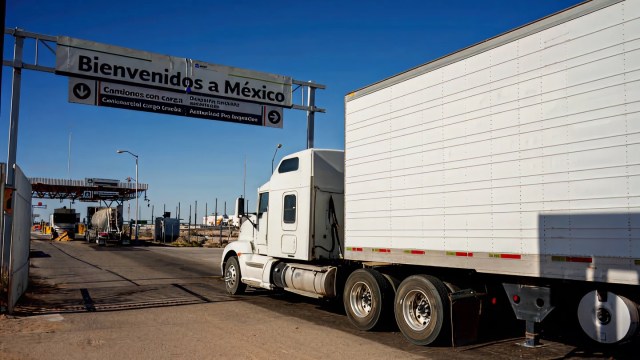
No form of transportation is more vital to cross-border commerce than trucking. It’s responsible for 55.7% of trade through Canada and 73.6% through Mexico. But cross-border operations introduce a distinct set of challenges. Small issues get amplified easily, opening the door to bigger problems.
- Connectivity drops in and around border crossings.
- Communication between drivers and dispatch gets delayed or disrupted.
- A lack of visibility into delays, inspections, and asset movement prevents companies from reacting to disruption in real time. As a result, it’s often difficult to act when cargo is damaged or lost.
When problems add up, cross-border operations tend to fail. That’s why fleet-based organizations need complete visibility and control across every asset, vehicle, and driver.
Why cross-border challenges are growing

The U.S. land borders with Canada and Mexico are responsible for roughly $4 billion in daily cross-border freight shipments, consistently facilitating more than $1 trillion in annual trade. While the overall volume of freight moving across U.S. land borders remains high, the mix of freight is changing. Those changes are increasing pressure on cross-border operations.
At the same time, more manufacturing is moving closer to the United States through nearshoring. Mexico’s trucking trade value is now roughly 50% higher than Canada’s, reflecting Mexico’s growing role as a manufacturing hub south of the border. That change increases reliance on border crossings that already face major congestion and inspection activity.
Other factors, like those below, are adding to the complexity of commercial transport at U.S. borders.
- Volatile transportation costs. Fuel prices remain a major cost driver. Small inefficiencies in routing, idling, or detention can quickly erode margins when vehicles operate across long cross-border lanes.
- Variable wait times and inspection intensity. Wait times and inspection times can vary widely, depending on the crossing and time of day. These variations make it difficult to predict when freight will clear the border or how long drivers will be delayed.
- Multiple regulatory standards. Fleet-based organizations must navigate different compliance requirements, hours-of-service rules, and documentation standards as they move between the United States, Canada, and Mexico, increasing the risk of violations or delays.
- Emerging regional compliance mandates. Regulatory requirements continue to evolve across North America, creating new obligations for fleet-based organizations that operate across borders. British Columbia recently passed legislation that will require forward-facing dash cameras in heavy commercial vehicles operating on provincial highways.
The mandate is expected to affect both Canadian and U.S.-based carriers, including those traveling through British Columbia on Alaska Highway routes. For more information on the law, implementation timeline, and impacts, see “Compliance Watch: British Columbia’s Dash Cam Mandate” later in this guide.
Gaps like these create downstream impacts for the whole operation — especially in the form of longer delays, lower asset utilization, and higher operating costs.
Moving from fragmented systems to unified control
Many organizations still rely on disconnected tools for compliance, tracking, safety, and fleet spend. Any fragmentation has a trickle-down effect on the whole operation, resulting in:
- Slow, manual decision-making. Teams chase data across systems or spreadsheets while drivers sit at the border and freight continues to be delayed.
- Blind spots between safety, compliance, and spend. It’s hard to see how individual drivers, routes, or crossings cause delays and drive up costs when your technologies are disparate and siloed.
- Inconsistent customer communication. Without a reliable source of truth for estimated times of arrival (ETAs) and status updates, teams struggle to set expectations and keep customers informed when conditions change.
A unified approach, like the one the Motive Integrated Operations Platform provides, connects these systems so information flows in real time across the entire operation. As a result, teams get faster, more coordinated responses at the most critical times.
When cross-border operations are connected and unified:
- Drivers can move through borders with consistent compliance and fewer disruptions.
- Dispatch and operations teams have real-time visibility across vehicles, trailers, and high-value assets on both sides of the border.
- Teams can adjust routes and plans immediately based on live conditions.
- Customers receive accurate, proactive ETAs — even when border conditions change at the last minute.
“Whether it’s alternative routes or flexible contracts, with our customers specifically, giving them real-time data allows us to pivot quickly when things change overnight.
How Motive instills border confidence

A unified platform connects all aspects of fleet operations, so organizations with fleets can act faster, operate with clarity, and maintain control through every crossing.
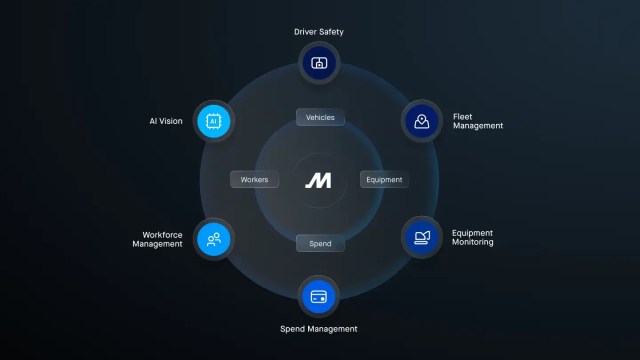
Motive connects driver safety, fleet compliance, fleet tracking, equipment monitoring, workforce management, and spend management* on a single AI-powered platform, so cross-border fleets can stay compliant, connected, and in control across the United States, Canada, and Mexico.
Unified safety and compliance across borders
With Motive’s ELD* and Compliance Hub, organizations with fleets can standardize compliance across the United States and Canada, while drivers can stay productive and prepared for inspections.
- Motive’s top-rated ELD and Driver App help drivers record hours of service and complete DVIRs quickly, with intuitive countdown clocks and alerts to prevent violations.
- The Compliance Hub centralizes ELD compliance, driver qualification, IFTA reporting, and CSA score management in one place, making it easier to monitor risk and coach drivers before violations occur.
- Live, inspection-ready records give drivers and safety teams confidence moving through border environments with high security.
Compliance Watch: British Columbia’s dash cam mandate
Emerging provincial regulations. British Columbia recently passed the Dashboard Cameras in Commercial Vehicles Act, becoming the first jurisdiction in Canada to require dash cameras in heavy commercial vehicles. The law will require fleets to have forward-facing cameras that record the roadway through the windshield, and it’s expected to apply to commercial vehicles with a gross vehicle weight rating (GVWR) above approximately 26,000 pounds (11,793 kg).
Who may be affected. The requirement is expected to apply to both Canadian and U.S.-based carriers operating on British Columbia highways. Because the rule is tied to operating on provincial roads rather than where a vehicle is registered, carriers traveling through British Columbia on Alaska Highway routes may also be subject to the requirement while operating in the province.
Implementation timeline. Although the legislation has passed the British Columbia legislature with unanimous support, it must still receive Royal Assent before becoming law. Once that occurs, the mandate will take effect six months later, placing expected compliance requirements in late 2026 or early 2027.
Technology requirements. Based on the legislation and committee discussions, organizations should expect dash cam requirements for continuous recording, forward-facing camera placement, minimum 1080p video quality, night-vision capability, and at least 72 hours of footage retention. Additional enforcement, inspection, and data-access requirements are expected to be established through future regulations.
Preparing for compliance. Requirements such as these highlight how quickly regulatory obligations can evolve across jurisdictions. Organizations that standardize safety and compliance technology across their operations can more easily verify camera deployment, monitor device health, maintain required footage retention, and adapt when new provincial, state, or federal requirements take effect.
Real-time fleet visibility across all regions
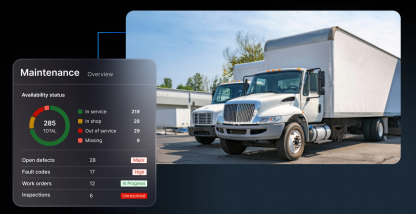
Cross-border operators need to know where trucks, trailers, and equipment are at all times. Motive delivers GPS tracking and telematics across regions, giving operations teams helpful tools, including:
- Real-time and historical views of vehicles, trailers, and equipment, including location, utilization, and health.
- Live ETAs and route awareness, so dispatch can proactively update customers and re-sequence stops.
- Context on dwell time at crossings, yards, and customer locations, enabling better planning and contract discussions when detention is an issue.
Driver safety in high-risk environments
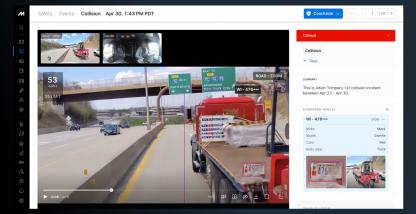
Border crossings, congestion, and unfamiliar routes can all increase risk. With Motive Driver Safety and the AI Dashcam Plus, fleet-based organizations can protect drivers while they wait, clear inspection, and re-enter the roadway.
- Accurate AI models detect high-risk behaviors such as distraction, close following, and speeding with up to 99% accuracy, helping safety teams focus on actual safety events instead of false positives.
- When risk rises, reliable in-cab alerts coach drivers in real time, even when they’re far from a yard or terminal.
- Motive’s Safety Hub and driver coaching tools enable managers to follow up on high-risk events or reward safe driving behaviors, helping build a stronger safety culture on cross-border lanes.
Equipment and asset tracking across the network
At the border, trailers are frequently unhooked from the truck and handed off to different drivers. Without dedicated asset tracking, organizations can easily lose track of cargo.
With Asset Gateway Mini and Motive’s equipment monitoring solutions, organizations that operate fleets get several benefits. Here are some of the most notable:
- Cross-border visibility into the location and utilization of high-value equipment such as trailers and containers.
- Long battery life and a small, discreet design that make it easy to track high-volume, mixed fleets of powered and unpowered assets.
- Geofence alerts and on-demand pings to detect unauthorized movement, locate missing equipment, and improve recovery when theft or poor routing occurs.
Spend control at the border
Border crossings are a stress test for your budget. Drivers have to manage long lines, fuel stops, and last-minute route changes, while finance teams are left sorting what was necessary and what wasn’t after the fact.
Without a clear connection between what vehicles are doing and what cards are buying, it’s easy for unplanned and unauthorized costs to slip through — especially at fuel and rest stops clustered around the border.
The right fleet card program can turn high-risk stops into controlled checkpoints. Organizations with fleets need a card that works across the United States and Canada**, with guardrails that stop fraud and out-of-policy spending before it hits the bottom line.
With Motive Card and Spend Management**, organizations can:
- Apply fully customizable spend controls by driver, group, region, or time of day to prevent unauthorized card use.
- Use AI-powered fraud detection that compares vehicle telematics and card transactions in real time to flag and auto-decline suspicious purchases at high-risk locations.
- Improve profitability with cashback and U.S.-based partner network discounts. By combining Motive Card fuel transactions with vehicle mileage data, you can automate IFTA reporting at the same time.
Customer proof: real cross-border performance

For those that operate on the border, stability starts with dependable, integrated tools that can improve compliance and visibility. As vehicles move between jurisdictions, automated technology can reduce interruptions and ensure that systems are reliable.
Estes Forwarding: agility in real time
Estes Forwarding Worldwide, a logistics company based in Richmond, Virginia, operates across the United States, Canada, and Mexico, designing and managing the end-to-end shipment of goods. At a time when volumes, trade flows, and cross-border conditions tend to change unexpectedly, EFW has found success in keeping their options open.
“Whether it’s through alternative routes or flexible contracts, with our customers specifically, giving them real-time data allows us to pivot quickly when things change overnight,” says Matt Lacy, Vice President of EFW Transport. “That comes through strong relationships, knowing when to call a customer, and when to work with border authorities and trade partners. Oftentimes, that’s what gives us the edge.”
Real-time information enables faster, better-informed decisions — and that’s what keeps freight moving across borders. EFW anchors its network on Motive’s AI-powered platform. By unifying data across drivers, vehicles, and equipment, Motive helps cross-border operators close the gap between what’s happening at the border and how the fleet responds.
Explore Motive offerings that empower your organization to strengthen its response in the field:
- 360° visibility into drivers, vehicles, equipment, and spend across safety, operations, and finance.
- GPS fleet tracking with real‑time location, traffic, and weather overlays so managers can spot delays before customers feel them.
- Automated compliance and safety tools that help keep high-stakes operations protected, enabling companies like EFW to achieve an 89% reduction in collisions; a 90% reduction in speeding events; and a 98% driver exoneration rate.
By using unified, real-time data to adjust plans in the moment, cross-border operators can adapt quickly, protect their margins, and keep freight moving.
Conclusion: Confidence at every border
By connecting cross-border operations, organizations can gain confidence at every level — from drivers and dispatch to operations, finance, and customers.
With the right AI-powered platform:
- Drivers can move through borders with clear workflows and fewer surprises.
- Operations teams can see what’s happening across vehicles, trailers, and equipment on both sides of the border.
- Finance and safety teams can share a unified view of risk and spend, making it easier to control costs and protect the business.
An AI-powered Integrated Operations Platform gives fleets the visibility, automation, and control they need to keep freight moving — no matter how conditions change.
See how Motive simplifies cross-border operations
Ready to make the border just another controlled part of your network? Schedule time with Motive to see how our AI-powered Integrated Operations Platform gives you real-time visibility and control over drivers, vehicles, equipment, and spend on every cross-border lane.
For organizations operating primarily in Mexico or Canada, explore local resources from Motive. Visit our Spanish-language site, and dive deeper into local requirements with our Canadian ELD guide.
* Please note: Electronic Logging Devices (ELDs) are permitted for use in Mexico, but their use is not legally mandated under local regulations. Motive Spend Management is not available in Mexico.
**Motive Card and Spend Management are designed for U.S.-registered fleets operating in the United States and Canada. Because the cashback and partner savings network is primarily U.S.-based, most rebate savings apply on the U.S. side of cross-border routes. Spend Management is not available in Mexico. Learn more on the Spend Management page.