


Manual dispatching, paperwork orders, and fix-it-when-it-breaks maintenance rarely appear as a line item on a P&L but they still carry a price. Field service operations that run on spreadsheets, phone calls, and clipboards lose hours every week and money every month to work that an AI-powered, integrated operations platform can automate. For operations watching cash flow closely, the distance between manual and automated work can be the difference between a thin margin and a healthy one.
And that distance is measurable:
In Motive’s 2026 ROI research, 95% of field service respondents named rising costs as a top concern, and 53% said inefficiency and manual work are holding their operations back.
Costs are climbing and the manual processes meant to control them are quietly making them worse. The trouble with manual costs is they hide in plain sight. A dispatcher might spend an extra hour on the phone, or a truck might pull off the road for an emergency repair. Additionally, manual processes are far more error-prone than digitizing and automating tasks. The additional time and potential for error might not feel like a crisis on any single day, but added up across a month and a full fleet, they become one of the largest and most addressable expenses an operation carries.
What do manual field service operations actually cost?
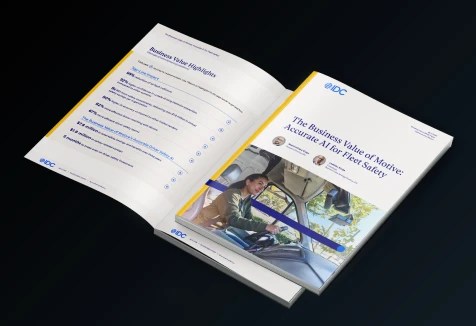
Manual operations cost a field service organization in three places: the labor hours spent coordinating work by hand, the fuel and asset waste that goes undetected, and the downtime that comes from repairing equipment only after the point of failure. In Motive’s 2026 ROI Report, top respondents reported an average of $1 million in business savings across their operations after adopting the Motive Integrated Operations Platform. Among top respondents, fleet managers reported reclaiming an average of 25 hours per week through fleet tracking.
In practice, the costs of these manual practices compound. Manual dispatch leads to inefficient routes, which burns fuel. Paperwork issues delay the maintenance data that could catch a problem early, which leads to equipment breakdowns. Each manual process makes the next one more expensive.
Here’s how manual processes drain profitability and what closing each gap might be worth to you:
1. The cost of manual dispatching
A dispatcher working from a whiteboard and a cell phone is doing skilled coordination the hard way. Every schedule change means a round of calls, every reroute is a guess without live location data, and every miscommunication sends a technician to the wrong site or order. This can compound on a busy day into missed appointments, longer route times, and unbudgeted overtime.
And the downstream effects reach further than the dispatch desk. When a coordinator can’t see where crews actually are, jobs get inefficiently assigned to whoever is top of mind rather than whoever is closest or actually free. Customers wait for a longer window and technicians might double back across a service area — with the fuel meter running the entire time. A single mis-scheduled day rarely gets tracked as a loss, but a month of them will show up plainly in overtime and fuel spend.
For dispatch teams, automated dispatch and routing with fleet dispatch software can reduce the manual coordination that slows field service operations.
Dispatch is only one part of the broader operational picture. When teams connect location, vehicle health and fuel data, they can address related sources of waste — such as overdue maintenance and unnecessary idling — without treating every improvement as a dispatch outcome.
Southwind, a home and commercial services operation, increased the share of its fleet that was road-ready from 72% to 90% within three months using Motive’s preventative maintenance features. It also saved more than $500,000 in fuel costs in one year by reducing engine idle time. The results reflect two distinct improvements: higher fleet readiness through proactive maintenance and lower fuel consumption through reduced idling.
2. The cost of manual scheduling and paperwork
Paperwork orders and manual data entry are a tax on the back office, because someone has to re-key job details, chase down signatures, reconcile timesheets, and assemble reports by hand. In leaner operations, that someone is often the owner or a single office manager already stretched across billing, payroll, customer calls, and more admin. The hours spent on administrative cleanup are hours no one is spending on winning or servicing work.
There’s also a second cost buried in the paperwork: accuracy. Every time a job detail is written down once and typed in again later, there’s a chance for an error that can turn into a billing dispute, a compliance gap, or a job that gets invoiced late or not at all. Revenue that leaks through slow or missing invoicing can be some of the most expensive money an organization can lose, because the work was already done and paid for in labor and fuel. Manual reporting also means leadership is always looking at last week’s picture, making decisions on numbers that are already out of date.
Top respondents to Motive’s 2026 ROI Report reported that fleet managers saved 20 hours per week on average by reducing paperwork and other manual tasks — equivalent to 50% of a 40-hour workweek, or nearly 1,000 hours a year. In the field services industry, these respondents reported reclaiming 24 hours per week — equivalent to 60% of a 40-hour workweek, or more than 150 workdays annually.
3. The cost of reactive maintenance
Waiting for a truck or piece of equipment to break down is the most expensive maintenance strategy available. A roadside failure means an emergency repair bill, a missed job, an idle crew, and a customer who now questions the reliability of the whole operation. The repair itself is often the smallest part of the loss; the bigger costs can be revenue from the canceled job, the technicians standing around, and the overtime to catch up on everything that got delayed.
Reactive work can leave less time for preventive planning. In Motive’s 2024 Physical Economy Outlook, 58% of physical operations leaders said they spend most of their time dealing with reactive issues rather than proactively managing their workers, fleet, spend, or assets and equipment. That pattern can make it harder for an operation stuck in a loop to address issues before they become costly breakdowns.
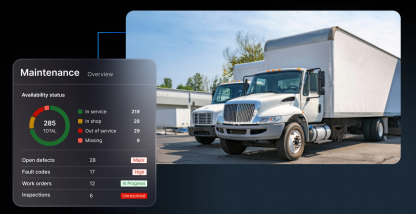
Preventive, data-driven maintenance changes the pattern and extends vehicle life. When fault codes and utilization data flow automatically from the vehicle, small issues get caught during scheduled service instead of on the shoulder of the highway. In Motive’s 2026 ROI Report, all survey respondents reported an average 18% increase in vehicle uptime after investing in Motive.
CoolSys, a field-service HVAC provider with a 2,600-vehicle fleet, reported a 25% decrease in at-fault collisions and $4 million in auto-loss savings. Its workers’ compensation claims also fell from $1.9 million to $800,000 in one year, representing more than $1.1 million in savings.
Adding it up: the case for one connected system
The individual costs are steep on their own, but the deeper problem is fragmentation. A GPS app that doesn’t talk to a maintenance log. A scheduling spreadsheet that doesn’t talk to payroll. A fuel card statement landing weeks after the fuel was burned. A signed paper work order that has to be re-keyed before it can be invoiced. Each gap forces someone to bridge it by hand, which is where the manual costs come from in the first place.
Motive’s 2024 Physical Economy Outlook found that 46% of physical-operations leaders use more than 10 individual tools to manage their operations, while 30% say they use too many to count.
The report also found that 42% lack a single view of their workers, vehicles, assets and operational spend, and 41% identify data silos or lack of integration as a technology concern. These findings illustrate how disconnected systems can make it harder to manage operations efficiently.
Consolidating dispatch, maintenance, and back-office work onto a single platform is what turns these scattered savings into a number that shows up on your P&L. When location, diagnostics, hours, and spend data live in one system, the coordination can happen automatically and reporting stays current. Field service organizations that make the move recoup their investment in about 5 months.
Running a fleet by hand has always carried a cost that stayed off the ledger. Putting a number to it is the first step toward keeping that money in the business.
Frequently Asked Questions
What are the biggest hidden costs of manual field service operations?
Manual dispatching paperwork, fuel and asset waste, and reactive maintenance can all add cost. In Motive’s 2026 ROI Report, field-services respondents reported reclaiming about 24 hours per week for higher-priority work. Top fleet-manager respondents also reported saving 20 hours per week on paperwork and other manual tasks.
How much can a field service fleet save by automating manual processes?
In Motive’s 2026 ROI Report, field services respondents reported an average time to ROI of 5.3 months. The report also found an average 18% increase in vehicle uptime across all respondents.
Why is reactive maintenance more expensive than preventive maintenance?
Reactive maintenance stacks emergency repair costs on top of missed jobs, idle crews, and lost customer confidence. Fleets using connected diagnostics spend 29% less time managing repairs and downtime, catching small issues before they become roadside failures and extending vehicle lifetime.
How common are fragmented technology stacks in physical operations?
Motive’s 2024 Physical Economy Outlook found that 46% of physical operations leaders responding to Motive’s survey reported using more than 10 separate tools, while 30% said they use too many to count. 42% said they lack a single view of operations and 41% cited data silos or poor integration as technology concerns. Motive helps physical operations teams replace fragmented systems with one connected platform.