

Fleet operations have come a long way. Managers have visibility into more data than ever before: alerts, fault codes, safety events, safety scores, dashboards, and more, but that visibility often comes with a growing to-do list. Instead of getting ahead, teams remain reactive, chasing alerts, pulling reports, and following up after something goes wrong, whether it’s a collision, an HOS violation, or a maintenance issue. Manual processes make it difficult to spot patterns early, respond consistently, and scale performance, turning oversight into a bottleneck rather than a strength.
The cost is significant. Organizations spend an estimated 860 million hours on tasks that could be automated, including manual work and follow-ups. On top of that, they incur $46 billion in preventable costs tied to downtime, unproductive idling, and compliance violations.
Agents, powered by Motive AI, change that by shifting fleet operations from reactive to proactive.
Embedded directly into the Motive Platform, Agents give organizations a single place to turn manual processes into scalable, automated workflows. Teams define the conditions and actions once, then AI takes the actions for you.
Agents can be set up using guided workflows, pre-built templates, or natural language, making it easy to go from idea to execution without complex setup.
Once live, Agents trigger action in real-time, like alerting drivers before HOS violations, assigning training when risky behaviors hit a threshold, or disabling cameras in restricted geofences. Automated notifications are delivered via email, SMS, or app alerts, with in-cab voice messages through AI Dashcam Plus.
Agents are designed to help you save time, reduce costs, and prevent issues before they happen.
Easily build smarter workflows
FFleet operations rarely rely on a single signal or action. Managing safety, compliance, and efficiency requires coordinating multiple inputs across drivers and vehicles — something that is difficult to do manually and even harder to scale consistently.
Agents bring these moving parts together into a single, flexible workflow engine, allowing you to:
- Configure multiple triggers and actions within a single Automation to streamline complex processes.
- Automatically handle routine tasks and issue resolution without constant manager intervention.
- Combine vehicle, driver, and operational data to trigger the right actions at the right time, including alerts, in‑cab notifications, training, coaching, or outreach via an AI voice agent.
By connecting signals and actions in one place, Agents help teams operate with greater precision, consistency, and control across the entire organization.
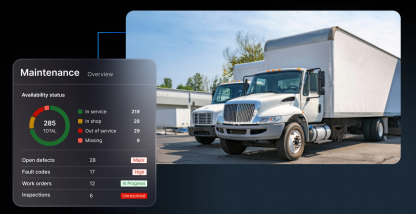
Prevent downtime with automated fault code alerts
Unexpected vehicle issues can lead to costly downtime, especially when faults go unnoticed or are addressed too late.
Agents enable fleets to detect and respond to maintenance issues as soon as they arise, helping teams:
- Instantly understand vehicle fault codes with AI-powered insights, including a clear explanation, severity level, recommended actions, and suggested driver messages.
- Prompt drivers to take safe action before damage occurs by initiating an in-cab call with Atlas for critical fault codes.
- Improve uptime and reliability through rules that monitor fault codes and trigger immediate responses, resolving issues before they escalate.
- Stay ahead of maintenance with timely alerts that surface upcoming service needs before they become problems.
Catching issues early and acting quickly keeps vehicles on the road, reduces downtime, and helps avoid expensive repairs.
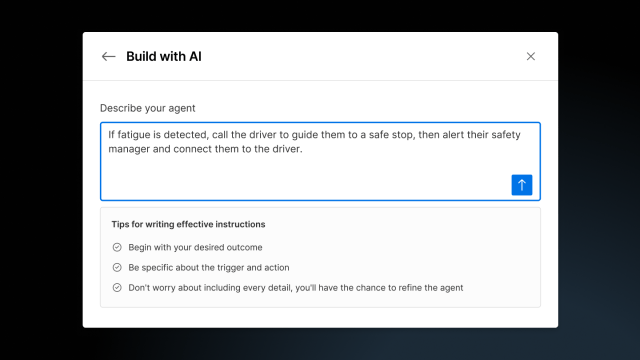
Take action fast when driver fatigue is detected
Driver fatigue is a major safety risk, but early warning signs are often missed without consistent monitoring and follow-up.
Agents help fleets identify and address fatigue risks earlier, allowing organizations to:
- Identify risky behaviors early with Agents that trigger timely intervention before conditions become unsafe.
- Notify drivers with in-cab alerts when repeated fatigue indicators are detected, prompting them to take a break or rest when it’s needed most.
- Instantly alert safety managers to fatigue-related risks so they can follow up and ensure drivers stay safe and compliant.
By intervening earlier, fleets can reduce risk, improve driver safety, and maintain compliance at scale.
Reduce fuel costs and emissions
Unnecessary idling drives up fuel costs, increases emissions, and accelerates engine wear, but it can be difficult to monitor and correct in real time.
Agents help organizations detect and respond to idling as it happens, enabling teams to:
- Automatically flag excessive idling and trigger actions to reduce waste.
- Guide drivers to shut off engines with automated in-cab alerts from AI Dashcam Plus.
- Notify fleet managers the moment idling thresholds are exceeded so they can step in when needed.
Addressing idling in the moment helps fleets lower costs, improve sustainability, and extend vehicle life without added manual effort.
Proven results
The result is a smarter, more scalable operation—where teams spend less time managing tasks and more time improving performance. Decisions can happen up to 10 times faster with Agents, and issues are addressed before they impact safety, compliance, or efficiency.
With Agents, organizations don’t just respond to problems. They prevent them.
Agents are available now. Talk to your Motive representative to learn more and start building a more proactive, efficient fleet today.