

Standard dash cams helped fleets bring basic visibility to the road. But today, rising collision risk, higher insurance premiums, and stricter safety expectations are exposing the limits of cameras that only record what already happened.
For fleets that run critical physical operations, moving from simple recording to accurate, AI-powered prevention can be the difference between reacting to incidents and preventing them in the first place.
AI dash cams go further by detecting unsafe behavior in real time, alerting drivers in the cab, and feeding structured coaching programs that actually change behavior. This blog walks through the differences between AI and standard dash cams, how they fit in a modern fleet safety stack, and how to evaluate them for your own operation.
What’s the difference between AI dash cams and standard fleet dash cams?
At a high level, standard dash cams record incidents, while AI dash cams help prevent them. While both provide visibility, the technology underlying each serves a fundamentally different purpose in a safety program: one acts as a digital witness for what has already occurred, while the other acts as an intelligent co-driver to help avoid the next accident.
What are standard fleet dash cams?
Standard or legacy fleet dash cams are simple recording devices that capture video during continuous driving or when they detect G-force events like harsh braking. They store footage for evidence and exoneration, but lack the ability to understand driver behavior or provide real-time warnings before a collision.
Where they fall short:
- They do not understand what a driver is doing, only that a bump or impact occurred.
- Safety teams must sift through large volumes of video to find relevant moments.
- There is no built‑in way to warn drivers in real time before a collision.
What are AI dash cams?
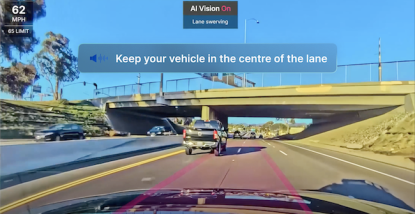
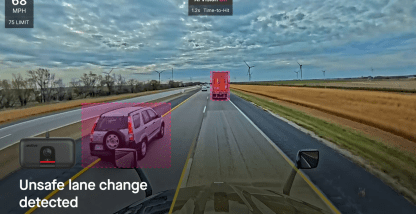
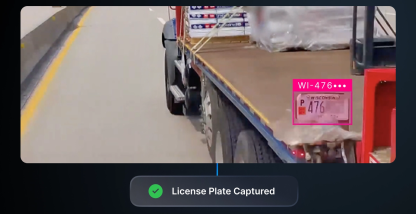
AI dash cams use edge computing and computer vision to move beyond simple recording. By processing video in real time, they identify risky behaviors — like distraction and drowsiness — triggering instant in-cab alerts that allow drivers to correct actions before a collision occurs.
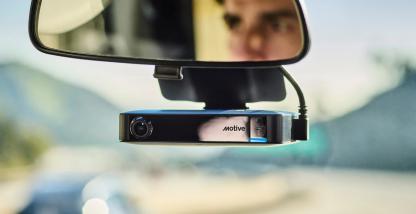
Beyond immediate prevention, AI systems like the Motive AI Dashcam Plus automatically upload event-based clips and risk scores to a centralized platform. This data enables safety managers to implement proactive, structured coaching programs rather than manually sifting through hours of raw footage. When combined with accurate AI that detects 20+ safety events with up to 99% accuracy, fleets can prevent more collisions with fewer false alerts.
“The accuracy of the AI Dashcam’s detection — and the contextual tags automatically associated with the videos — eliminates the need to play detective and gives us the ability to immediately direct our attention to where it’s required most.
Why fleets are moving from standard dash cams to AI dash cams
Fleets are upgrading from standard dash cams to AI dash cams for three main reasons: rising risk and cost, the need for real‑time prevention, and higher expectations from insurers and executives.
- Rising risk and insurance pressure: Supports better premium negotiations and can help speed up claims processing with clearer evidence.
- Real-time prevention: Detects unsafe behavior instantly and issues in-cab alerts to prevent collisions.
- Stakeholder alignment: Provides scalable coaching and clear ROI for safety, operations, and finance teams.
By proactively reducing incident frequency and severity through real-time alerts and structured coaching, AI dash cams deliver a stronger long-term safety ROI. Motive customers using the AI Dashcam reduced collisions by an average of 80% within the first year,1 while top-quartile surveyed customers reported a 63% reduction in accident-related costs,2 according to the 2026 Motive ROI Report.
“We were using dash cams from another company and they failed to capture two major events that resulted in large lawsuits.
AI dash cams vs. standard dash cams: How do they compare?
| Feature | Standard dash cams | AI dash cams |
| Risk detection | Relies on physical triggers like G-force or harsh braking; records events after they occur. | Uses computer vision to detect distraction and drowsiness in real time before a collision. |
| Driver coaching | Manual review of large video volumes to find relevant moments for coaching. | Automatically surfaces critical events and patterns for proactive, scalable coaching. |
| Experience and privacy | Often viewed as basic surveillance without supportive driver feedback. | Prioritizes transparency with privacy modes and recognizes safe driving behavior. |
How to evaluate AI dash cams vs. standard dash cams for your fleet
If you’re considering AI dash cams, a structured evaluation will help you make the right call.
Start with your risk profile and goals
Ask:
- Where are collisions and near misses happening today?
- Which routes, vehicle types, or business units carry the highest risk or cost?
- Are you primarily solving for exoneration, proactive coaching, insurance savings, or all of the above?
Fleets with concentrated risk — such as heavy urban delivery, hazmat, or passenger transport — usually see the fastest payoff from AI dash cams.
Key questions to ask about AI accuracy and reliability
For AI dash cams, accuracy and reliability matter as much as features. Consider asking:
- Which unsafe behaviors does the camera detect today, and how is accuracy measured and reported?
- Is there a human‑in‑the‑loop review team to validate events and reduce false positives?
- How does the hardware handle low‑light conditions, power loss, and poor connectivity?
- Does the vendor ship updates that improve models over time, and how are those changes communicated?
Devices like the Motive AI Dashcam Plus, built on a next‑generation AI processor with dual‑SIM connectivity and battery backup recording, are one way vendors are addressing these reliability questions in hardware as well as software.
Plan your rollout and driver buy‑in strategy
Even the best AI dash cam will underperform if drivers don’t trust it. Successful fleets ensure driver buy-in by:
- Lead with why — focusing on collision prevention, exoneration, and getting drivers home safely.
- Share clear policies about when video is recorded, how long it’s stored, and who can access it.
- Use early examples of exonerations and improved safety scores to build support.
- Recognize safe driving, not just call out risky events.
When you pilot, begin with high-risk routes, establish clear success metrics, and run the pilot long enough to capture trends and refine policies before scaling fleet-wide.
If you’re ready to see how AI dash cams could fit into your own safety strategy, explore Motive Driver Safety and the Motive AI Dashcam Plus, or request a demo to see them in action.
1- Based on an internal study of customers with 150 or more active monthly vehicles and at least 90% AI Dashcam adoption for at least 12 months.
2 – Results represent the top quartile of surveyed customers, management estimates, and internal data.
Frequently Asked Questions
Are AI dash cams worth it compared to standard dash cams?
Yes, AI dash cams are a critical investment for fleets with high collision risk, rising insurance costs, or limited staff. Unlike standard cameras that only provide evidence, AI dash cams proactively reduce incident frequency and severity through real-time alerts and structured coaching, leading to a significantly larger safety ROI.
Do AI dash cams replace my existing telematics or ELD system?
No, AI dash cams complement telematics and ELD systems. The most effective fleet safety management uses a unified platform to integrate AI dash cam data with GPS tracking, diagnostics, and compliance information. This shared view of risk benefits safety, operations, and finance teams.
How should fleets pilot AI dash cams before rolling them out fleet-wide?
Begin with a pilot on high-risk routes. Establish clear success metrics (e.g., reduced collisions and improved coaching completion). Run the pilot long enough to capture trends and refine policies before fleet-wide scaling.