


British Columbia’s Bill M217, the Dashboard Cameras in Commercial Vehicles Act, requires a forward-facing dash cam on every commercial vehicle over 11,793 kg (about 26,000 lb) operating on B.C. highways. The camera reportedly will be required to record continuously at 1080p or higher, include night vision, and retain at least 72 hours of footage. The bill passed third reading unanimously in May 2026 and takes effect six months after royal assent, putting the likely compliance date in late 2026 or early 2027. Based on the bill’s language, the rule applies to any in-scope truck on a B.C. road, regardless of where it is registered, which means U.S. carriers running the Alaska Highway are covered too.
British Columbia is set to become the first place in Canada to require dash cams for heavy commercial trucks. Based on the bill’s language, if you run trucks into or through British Columbia, or up the Alaska Highway, this one can land on you whether your equipment is registered in Vancouver or in Virginia.
Here’s all you need to know about the bill that just passed the British Columbia legislature, including who it covers, when it will be implemented, and how you can prepare for the mandate now.
B.C. dash cam law: What actually passed, and where it stands
Bill M217, the Dashboard Cameras in Commercial Vehicles Act, originated as a private member’s bill from MLA Ward Stamer. While private members’ bills haven’t gained much traction in the past, this legislation passed with unanimous, all-party support on the third reading.
Passing third reading is not the finish line. The bill still needs royal assent, the lieutenant governor’s formal sign-off, before it is law. The sponsor said he expected assent within days of the third reading. Once assent is granted, the clock starts, and the rule comes into force six months after that date. Realistically, that puts the live compliance date in late 2026 or early 2027.
The bill sets the rule. It does not spell out enforcement, penalties, or exactly how footage gets handled, accessed, or seized. Those details are written later as regulations by the Cabinet. So that means today you know what is coming. We do not yet know the how.
Who the B.C. dash cam mandate covers: This is a heavy-truck rule, not a 10,001-pound rule
Under U.S. regulations, the FMCSA’s commercial-vehicle safety regs line is at 10,001 lb. B.C. did not copy that number. The bill borrows the existing definition from B.C.’s Commercial Transport Act, which is use-based and covers trucks, tractors, buses, and vehicle combinations, and then the committee bolted on a weight floor during amendments: A gross vehicle weight rating of more than 11,793 kg, which works out to roughly 26,000 lbs. This means semi and heavy straight trucks. The committee actually raised that floor from an original 8,200 kg during discussions, so the final rule is narrower than where it began.
So a Class 8 tractor would be in scope. A light service van doing business in B.C. is not, even though it would read as “commercial” in a more traditional sense. If you are used to thinking in FMCSA’s 10,001-lb terms, reset to the heavy-truck line for this B.C. instance.
The dash cam law spec, in driver terms
Based on the bill, additional discussion in committee, and reporting, here’s what is likely to be required of organizations:
- Cameras must be forward-facing and record the road through the windshield; in-cab or driver-facing units are not required.
- Recording must be continuous during operation and cannot be obstructed or turned off.
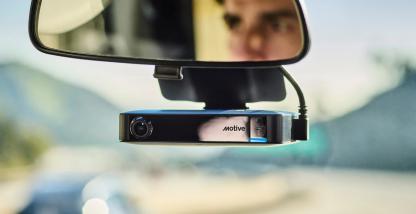
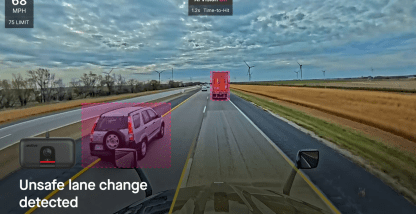
- Technical requirements include at least 1080p resolution, night vision, and a minimum of 72 hours of footage retention. Fleet-grade units like Motive’s AI Dashcam provide additional benefits, such as integrating with management platforms and holding up to 100 hours of video at HD 1080p.
- The vehicle owner is responsible for installation and maintenance, a duty that shifts to the lessee in lease agreements.
- Drivers are responsible for ensuring the camera is functional and unobstructed, making camera checks a necessary part of pre-trip inspections.
- Footage is protected under various laws, including B.C.’s Personal Information Protection Act; upcoming regulations will further define access protocols.
- The mandate likely applies to any in-scope truck on B.C. roads, including U.S. carriers transiting the Alaska Highway, regardless of where the vehicle is registered.
The Alaska angle
Based on the bill’s language, if you’re a U.S.-based carrier running the Alaska Highway, it likely applies to you. B.C. is the gatekeeper to Alaska. There is no road to Alaska that does not run through western Canada. The Alaska Highway, the old ALCAN, stretches roughly 1,300 to 1,390 miles from Dawson Creek, B.C., through the Yukon to the Alaska line. Every overland load moving between the Lower 48 and Alaska crosses B.C., and crosses an international border twice.
The rule keys on operating on a B.C. highway. It does not key on where the truck is plated. Nothing in it says “B.C. registered.” So a Texas or Washington carrier running a heavy load up the ALCAN to Fairbanks would fall under the recording requirement while it is on B.C. roads, just like a Surrey-based outfit. Non-resident is not a loophole because the Commercial Transport Act already regulates out-of-province trucks through its permitting framework, suggesting non-resident carriers would not be exempt.
Most Alaska freight by tonnage rides a barge out of Tacoma or Seattle, and federal data shows the land share is small compared to the sea. The road is the go-to for full-truckload, heavy equipment, oversized loads, flatbed and specialized work, time-sensitive freight, and some that is simply transiting Canada on a U.S.-to-U.S. trip. If that is your lane, plan to be compliant before the wheels touch B.C., not after a scale operator points at your windshield.
Remember, the Alaska run carries its own rules beyond this camera law. Cabotage still applies, so a U.S. carrier transiting Canada cannot pick up and deliver domestic Canadian freight along the way.
Your loads move under in-transit customs handling, and your drivers run under Canadian hours-of-service while they are north of the border, which are not identical to the U.S. rules. In 2025, B.C. Premier David Eby floated tolling U.S. commercial trucks transiting B.C. to Alaska as a response to U.S. tariffs. It never took effect, but it foreshadowed how the province might approach its situational leverage. B.C. knows it owns the only road, and it has shown it is willing to use that.
What the B.C. dash cam mandate means for your fleet
There are really three things to remember here:
1. First, figure out what is in scope.
That is every unit over about 26,000 lb GVWR that operates in or through B.C., including the Alaska runners. If you do not already have a clean list of which trucks touch B.C., that is the first thing to focus on.
2. Second, check whether the cameras you already run actually meet the spec.
Most fleets that already use cameras do not fail on having one or not. They fail on the details, usually retention or resolution. The rule is expected to require at least 72 hours of storage, at least 1080p resolution, night vision, and forward-facing capability. If your current setup falls short on any of those, that is your real gap, and it is a procurement and configuration problem, not an install-from-scratch problem.
Motive customers can run that audit from the platform. Your Motive Dashboard shows which trucks have active road-facing cameras and whether your device settings meet the retention and resolution specs. That turns a fleet-wide inventory into a 30-minute exercise instead of a week of spreadsheets and windshield checks.
To address gaps for a forward-facing mandate, the clean answer is a road-facing camera, and that’s exactly what Motive’s Road-Facing AI Dashcam is built for. It captures HD 1080p video with a wide field of view, and footage remains retrievable for up to 100 hours, clearing the 72-hour retention floor B.C. will likely be asking for. Storage will vary for newer models, like the road-facing AI Dashcam Plus, which shoots at 1440p on the zoom lens and 1080p on the wide lens. It also folds the camera and the Vehicle Gateway into one unit, so there is less to install and fewer potential points of failure.
3. Third, make compliance something your drivers and field teams are part of.
Put a camera check in the pre-trip. Define what happens when a camera goes offline mid-route. Sort out, in writing, that the recording duty sits with the lessee on leased trucks. The organizations that handle this well treat it as a process change with clear ownership across safety, operations, and maintenance, not just a box of hardware that showed up on the dock.
Motive’s platform supports that by surfacing camera health in real time. If a device goes offline or gets obstructed mid-route, operations and safety teams see it right away instead of finding out at the next pre-trip or worse, after an incident when the footage isn’t there.
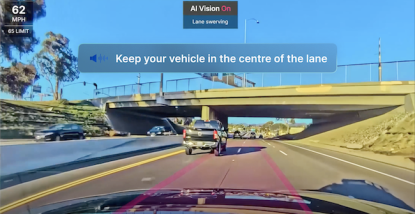
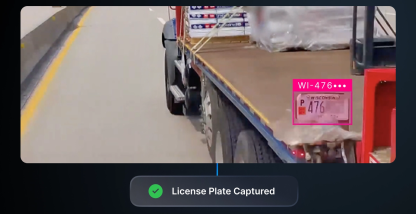
Another point is that the same camera that checks the B.C. box does not have to stop there. The Road-Facing AI Dashcam automatically flags more than 10 safety events in real time, and the Dual-Facing AI Dashcam flags more than 20. This can be the difference between footage you review after a wreck and a system that helps you prevent one. FMCSA recorded more than 5,400 fatalities involving large trucks in 2023, and regulators, insurers, and shippers are all leaning in the same direction. Plus drivers get exonerated where they aren’t at fault and also can get coaching to improve their driving and safety scores.
A mandate like this is a forcing function. Smart fleets use it to clean up exoneration, coaching, and claims handling at the same time, so the spend works twice.
Crucially: do not let the six-month runway lull you into complacency. Six months sounds like plenty of time until you factor in procurement, internal approvals, installation scheduling, policy updates, and driver communication. Start with the gap analysis now and you phase the rollout. Wait, and you turn every truck into an emergency the same week.
Keep an eye on the assent date, map your in-scope units, and make sure the hardware you already have actually meets the floor before the clock runs out.
Learn more about Motive’s dash cam offerings here, or reach out to our team to start preparing for Bill M217 now.
Motive serves 8,000 organizations with fleets across Canada and nearly 100,000 organizations globally. See how Motive’s compliance solution was ready “out of the box” for Canadian ELD regulations for STEP Energy Services.
Frequently asked questions
Six months after royal assent. The bill passed third reading unanimously on May 25, 2026, and the sponsor expected assent within days. That puts the likely compliance date in late 2026 or early 2027. The exact date depends on when the lieutenant governor signs off.
Commercial vehicles with a gross vehicle weight rating over 11,793 kg, which is roughly 26,000 lb. That means semis and heavy straight trucks. Light commercial vehicles, vans, and pickup trucks are not in scope. The weight floor was raised from 8,200 kg during the committee process.
Forward-facing only, pointed through the windshield at the road. It must record continuously whenever the truck is operating, retain at least 72 hours of footage, have night vision capability, and shoot at a resolution of at least 1080p. Driver-facing or in-cab cameras are not required.
Yes. As the bill is written, the requirement applies based on operating an in-scope vehicle on a B.C. highway, not on where the vehicle is registered, and the bill contains no stated intention for a non-resident exemption.
The vehicle owner. If the truck is leased, that responsibility shifts to the lessee. The driver or operator is responsible for making sure the camera is recording and unobstructed while the vehicle is in use.
No. The mandate is forward-facing only. If you run dual-facing equipment elsewhere in your fleet, Motive’s Driver Privacy Mode lets you control when the cabin lens is active, so the same hardware can work in both B.C. and jurisdictions where you want full dual-facing coverage.
The bill sets the rule but does not spell out enforcement or penalties. Those details will be written as regulations by the provincial cabinet after royal assent. Expect more specifics as the compliance date approaches.
It can, as long as it meets the reported spec: forward-facing, 1080p or higher, night vision, at least 72 hours of continuous recording retention, and the ability to record without interruption while the truck is operating. Most fleets that already run cameras find their gaps in retention or resolution, not in whether they have a camera at all.
The B.C. Trucking Association has pushed for a single federal standard through Transport Canada to avoid a province-by-province patchwork. If Ottawa requires other provinces follow suit, the spec you buy for B.C. may end up being the spec for the whole country.