

Real-time driver-to-dispatch communication helps organizations reduce delays, prevent safety incidents, and therefore, helps protect margins by closing the gaps between what’s happening on the road and what dispatch can see.
Modern live two-way calling solves this by giving dispatchers a direct in-cab voice channel through dedicated devices like the Motive AI Dashcam Plus, helping drivers respond hands-free.
What happens when dispatcher-driver communication breaks down?
When dispatch relies on personal phones, standalone radios, and unlogged text threads, information gets trapped in silos — driving higher costs, compliance risk, and unhappy customers.
Common impacts of poor dispatcher-driver communication
- Missed or late deliveries when drivers do not receive schedule or route changes in time.
- Excessive idle time and fuel waste while drivers wait for instructions.
- Route confusion and unnecessary miles when updates live in text threads, not the TMS.
- Mismanaged breakdowns or weather events when drivers cannot reach dispatch quickly.
- Customer dissatisfaction when status updates are delayed or inconsistent.
- More HOS violations and audit exposure due to incomplete or conflicting instructions.
Motive’s perspective: the durable fix is to move dispatcher-driver communication into a unified, auditable system that connects to your telematics, safety, and compliance data.
What is live two-way calling in fleet operations and how does it work?
Two-way calling in fleet operations is a live, hands-free voice connection between drivers and back-office teams through dedicated in-cab hardware, not personal phones.
With Motive, live two-way calling is built directly into the AI Dashcam Plus. Managers start a call from the Motive Dashboard or Fleet App, and audio plays through the dash cam’s speaker and dual digital microphones in the vehicle. Drivers answer and speak normally while keeping their hands on the wheel and eyes on the road.
Key elements of modern two-way calling:
- Dedicated device: The dash cam’s built-in speaker and microphones carry the call, so no one depends on a driver’s phone battery or cell plan.
- Hands-free interaction: Drivers can respond without touching a device; Motive is also rolling out “Hey Atlas” voice commands so drivers can initiate calls when they need help.
- Unified interface for dispatch: Calls launch from the same Motive Dashboard dispatchers already use to monitor vehicles and safety events.
Compared with fragmented radios and personal phones, this unified approach keeps every call inside a single platform that already knows the vehicle’s location, recent alerts, and trip history.
What are the key benefits of real-time driver-dispatcher voice communication?
Real-time driver–dispatcher voice communication gives fleets faster, clearer coordination than text or phone calls alone.
Because dispatchers can reach drivers instantly and see accurate, real-time context from the Motive platform on the same screen, they resolve issues in minutes instead of hours while reducing misunderstandings and escalations.
Core benefits
- Fewer missed or misunderstood messages: Voice calls cut through noisy notification streams and language ambiguity. Drivers can ask clarifying questions in real time instead of decoding a one-way text.
- Better ETAs and fewer customer escalations: When customers delay a pickup or change requirements, dispatch can contact drivers in seconds, adjust plans, and reset expectations with customers.
- More empathetic communication in high-stress moments: Incidents, near-misses, or equipment failures are easier to handle when drivers hear a calm voice instead of another notification.
Example of a real-time reroute flow
- Dispatch sees a major storm moving across a driver’s route.
- They launch a two-way call from the Motive Dashboard.
- They provide an updated route and safe stop options.
- The driver confirms the change and continues safely, without pulling out a phone.
Why does two-way calling work best when it’s integrated with telematics and fleet management?
Two-way calling delivers the most value when it is embedded in your telematics and fleet management platform, not bolted on as a standalone tool.
In Motive, live two-way calling is part of the Integrated Operations Platform that also manages driver safety, fleet management, equipment monitoring, spend management, and workforce management in a single system.
Advantages of an integrated approach
- Event-triggered outreach: Safety events and fault codes can prompt managers to call drivers immediately instead of waiting for drivers to report issues.
- Rich context in every call: Dispatchers see GPS, recent safety events, engine health, and trip history during the call, so they can give precise guidance rather than guesses.
- Automatic logging and audit trails: Calls sit alongside trip, safety, and compliance data in Motive, making it easier to reconstruct events during audits, insurance claims, or internal reviews.
Compared with radios or ad hoc phone calls, an integrated two-way calling system turns every conversation into actionable data that improves safety programs, route plans, and coaching over time.
How does hands-free calling improve safety and compliance?
Hands-free two-way calling improves safety by reducing distractions and helps organizations comply with increasingly strict mobile-device and distracted-driving regulations.
Drivers can talk with dispatchers without handling a phone or looking away from the road, which lowers distraction risk.
Compliance and safety benefits
- Alignment with hands-free rules: Because the AI Dashcam Plus carries the call via in-cab audio, drivers can communicate while staying within hands-free requirements in many jurisdictions.
- Fewer risky workarounds: Teams no longer “make do” with speakerphone calls or headset setups. Calling through Motive becomes the easiest path.
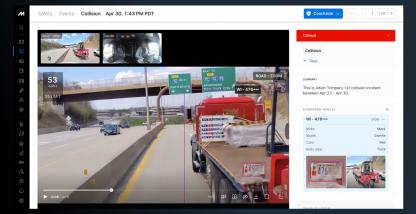
- Better escalation for safety issues: When a severe safety event or collision is detected, Motive uploads video and alerts managers, who can then call drivers and coordinate next steps in real time.
- Auditable data for CSA, insurance, and legal teams: Combined with event data and video, call records help fleets demonstrate due diligence, show how quickly they responded, and reduce dispute time and liability exposure.
What are best practices for implementing two-way calling in fleets?
A structured rollout helps organizations capture the benefits of two-way calling while maintaining driver trust and compliance.
The goal is to embed calling into existing workflows so it becomes the default way dispatch and drivers resolve urgent questions.
Step-by-step implementation checklist
- Integrate with your fleet platform: Use a solution like Motive where two-way calling is embedded in telematics, safety, and fleet management tools, not a separate system.
- Deploy hands-free, in-cab hardware: Install AI Dashcam Plus devices with built-in speakers and dual digital microphones so calls are clear even in noisy environments.
- Set clear communication norms: Train dispatchers to reserve calls for time-sensitive issues (safety events, weather, breakdowns, schedule changes) and keep instructions concise.
- Align with safety and compliance policies: Update driver handbooks to clarify when and how two-way calling should be used, and how it supports distracted-driving compliance.
- Provide resilient connectivity: Use dual-SIM connectivity in AI Dashcam Plus and existing network redundancy to keep calls available in more locations.
Features fleets should prioritize
- Hands-free interaction and strong in-cab audio.
- Tight integration with telematics, safety, and compliance tools.
- Configurable alerts and event triggers for calls.
- Call logging and audit trails tied to trips and drivers.
- Flexible settings that respect driver privacy and local regulations.
Key takeaways and next steps
Real-time, hands-free two-way calling closes the gap between dispatch and the road. It helps teams respond faster to hazards, breakdowns, and last-minute changes, while keeping drivers focused on the road and creating an auditable record of call activity.
By deploying two-way calling through Motive’s AI Dashcam Plus and Integrated Operations Platform, fleets can unify communication, safety, and telematics in a single system — helping teams see more, act faster, and prevent more accidents.
To see live two-way calling in action and understand how it fits into your dispatch workflows, schedule a tour of Motive Driver Safety and Fleet Management.
Frequently Asked Questions
What is two-way calling in fleet dispatch and how does it work?
Two-way calling in fleet dispatch is a live, hands-free voice connection between drivers and managers through in-vehicle hardware like the AI Dashcam Plus. Today, managers can start calls from the Motive Dashboard or Fleet App, and audio plays through the dash cam’s built-in speaker and microphones so drivers can respond without touching their phones. Soon, drivers will also be able to initiate calls by voice, making it even easier to reach dispatch when they need help.
How does two-way calling reduce missed messages and improve response times?
Two-way calling reduces missed messages by giving dispatch one reliable, in-cab channel that doesn’t depend on drivers hearing a ringtone or checking texts. Because calls are launched from the same platform that surfaces safety events and location data, managers can act immediately when hazards, faults, or schedule changes appear.
What features should fleets prioritize when choosing two-way calling solutions?
Fleets should look for hands-free operation, high-quality audio, tight integration with telematics and safety tools, reliable connectivity, event-triggered calls, and call logging. Solutions like Motive’s AI Dashcam Plus also add capabilities like AI-powered safety detection and dual-SIM connectivity, giving fleets both communication and risk visibility in one device.
How does two-way calling support safety and driver experience?
Two-way calling lets managers address fatigue, severe weather, and maintenance issues in real time without asking drivers to handle a phone.
It also gives drivers a fast, low-friction way to get help, which can reduce stress in high-pressure situations and strengthen trust in your safety program.
What proof is there that integrated safety and communication tools make a difference?
Motive customers using AI dash cams have reduced collisions by up to 80% and accident-related costs by up to 63%, and the AI Dashcam Plus builds on that foundation with live two-way calling and other advanced features.