

Paper-based or disconnected Driver-Vehicle Inspection Reports (DVIRs) create gaps in your fleet maintenance process and increase the risk of unexpected breakdowns. A driver might report a defect, but the inspection has limited value if the finding never reaches a maintenance workflow.
This article explains how to make the most of pre-trip and post-trip inspections by connecting them to maintenance workflows. You’ll also learn how Motive Maintenance connects real-time telematics data and driver logs to shop operations to help reduce risk and downtime.
1. Why inspection gaps can create safety and maintenance risk
Maintenance teams often keep inspection records, fault codes, and repair activity in separate places. These manual handoffs make it more likely that information will get lost.
The right team might not receive enough context to prioritize the problem. These gaps can delay escalation, make follow-up difficult, and leave defects unresolved, increasing safety and breakdown risks for drivers.
Before we explore how to connect inspections to maintenance workflows, see if your pre-trip inspections provide the right context.
2. What pre-trip inspections should capture
A pre-trip inspection should help determine whether a vehicle is safe and ready to drive. To capture the information maintenance teams need, follow these guidelines:
- Use a consistent inspection template. Drivers can follow the same process each time, and managers can review results consistently.
- Record defects in a structured way. Drivers should record what and where defects were found, and how seriously they affect the vehicle’s readiness.
- Capture enough detail for maintenance to prioritize and act. Drivers should describe the symptom or condition in enough detail for maintenance teams to act.
3. Use post-trip inspections to make the next dispatch decision
A post-trip inspection should use the same core checks. It should also answer: “Did anything change since the pre-trip inspection, and does anything need to happen before the next shift?” These inspection results help managers decide whether a vehicle is ready for its next assignment or needs maintenance attention first.
A post-trip inspection should accomplish these goals:
- Capture issues noticed during the shift. Drivers report new symptoms, damage, or defects that may not have been present at departure.
- Prevent unresolved issues from going unnoticed. The end-of-shift inspection creates a documented handoff for the next driver or maintenance team.
- Determine whether the vehicle is available for its next assignment. Major or safety-related findings should trigger escalation.
- Plan the next action. Decide whether the issue needs to be repaired immediately, can be monitored, or can be addressed at the next scheduled service.
4. Connect inspection findings to maintenance workflows
Inspections create value when teams turn defects into tracked maintenance work. After a post-trip inspection, maintenance teams should move findings into a trackable workflow.
In Motive, inspection findings flow into the maintenance workflow where teams can review issues, assign repairs, and track work through completion.
Teams can use Work Order Automations, to create work orders from unsafe inspections, major defects, critical fault codes and service reminders.*
5. How to prioritize and escalate defects
Once inspection data is in the workflow, teams need a consistent way to decide what to address first. Use the suggestions below to create a maintenance triage process.
| Finding | Recommended response | Operational outcome |
| Unsafe inspection or major defect | Escalate immediately and evaluate whether the vehicle should be out of service. | Prevent the issue from carrying into the next dispatch. |
| Critical or high fault code | Review alongside defect and availability context. | Prioritize diagnostics or repair. |
| Minor defect with no immediate safety impact | Track and schedule or bundle with planned work. | Avoid losing the issue while protecting uptime. |
| Scheduled service due or overdue | Schedule the work or bundle it with planned maintenance; escalate if it’s overdue or linked to a safety concern. | Keep preventive maintenance on schedule and reduce avoidable downtime. |
| Issue already under repair | Review the existing work order before creating another. | Prevent duplicate or disconnected work. |
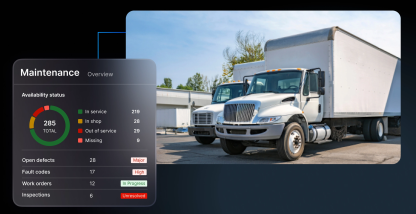
The Health view in Motive Maintenance brings together availability, defects, fault codes, and scheduled services, then sorts units by urgency and shows severity context. Managers can use that context to prioritize repairs.
6. Verify repairs and close the loop
The final stage in the inspection-to-repair process is to verify completion. Managers should confirm reported issues were actually resolved and keep unresolved issues open for follow-up. An effective process looks like this:
- Drivers report defects.
- Managers prioritize them using vehicle and maintenance context.
- Maintenance teams assign and complete repairs.
- Managers confirm repairs before the vehicle returns to service.
In Motive Maintenance, once confirmed issues are marked resolved, completed service tasks flow into Service History and Operating Cost. This preserves repair history for future maintenance decisions.
Bringing it all together into one maintenance system
An inspection creates operational value — reduced risk and downtime — when teams turn defects into a prioritized, tracked, and verified repair. Prevent reported defects from losing momentum by closing the loop from inspection to repair.
Ready to make the most of your pre-trip and post-trip inspections? See how Motive Maintenance connects inspections, vehicle health, and repairs in one workflow for organization with fleets.
*Motive Fleet Management includes Inspections, AI Fault Codes, Health Insights, Scheduled Services, and Service History. The paid Maintenance subscription adds the full workflow layer, including Work Orders, Work Order Automations, Overview, Operating Cost, Parts and Inventory, and advanced maintenance features.
Frequenty asked questions
Should pre-trip and post-trip inspections use the same checklist?
Yes, pre-trip and post-trip inspections should share core safety checks, but they serve different purposes. A pre-trip inspection confirms whether a vehicle is safe and ready to operate. The post-trip inspection records what changed during the shift and creates a handoff for the next driver or maintenance team. Adjust your checklists to match those goals.
How should teams decide whether an inspection defect needs immediate repair?
Teams should prioritize defects by safety risk, compliance impact, likelihood of breakdown, vehicle availability, and repair urgency. A safety-related or major defect may require immediate escalation and an out-of-service decision. A minor issue could be scheduled, monitored, or bundled with planned work, as long as it remains visible and assigned.
How can fleet inspection data help teams identify recurring maintenance problems?
Inspection data can reveal recurring problems when teams review defects by vehicle, component, severity, and timing, then compare those patterns with repair history and scheduled service. Repeated findings may point to a maintenance interval, operating condition, or repair-quality issue that needs attention.
How should teams handle unresolved vehicle defects at a shift change?
Unresolved defects should remain visible in a documented handoff until the assigned owner confirms the next action. The handoff should identify the affected vehicle, defect, current safety status, owner, and repair or monitoring plan. Before the next dispatch, managers should decide if the vehicle is safe to drive.