


For commercial fleets, IFTA fuel tax reporting can feel like a quarterly fire drill, especially for operations with less than 50 vehicles, where one person may be juggling driver questions, dispatch changes, maintenance approvals, and IFTA reporting all at once.
When distance, fuel transactions, and tax data all live in one, unified platform, audit-ready IFTA reporting happens automatically, not as a separate project that consumes your team’s attention four times a year.
In this blog, we’ll look at how an AI-powered platform can simplify the IFTA filing process, help control fuel costs, and turn IFTA fuel tax reporting into an operational advantage.
Why IFTA fuel tax reporting is strategic for small fleets
On paper, IFTA filing is just a fuel tax requirement. In practice, it shapes where you run, how you fuel, and how efficiently your drivers and lanes perform.
For fleets with less than 50 vehicles, that work usually lands on a very small team. The same person handling driver questions, dispatch changes, and maintenance approvals is often the one exporting mileage reports and tying them back to fuel receipts.
Even if you already use electronic logging devices and a fleet card, the IFTA reporting process can feel fragmented when you have to reconcile data across three or four systems just to file every quarter.
That fragmentation is where the real risk lives. If your fuel data doesn’t line up with your miles, it’s difficult to be truly audit-ready. That’s why IFTA reporting is strategic. It’s not just about filing on time. It’s about giving you a reliable, repeatable way to connect compliance data with everyday operating decisions, turning a recurring task into a source of visibility and control.
From fragmented tools to a unified operations platform
When IFTA data is trapped in forms and PDFs, it’s helpful for filing taxes. Inside a unified platform, it becomes a new way to understand the health of your routes and drivers.
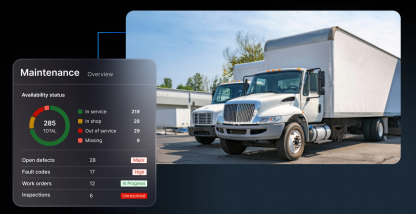
Forward-thinking organizations with fleets use automated IFTA reporting to go much further than basic compliance. By leveraging a unified platform, fleet managers can seamlessly pull each driver’s monthly miles and compare them directly against revenue. They can also consolidate the process by bringing all fuel data directly into the same system.
Here’s how a unified approach simplifies the process:
- Automated jurisdiction tracking: Instead of piecing together mileage data at the end of the quarter, distance traveled across state lines is automatically captured in the background. You get accurate data without the manual workload.
- Fuel transactions that match your miles: Eligible purchases sync in real time when using tools like the Motive Card. Drivers can easily upload missing receipts right from the driver app, while the back office gets a clean, consolidated view in the fleet dashboard.
- A shared operational foundation: Because your fuel tax reporting lives in the same place as your dispatch, safety, and compliance tools, you get complete visibility, and everyone stays on the same page.
“Our compliance IFTA regulation, I said ‘How much time does Motive save you?’ He said, ‘It saves me 20 hours a month.’ It’s so accurate, he’s able to pull that report — and he’s done like that.
Inside Motive’s unified IFTA workflow
For smaller fleets, the quality of the workflow helps shape compliance, influencing how much time the back office spends chasing information and how confidently teams can file. When your process flows, IFTA reporting becomes a reliable part of how the business runs.
Here’s how Motive brings the core pieces of IFTA reporting together in one workflow.
Accurate distance by jurisdiction, captured automatically
The Motive Vehicle Gateway uses GPS and odometer data to track how far each vehicle travels in each IFTA jurisdiction, every day. That history is stored centrally in the Motive Fleet Dashboard, and it’s ready in minutes.
Fuel and spend that actually match your miles
Mileage is only part of the IFTA reporting process. When fuel data lives in a separate system from other data, smaller fleets can lose hours reconciling information.
Architectural Surfaces, a natural stone, quartz, and tile product company, felt that pain with a previous fleet card. Transaction reporting and billing didn’t line up, leading to long nights and complicated IFTA filing.
“It created a lot of chaos for our IFTA reporting, and ended up costing us when it came time to file.
Since switching to the Motive Card and consolidating spend data on the Motive platform, Architectural Surfaces has been able to create IFTA fuel tax reporting directly from the Motive Dashboard, with accurate, consolidated fuel data. The team has achieved a 5% reduction in fuel costs, proof that aligning spend and mileage on the same platform can lead to meaningful savings.
When drivers use the Motive Card, every eligible fuel transaction is captured and tagged in the same platform that tracks your miles. That’s why the card is a core part of automated IFTA reporting on the Motive platform.
Audit-ready reports in a couple of clicks
For many small fleets, mileage reports from other providers can be difficult to access. They often require going through a billing or accounting contact who handles IFTA and fuel tax payments. With Motive’s IFTA summary, teams can generate the report themselves in just a couple of clicks.
Fleet and compliance leaders log into the Motive Dashboard, pick a date range, and generate IFTA summaries themselves. There’s no need to open a ticket, wait on billing, or hunt down a file.
Eliminating screenshot ‘proof’ with data auditors actually want
Even when small organizations have telematics, they don’t always have the IFTA-ready records auditors expect. That’s what happened at A&W Warehousing & Logistics.
To prepare for audits, the team took daily map screenshots for each vehicle as “proof” of mileage. That process was time-consuming to maintain, difficult to search or summarize at the quarter’s end, and out of step with IFTA’s expectation for electronic distance records.
With Motive, A&W replaces screenshots with data points like these:
- GPS-based tracking that automatically records state and province border crossings
- Jurisdictional mileage per truck, calculated in the background
- Exportable reports in CSV or XLS format that auditors can review in seconds
“We file IFTA monthly for Oregon and quarterly for other states. Currently, someone does daily map screenshots for each truck as proof of mileage for audits. We want to eliminate that extra work by downloading a report from Motive with mileage per truck, synchronized with IFTA at month- or quarter-end.
Unifying safety, maintenance, and spend data to streamline IFTA
For organizations with fleets of less than 50 vehicles, the real leverage comes from connecting every piece of IFTA reporting on the same platform that already runs your safety, maintenance, and spend programs. When you unify all your data in one place, you get a consistent, audit-ready workflow that scales as the business grows. And you can turn a recurring task into a steady source of insight and savings.
Ready to see how that looks in your own operation? Get a tour of the Motive platform and let IFTA reporting work for you.