


Thousands of people are killed every year in traffic accidents, and the costs of an accident are high, especially when large trucks are involved. These dangers make it well worth it to improve or invest in fleet safety culture.
Building a safer fleet is about more than just preventing accidents, although that’s the most important reason to do it. Safer driving can save a company millions of dollars, while increasing long-term operational stability.
Gaining buy-in from leadership and drivers
Before you install a single piece of equipment, fleet safety begins with people. You’ll need enthusiastic buy-in from two key groups: the leadership team who will approve the investment and the drivers at the center of the program.
Making the business case to leadership
For company leaders, a fleet safety program is a strategic decision. To get their full support, frame the investment in a safer fleet as a direct driver of profitability and risk reduction. When talking to leadership, lead with the financial gains:
- Boosting the bottom line. Safer driving directly translates to savings. Motive customers surveyed reported a 20% annual savings on maintenance and fuel expenses, driven by the same behaviors that reduce accidents.
- Controlling insurance costs. A proven safety program is one of the most effective ways to lower insurance premiums. Motive customers reported saving, on average, 21% annually on insurance expenses by demonstrating a commitment to reducing risk.
- Exonerating drivers. With jury verdicts in large truck collisions averaging $22 million, an investment in proactive safety with tools like dash cams can protect drivers and your company against the costs of litigation.
Earning trust with drivers
For drivers, the buy-in conversation is about protection and fairness. Understandably, drivers are wary of being watched. Tackle their concerns head-on and show them how this program is a tool that’s working for them.
- Emphasize exoneration. The single most powerful tool for earning trust is video evidence that proves a driver’s innocence. With Motive dash cams, 80% of Motive customers have reported they were exonerated for not-at-fault accidents.
As Tilcon’s Concrete Division Manager Don Penepent said, “With the Motive cameras, it took us about 17 seconds to understand what happened and exonerate our driver. Motive has taken the guesswork out of it. We did change that driver’s opinion. He’s happy he’s got a camera in his truck.”
- Focus on fairness and accuracy. Drivers need to trust the technology. Fewer false positives mean drivers know that when an alert sounds, it matters.
- Reassure them about retention. A common fear is that experienced drivers will quit. Motive data shows this isn’t the case. In a 2023 study, we found no retention difference between fleets using dual-facing cameras and those with no cameras at all. In fact, 91% of Motive customers surveyed reported that they saw less than 5% driver turnover after adopting dual-facing cams. As driver Greg Vander Heide of Wessuc Inc. puts it, “This camera’s there for my protection.”
As you establish buy-in for improving driver safety, emphasize the three best ways to establish a solid culture of fleet safety.
3 steps for a stronger fleet safety culture
1. Start capturing clear video footage
The foundation of fleet safety culture is data: Data on how drivers are driving, how the vehicles around them are driving, and the behaviors that drivers are practicing. One of the most successful and important ways to get that data is through clear video footage.
High-definition video from every angle of the vehicle is a huge help in creating a true safety culture. It’s the backbone for understanding how drivers operate. Use video clips to provide timely feedback, reward safe driving behavior, and even exonerate drivers.
Here’s how three Motive customers are using dash cam video to improve safety.
Encore Coaches uses video data from dash cams to keep drivers accountable, as well as exonerate them when they’re not at fault.
Reliable Carriers won’t let their drivers go out on the road without a dash cam installed.
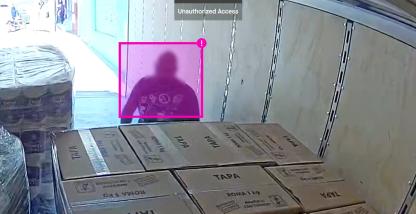
Klapec uses Motive cameras to document the safety of their trucks, both when drivers are on the road and when the fleet is at rest to prevent vandalism and theft.
Look for cameras that:
- Provide HD footage of the road, the driver, and everything around the vehicle
- Use computer vision AI to detect unsafe and positive driving behaviors
- Provide in-cab alerts to coach drivers in the moment
Next, see how AI-powered video footage can improve fleet safety culture in real time.
2. Provide personalized, timely feedback to drivers on critical unsafe behaviors
In-the-moment feedback is crucial to creating a safe fleet culture. One of the best ways to provide this type of feedback is to use video footage and AI in tandem. According to Motive’s Physical Economy Outlook 2024, 64% of leaders say AI is crucial for preventing accidents and coaching drivers.
So how does it work? An AI dash cam uses computer vision to see and understand what’s happening on the road.
Motive’s AI Dashcam can detect 15+ safety events, including close following, cell phone usage, and stop sign violations. Managers can choose which events to detect and the threshold at which they’re detected. When an unsafe behavior exceeds the threshold, it triggers an in-cab alert to the driver. Managers can also receive alerts and review the safety event.
These in-cab notifications work to curb unsafe behaviors. For example, Hawx Pest Control has reduced cell phone usage by 88% using Motive dash cams.
3. Use trends to create a data-based coaching program
While real-time alerts are key to a safe fleet, video and telematics data support a data-based coaching program. According to Motive’s latest State of Safety Report, companies that have implemented a driver coaching program see major safety improvements:
- Fewer unsafe driving behaviors (56% of respondents)
- Fewer accidents (53% of respondents)
- Insurance savings (44% of respondents)
Those using dash cams as part of their fleet safety culture find that they further reduce unsafe driving behaviors and insurance premiums.
5 elements of an effective driver coaching program
Consider these best practices for building a coaching program.
- Base feedback on trends. Giving feedback based on trends seen in the data, rather than one-off incidents, will do more to improve safety. The Motive Safety Score evaluates driver safety performance over time for an accurate measure of driver risk across 15+ unsafe and positive driving behaviors.
- Reward drivers for practicing safe behaviors. Review positive driving behaviors first to help drivers be more open to feedback. In addition, pair driving insights with a rewards program to further incentivize driver safety. Motive automatically identifies positive driving behaviors such as safe distancing and alert driving. With this pre-work done, safety managers don’t have to spend time combing through footage.
- Stop false positives from alerting drivers. At Motive, our 400+ person Safety Team reviews every safety event to remove false positives. Their work means drivers aren’t penalized for mistakes they didn’t make. See how Motive’s driver coaching process works.
- Enable drivers to self-coach. Drivers can use the Motive Driver App to review their own safety events. Customizable self-coaching behaviors and engaging training videos increase the benefits of a safety program.
Automate the coaching session. Fleets take 16 days on average to coach a driver after an event. Get safer faster by using Motive’s AI Coach to provide personalized feedback based on each driver’s safety events and score.
Want more advice? Two Motive customers — Rob Fountain of Germaine Distributors and Daniel Patterson of Western Express — shared best practices about building an effective driver coaching program.
Watch now: Level up your fleet: Key takeaways from Motive’s Vision 25 breakout on driver coaching.
Build safety into every part of the business
A truly effective safety culture should be integrated into every part of the business. Dash cam data is powerful. But it becomes even more valuable when it’s plugged into a single platform that connects safety to everything else — maintenance, fuel spending, and overall productivity
Here’s how a unified approach makes a fleet even safer:
- Connect safety events to maintenance needs. A harsh braking event isn’t just a safety coaching moment. It’s also a sign of premature wear on tires and brakes. A unified platform connects that safety event to the vehicle maintenance schedule, getting ahead of maintenance and preventing costly downtime.
- Link driver behavior to fuel spend. The same behaviors that contribute to accidents, like speeding and rapid acceleration, also waste fuel. Coaching these behaviors improves safety and directly lowers fuel costs. Motive customers surveyed reported saving 20% on fuel annually, and our integrated platform helps you understand how your driver behavior affects fuel.
- Automate compliance and reduce administrative work. A unified platform automates cumbersome processes like HOS tracking and IFTA fuel tax reporting. Automation saves countless hours on manual paperwork, freeing up teams to focus on high-impact work like driver coaching and rewards. With Motive, 73% of customers surveyed said Motive has helped them reduce HOS violations. Since implementing Motive, the same customers say they now spend 35% less time on back-office tasks.
Safety affects every part of the business. This knowledge means fleet safety becomes more than just a ‘safety thing’. Improving safety is a powerful way to make an entire operation more efficient and profitable.
Treat safety as a revenue generator, not a cost center
Ultimately, treating safety as a revenue generator is a fundamental shift in perspective. A comprehensive fleet safety culture, built on leadership buy-in, driver trust, and a unified technology platform, moves your business from a reactive state of managing incidents to a proactive one that generates value. You’ll avoid millions in potential losses and build a more resilient, efficient, and profitable operation that attracts and retains the best drivers on the road.
Want to see Motive Driver Safety in action? Watch a short demo.