
If an operation still runs on paper timecards, group texts, a wall of whiteboards, and a spreadsheet only one person really understands, it’s in good company — roughly a third of fleet managers still rely on spreadsheets to run the day. It works, right up until it doesn’t.
Manual processes don’t fail loudly. They fail slowly. A missed text about a job-site change. A timecard that shows up three days late. An hour every morning spent tracking down where a machine ended up. None of it is a crisis on its own. But it adds up, and the bigger an operation grows, the more it costs.
Here’s the good news: modernizing doesn’t mean ripping everything out and making a crew learn ten new tools overnight. The smartest operations move from spreadsheets to connected operations one practical step at a time.
The real cost of paper and spreadsheets
Manual processes share one weakness. The information exists, but it’s scattered, late, and hard to trust. When data lives in a dozen places — a clipboard in one truck, a text thread on someone’s phone, a spreadsheet on the office desktop — nobody has the full picture, and everybody wastes time stitching it together.
That shows up as real cost:
- Time lost to admin — hours every week chasing paperwork and re-keying timecards into a spreadsheet. Southland Steel Fabricators put a number on it: after digitizing dispatch with Motive, they eliminated a week’s worth of monthly time spent hunting down the right information about their trucks.
- Decisions made on old information — by the time the whiteboard is updated, the job site has moved on. You’re managing yesterday.
- Blind spots that cost money — tracking equipment location in a spreadsheet means you don’t actually know where your machines are right now. That’s idle equipment, missed utilization, and the occasional “wait, where’s the skid steer?”
- Knowledge stuck in one person’s head — when the process depends on the one person who knows how the spreadsheet works, you’re one vacation away from a problem.
The team is good at their jobs. They’re just spending that skill fighting the process instead of running the work.
The most important shift: from disconnected tools to one source of truth
Connected operations means people, equipment, and data all work from the same source of truth instead of a pile of disconnected tools. Instead of a timecard on paper, a location in a spreadsheet, and a safety note in a text, it’s all in one place — visible in real time, to the people who need it.
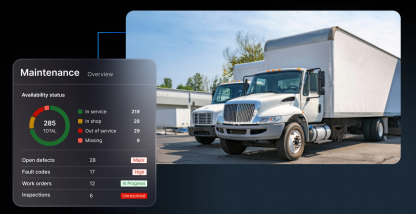
The payoff is concrete. When Ernst Concrete brought maintenance and fuel spend into one dashboard, they could finally see per-vehicle cost in a single view instead of hunting across separate systems. That’s the difference:
- Timecards captured automatically instead of hand-entered
- Equipment and vehicle location visible at a glance instead of guessed at
- Job-site updates reaching the crew in real time instead of through a game of telephone
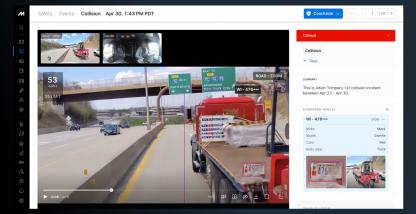
- Safety, fleet, and equipment in one view instead of four systems that don’t talk to each other
The result goes beyond tidier data: hours handed back to a team every week, decisions made on what’s happening now, and a lot less “I didn’t get that message.”
How to modernize without overwhelming your team
This is where most efforts succeed or stall. Try to change everything at once and you’ll overwhelm the crew, spook the office, and stall out. The operations that make it treat modernization as a series of small, provable wins:
- Start with the biggest pain point, not everything at once — pick the one process that costs the most time, usually timecards or knowing where equipment is, and fix just that. Standardize a few non-negotiables first and build from there.
- Meet the crew where they are — the best tools feel familiar fast. Pick something operators can learn in minutes, not something that needs a training week. Modernization that adds friction to a crew’s day won’t survive contact with the job site.
- Prove it small, then expand — roll out to one crew or one location. Let them work out the kinks. Use their success to bring the next group along.
- Celebrate the early wins out loud — when the office saves hours on payroll or a manager finds a machine in one glance, say so. Visible wins turn skeptics into advocates.
- Let the system grow with you — you don’t have to connect everything on day one. Start with one workflow and add the next as the team gets comfortable. It’s how Hardy & Harper scaled operations while boosting safety and reducing spend.
What this means for the business
The first step is smaller than most leaders think. Moving from paper, texts, and spreadsheets to one connected construction operations system starts with a single step: pick the workflow costing the most, replace it with something the crew can actually use, and build from there.
Done right, modernizing gives a team back the time they’re losing to manual work — and gives leadership a clear, real-time picture of the business they’re actually running today.
Additional resources