

An organization can have telematics and still experience avoidable downtime. Data can show that a problem exists, but teams also need a clear way to review the issue, decide what to do next, and keep everyone informed.
When inspection defects, service schedules, fault alerts, and availability information are difficult to connect, maintenance teams spend more time searching for information and coordinating work. A connected maintenance workflow brings those activities together so organizations can stay ahead of issues and keep vehicles and equipment moving.
Motive helps organizations manage inspections, schedule service, monitor vehicle and equipment health, and track maintenance information from one platform. These tools can help teams identify issues earlier, reduce delays, and make more informed maintenance decisions.
Why maintenance data needs a workflow.
Telematics and inspection data can provide important information about vehicles and equipment. Teams still need to understand the information, prioritize the response, and communicate the status to the people responsible for the next step.
A connected maintenance workflow can help organizations:
- Create detailed inspection records.
- Track defects and their severity.
- Schedule maintenance based on time, mileage, engine hours, or other factors.
- Review fault-code alerts with more context.
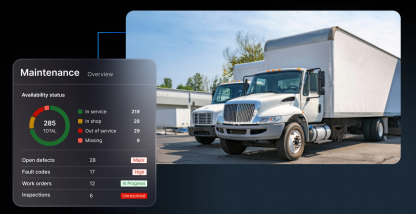
- Monitor availability and out-of-service status.
- Keep drivers, dispatchers, and maintenance teams working from current information.
5 strategies for using connected maintenance data.
1. Review fault alerts before issues become larger disruptions.
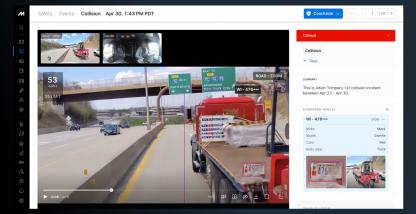
Motive’s maintenance tools provide detailed fault-code alerts and help organizations monitor information such as speed, fuel, fault codes, battery voltage, coolant temperature, and engine data through connected hardware.
Reviewing fault information can help managers understand what may be affecting a vehicle and decide whether it needs attention. It does not eliminate every mechanical failure, but it can give teams more information when they are deciding how to respond.
2. Schedule service around how vehicles and equipment operate.
A fixed calendar does not always reflect how an organization uses its vehicles and equipment. Maintenance needs can depend on mileage, engine hours, time elapsed, and the type of work an asset performs.
Motive provides maintenance reminders based on mileage, engine hours, and time intervals. Using more relevant service intervals can help teams plan recurring work instead of relying on memory or separate spreadsheets.
3. Use inspection and availability information to prioritize work.
Detailed inspection records help teams document defects, severity levels, and resolution information. Maintenance tools also help managers view the availability of vehicles and assets, including how long an asset has been in or out of service.
When a severe defect is found, teams can mark the vehicle out of service and prevent it from being assigned until the issue is resolved. This gives dispatch and maintenance teams a clearer view of which units need attention before they return to operation.
Motive also supports customizable inspection templates, required information, photo attachments, and digital documentation for roadside inspections and audits.
4. Keep maintenance teams connected to the work.
Maintenance information is more useful when the people involved can see updates and respond to them. Motive centralizes inspection and service activities so drivers, dispatchers, and maintenance managers can view updates, leave notes, resolve issues, and share status changes or supporting evidence.
Organizations can also use maintenance integrations to connect Motive with other systems when they need a broader maintenance workflow. The right setup depends on the organization’s existing tools, processes, and communication needs.
5. Maintain a clear record of service activity.
A maintenance issue should not disappear after a repair or service visit. Teams need to know what was found, what action was taken, and whether the vehicle or equipment is ready to return to service.
Motive lets organizations add notes, photos, and documentation to inspections and service records. Service notes and attachments become part of the maintenance history for the associated vehicle or asset, giving teams a record they can reference later.
What should a connected maintenance system include?
A connected system should help teams identify, plan, document, and communicate maintenance work. Look for capabilities such as:
- Inspection templates that can be customized for the organization’s requirements.
- Defect records with severity and resolution information.
- Maintenance reminders based on mileage, engine hours, time.
- Fault-code alerts with enough detail to guide the next review.
- Vehicle and equipment availability information, including out-of-service history.
- Digital records with notes, photos, and supporting documentation.
- Integrations that connect maintenance information with other systems when needed.
Feature availability can vary based on the vehicle, equipment, connected hardware, and configuration. Confirm that the available tools support the organization’s asset types and maintenance processes.
How to connect maintenance data to the next decision.
Organizations do not need to change every maintenance process at once. Start with the workflow where missing or delayed information creates the most friction.
- Map one recurring issue from detection to resolution.
- Identify where someone searches for or re-enters a defect, service date, vehicle identifier, or status.
- Decide which system should hold the current maintenance record.
- Standardize key fields such as vehicle identifiers, mileage, engine hours, defect severity, and service status.
- Configure alerts and reminders that match the organization’s maintenance process.
- Keep people responsible for safety and repair decisions involved in the review.
The goal is not to connect every data source immediately. The goal is to help the team make the next important maintenance decision with less searching and less back-and-forth communication.
How should teams measure the impact?
Connected maintenance data should be evaluated through operational measures rather than assumed outcomes. Establish a baseline and measurement period before changing the workflow.
Useful measures include:
- Vehicle and equipment availability.
- Time and monetary cost of unscheduled downtime.
- Hours spent on manual data entry and reconciliation between systems.
- Time from defect detection to review.
- Time from service reminder to completed service.
- Repeat repairs or recurring defects.
- Out-of-service frequency and duration.
- Time spent searching for maintenance information.
- Completeness of inspection and service records.
These measures will not eliminate every mechanical failure. They can help teams understand whether the maintenance process is becoming more consistent, easier to manage, and better documented.
How to get started with Motive Maintenance.
If an organization already uses telematics but still relies on disconnected maintenance processes, start with one recurring service need or one common defect.
Identify where the issue first appears, who needs to act, and what information they need to complete the next step. Then look for the workflow connection that can help the team review the issue earlier, schedule service more consistently, communicate status changes, or maintain a complete record.
Motive maintenance tools help organizations manage inspections and scheduled service for vehicles and equipment, monitor fault alerts, track availability, and maintain digital records. The result is a clearer way to stay ahead of maintenance issues and reduce avoidable delays.
Explore Motive Maintenance to see how connected fleet maintenance data can help maximize uptime and control costs.
Frequently asked questions
What types of maintenance activities can Motive help manage?
Motive helps organizations manage several maintenance activities, including:
- inspections and defect records
- scheduled service based on mileage/engine hours/time
- out-of-service tracking
- shop workflows (work orders, parts, inventory)
- and cost control (operating spend, warranty tracking).
Motive also helps manage shop workflows with work orders, parts and inventory management, and control costs with operating spend insights and warranty eligibility tracking.
How can maintenance data help reduce downtime?
Maintenance alerts, service reminders, inspection records, and availability information can help teams identify issues earlier and respond with more context. Keeping unresolved defects visible can also help teams follow up before a vehicle or asset returns to operation.
Can inspection templates be customized?
Yes. Organizations can build inspection templates or use preconfigured options. Templates can include required information, instructions for inspection steps, photo attachments, and requirements related to previous inspections.
How does Motive handle severe inspection defects?
Drivers can record defects and indicate their severity in the inspection workflow. Vehicles with severe defects can be marked out of service and prevented from assignment until the issue is resolved.
Can maintenance teams share updates and supporting information?
Yes. Drivers, dispatchers, and maintenance managers can view updates, leave notes, resolve issues, share status changes, and attach supporting evidence within the maintenance workflow.