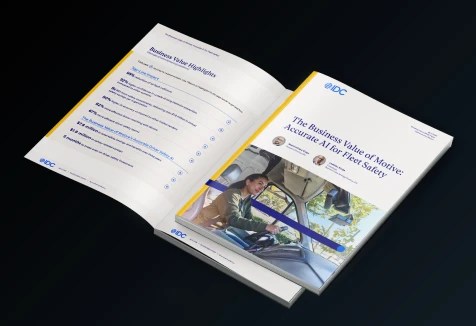


Research from 351 fleet organizations suggests the costliest problems share a cause: the time between spotting something and fixing it. The 2026 Motive ROI Report reflects an online survey of 351 current Motive customers across North America, conducted June through August 2025. Figures are labeled as all respondents, internal data, or top respondents (the top 25% ranked by reported ROI outcomes). IDC figures come from the IDC Business Value White Paper, sponsored by Motive, “The Business Value of Motive: Accurate AI for Fleet Safety,” doc #US54413826-BVWP, April 2026, based on structured interviews with six organizations. Individual customer results are specific to the organizations cited.
Ask a fleet leader what’s worrying them, and you’ll get a similar list every time. In Motive’s 2026 ROI research, 70% of respondents named worker safety among their biggest challenges, and 69% named rising costs. Regulatory changes followed at 48%, operational efficiency at 42%, and labor shortages at 30%.
Every item on the list describes a problem fleets already have the data to see.
Vehicle telematics can report position continuously. Fuel purchases create records. Inspections, fault codes, and safety events are recorded in systems somewhere. The trouble is that “somewhere” is usually multiple systems. Opportunities — and money — are lost in the hours or weeks between an alert and a response.
For instance, consider how a worn brake pad gets found. Sometimes it turns up during a scheduled service, gets replaced inside an hour, and no one thinks about it again. Other times, though, the first anyone hears about it is a driver calling in from the shoulder of the road, and by then the bill includes towing and the cost of the missed route. The maintenance alert that could have caught it earlier might have been sitting in one of the fleet’s systems.
The delay between detection and action has a price tag.
International Data Corporation interviewed six organizations using Motive’s AI-powered driver safety tools, averaging 1,000 vehicles and $250M in revenue, and built a three-year financial model from their reported costs and benefits. Those organizations reported an average 95% reduction in at-fault collisions, more than 8x return on their safety investment, and more than $1.8 million in annual safety savings each.
IDC linked those results back to accuracy. Accuracy is what makes a manager trust an alert enough to act on it, and inaccurate AI leads to missed events, false positives, alert fatigue, and driver disengagement. A system that alerts too often or inaccurately can teach people to ignore it, and an ignored alert can be as costly as no alert at all.
The survey data points the same way. Motive customers reported reaching ROI in an average of five months, and organizations running 1,000 or more vehicles reported 2.5 months. Larger operations reported faster payback. That kind of result is possible because the delay caused by not having a platform cost more than investing in and implementing a system designed for visibility and action.
Which fleet problems come from acting too late?
Many of the challenges plaguing leaders can be alleviated through earlier action. Rising costs, manual work, reactive maintenance, underused equipment, stalled safety programs, and unproven technology value all share the same core issue: the information existed but due to visibility issues, the action came too late.
Fuel waste, unauthorized spend, and missed rebates can look trivial as individual transactions. Teams might not detect them until a later reconciliation. When manual work is routine, the costs can be invisible until someone measures it. Top respondents to the survey reported reclaiming up to 25 hours a week once they addressed manual work blockers.
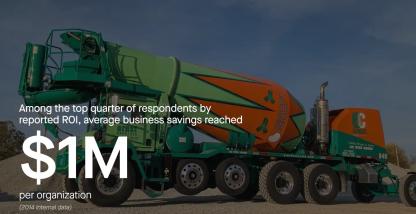
Solving this visibility-to-action problem can be worth a lot to a fleet operation. Among the top respondents, average business savings reached $1M per organization. At Ernst Concrete, Director of Risk and Safety Paul Fly put his organization’s number at roughly $1.3M saved annually in direct losses, about $6.5M once downtime, injured employees, and legal expenses are counted, which he calculated as a 2,000% return.
What should you ask a fleet technology vendor?
Ask which specific delay the product is designed to reduce and how the vendor measures it. Most evaluations start with price and feature lists. Those details matter, but predict very little about return.
Three delays are worth quantifying before any purchase, because a fleet can measure each one today and check it again a year later.
- How long passes between a safety event and a coaching conversation? Fleets take 16 days on average to coach a driver after an event. Motive’s approach is to generate the session automatically instead of scheduling it, and Motive reports that AI Coach has cut coaching time in half and returned over 100,000 hours to managers since launch. The reported performance gains — 8x more safety score improvement and a 50% drop in total events — apply to drivers who actively review their sessions. Fleets should treat driver engagement as part of the implementation plan.
- How long does it take to find a specific asset, and who stops working during the search? A cable-powered Asset Gateway Mini sends minute-by-minute location updates. Battery-powered units check in on a schedule the admin sets, with an on-demand option for an immediate position. Geofence alerts notify teams when an asset enters or leaves a site. How much of a difference that makes depends on how assets are powered and how the alerts are configured.
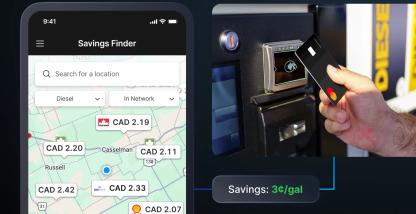
- How long does an unauthorized transaction sit before anyone notices? Because Motive Card and telematics data share a platform, the system can compare what was pumped against what reached the tank and decline a transaction that falls outside policy. Missed Savings flags rebates a fleet did not capture, which Motive estimates is worth up to 5% on fuel. Actual savings will vary with fuel volume, routes, and how spend policies are set.
Find the value your fleet technology may be missing.
The 2026 Motive ROI Report covers what organizations operating fleets reported across safety, fleet management, equipment monitoring, and spend management.