


Running a fleet has always brought risk. What’s changed is where it shows up: in the courtroom, in your insurance rates, at the pump, and in how consistently your standards are followed.
Organizations have more technology and data than ever, but more inputs don’t help if they don’t drive action. The leaders who stay one step ahead connect their systems, act on what the data shows, and build processes that cut risk before it leads to losses.
Here are five ways Motive customers are reducing risk and protecting their bottom line.
They use data to reduce their exposure and support legal claims and outcomes
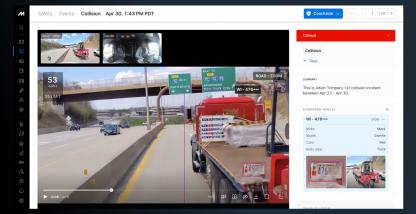
Everyone knows fleet data exists, and plaintiffs’ attorneys are counting on it. The real question is who will use it more effectively: them, or you.
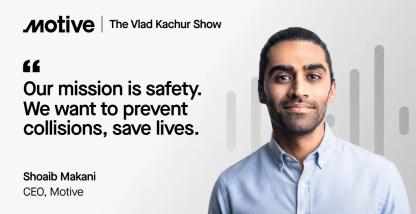
Doug Marcello, an attorney with Saxton & Stump, urges fleet leaders to rethink what he calls “the discovery fallacy,” the belief that collecting more data only increases legal exposure.
Organizations with fleets already have a wealth of telematics and operational data, and plaintiffs’ attorneys know it. The advantage goes to the ones who understand that data, act on it, and use it to demonstrate a consistent commitment to safety.
“So here’s the deal. Either you can get ahead of it and write your own narrative, or you can let them write it for you. And theirs is not going to be very nice.
Marcello believes AI will make that story even stronger by bringing more objective data into the courtroom. But technology alone isn’t enough to keep a fleet protected. Leaders also need to monitor key safety metrics, coach drivers consistently, document corrective actions, and enforce policies they can stand behind. Without a foundation of committed policies and actions, the same data that could help strengthen your defense may be interpreted less favorably in a legal case.
“The only thing worse than not having telematics and not managing your fleet safety is getting all that data, monitoring it, and doing nothing about it. You’re just building the case against yourself.
Data itself isn’t so much a liability as poor data management. Organizations that understand their data, act on it, and document those actions are better positioned to reduce risk long before a case reaches the courtroom. As telematics and AI-powered insights become more common in fleet operations, the strongest defense is less about limiting data and more about showing that your organization uses it in a thoughtful, actionable way.
They turn safety into a competitive advantage
For years, fleet safety was viewed primarily as a cost of doing business, a way to reduce collisions, stay compliant, and avoid claims. Today, it’s becoming something more — a competitive advantage.
Insurance providers increasingly want evidence that shows you’re actively managing risk. Organizations that can demonstrate consistent coaching, measurable improvement, and operational discipline are better positioned to build stronger relationships with insurers, manage their total cost of risk, and stand out in a competitive market.
“It’s that actual performance that gets you the returns.
Performance isn’t measured by how many safety events your technology captures. It’s measured by what your organization does next. Leading operators make sure to coach drivers, document improvements, and create a culture of accountability that produces measurable results over time.
Insurance discounts may be one benefit, but they’re only part of the equation. The biggest return comes from reducing collisions, minimizing claims, and proving your organization is a better-managed operation. In a market where every operation says ‘safety matters,’ those that can demonstrate measurable performance are the ones that earn trust and create a lasting advantage.
They standardize tools to reduce operational risk
As organizations grow, maintaining consistent standards becomes increasingly difficult. Different locations adopt different processes, managers develop their own workflows, and teams begin using different tools to accomplish the same task. Over time, those inconsistencies can create blind spots that make it harder to enforce policies, measure performance, and reduce operational risk.
That’s why standardizing your operations is so important. When every team is working from the same systems and the same standards, leaders gain a consistent view of performance across the business. That makes it easier to identify coaching opportunities, recognize top performers, and ensure policies are being followed consistently, even across multiple branches.
“If they have different tools in different settings, those can create silos. You want to make sure you have identical tools and standards across the board, so you have a lens to enforce [your policies fairly and consistently].
They don’t just collect data. They connect it.
Fleet leaders don’t have a data problem. They have a disconnected systems problem. Vehicles, fuel cards, maintenance platforms, cameras, compliance tools, and back-office software all generate valuable information. But when those systems operate independently, teams are left piecing together reports instead of making decisions.
Leading organizations focus on connecting the technology they already have. By bringing data together in one, unified place, they gain a real-time view of what’s happening across the business, enabling them to take the next step automatically.
“Data is not the finish line. Rather, data is the fuel… Instead of just capturing the signal, how do we convert that signal to an actionable workflow in an automated manner that helps us scale our business faster?
When every data point is connected, managers have complete visibility across their business, allowing them to spend less time searching for information and more time acting on it.
They create ‘strategic friction’ to reduce fleet card fraud
Fleet managers want to get drivers on the road quickly, and it’s tempting to prioritize convenience over security, especially when recruiting and retention are a challenge.
But fraud thrives when organizations remove every obstacle in the name of convenience. That’s true whether it’s leaving a fleet card in the vehicle, writing the PIN on the back of the card, or making it easy for anyone to complete a transaction.
The answer lies in creating “strategic friction,” adding intentional layers of security that make fraud significantly harder without creating an unnecessary burden for your drivers. That can include two-factor authentication, digital wallets instead of physical cards, merchant restrictions, or using telematics to verify that a vehicle is actually at the fueling location before authorizing a transaction.
“You just keep adding another layer of security around it, and around it, and around it. And that’s where we see businesses that really do have much less exposure to friendly fraud, misuse, that kind of thing.
Solutions like the Motive Card put those principles into practice by helping organizations apply spend controls, merchant restrictions, and vehicle-based verification. Motive uses vehicle telematics and payments data to set smart spend controls and auto-decline suspicious transactions in real time, helping protect your transactions with a single view of fleet spend.
Leaders can’t be everywhere at once. That’s why security needs to be built into the process. With the right safeguards built into every transaction, fraud has fewer ways to slip through.
The bottom line
Whether it’s defending your organization in court, strengthening relationships with insurers, or connecting disconnected operations, the most resilient fleets take a proactive approach to protection.
Technology is only part of the equation. The real advantage comes from using it to create accountability, automate smarter workflows, and make better decisions every day. When you combine the right tools with disciplined processes, you don’t just reduce risk. You build a stronger, more resilient business.
Hear more about future-proofing your operations, from these thought leaders and others, in the following sessions from Vision 26: