


Anyone running a fleet today faces risk in every direction, from safety and compliance to maintenance and physical threats. If these risks materialize, they could endanger your entire operation.
For years, the common approach to fleet risk management has been to handle each of these risk areas separately. This method, however, keeps you in a reactive mode, addressing the negatives as they appear.
A smart fleet risk management strategy today means shifting from a reactive approach to a proactive one. Fleets are moving away from operations built on siloed data points toward taking a unified view of their entire operations.
In this article, you’ll discover the four main categories of fleet risk management, along with proactive, technology-based strategies you can apply to reduce these threats.
The 4 categories of fleet risk management
Below we discuss four major categories of fleet risk management and ways you can manage these risks proactively.
- Driver safety
- Compliance
- Fleet maintenance
- Physical threats
1. Driver safety risks
Fleet risk management begins with your drivers. You’re facing these risks:
- Accidents. Damage and death caused by incidents on the road from speeding, harsh braking, and more.
- Liability. The severe financial exposure following an incident. You can face financial loss from litigation, including costly settlements and “nuclear verdicts,” which are not only expensive, but can lead to reputational damage to the company brand and higher insurance premiums.
Four proactive strategies for driver safety
Focus your driver safety strategy on proactive coaching and continuous improvement.
- Leverage in-cab technology. Install dual-facing dash cams to get real data to help you exonerate drivers when they’re not at fault, identify risky behaviors, and provide evidence for coaching. For example, Motive’s AI Dashcam can alert drivers in real time about 14 safety events.
- Build a strong fleet safety culture. Foster a shared, company-wide commitment to safety that goes beyond a policy manual.
- Create a driver coaching program. Use video data to create personalized training that’s based on trends, using something like Motive’s Safety Score, which creates an objective performance metric. A 2023 coaching study showed that fleets using our platform for regular coaching saw 57% fewer accidents within four months.
- Establish a robust hiring and onboarding process. Include thorough motor vehicle record (MVR) checks and comprehensive initial training. Motive’s Workforce Management provides a centralized hub for managing driver qualifications, training, and coaching.
When you go in and look at our safety scores, you can see the changes that have taken place since we implemented Motive. It’s pretty amazing to see the improvement.
2. Compliance risks
Fleet compliance involves detailed record-keeping and constantly changing rules. Failing to keep up with DOT and Federal Motor Carrier Safety Administration (FMCSA) regulations can lead to fines, vehicles being put out of service, and a high Compliance, Safety, Accountability (CSA) score.
Here are the risks you face:
- Out-of-compliance risks. The direct penalties for regulatory breaches, such as violations and fines from DOT or FMCSA audits or vehicles being placed “out of service.”
- Score and reputation impact. The cascading effects of poor compliance. A rising CSA score can lead to increased scrutiny. It can directly impact insurance rates, leading to premium hikes or policy cancellation. You also risk losing business as potential customers review public safety scores.
The key to managing compliance risk is automating and digitizing. By streamlining record-keeping, you can ensure accuracy and stay audit-ready.
Five proactive strategies for compliance
- Automate compliance. Use electronic logging devices (ELDs) to track Hours of Service (HOS) and digital systems for IFTA fuel tax reporting. For example, Motive’s DOT-compliant electronic logging device, which combines the Driver App with the discreet, easy-to-install Vehicle Gateway, automates HOS tracking to reduce logging errors and form and manner violations.
- Maintain meticulous digital records. Keep organized, easily accessible records for driver qualifications, vehicle inspections, and accident registers in one centralized, digital hub so that you can find all related documents in one place.
- Conduct regular self-audits. Proactively identify and fix potential issues before they cause issues during an audit. With Motive’s fleet management dashboard, you can review all HOS logs, DVIRs, and other compliance records for your entire fleet. Our robust reporting features make it easy to spot trends, identify at-risk drivers, and fix potential violations.
- Predict CSA score risk. Find out where you need to improve with predictive CSA risk modeling. In Motive, you can use past trends to forecast potential score changes.
- Unify coaching and CSA score. Integrating scores and coaching helps reduce violations and fosters proactive driver communication. Motive helps fleet managers quickly identify driver logs with violations who need coaching.
3. Fleet maintenance risks
A reactive approach to fleet maintenance leads to unpredictable downtime and can allow minor issues to become major, expensive repairs. Without a proactive fleet risk management approach, you’re risking:
- Unplanned downtime. The primary consequence of poor maintenance, leading to missed deadlines, lost revenue, and dissatisfied customers.
- Increased long-term costs. Minor issues spiraling into major, expensive repairs.
- Safety hazards. Mechanical failures like brake or tire failure, leading to accidents.
Use the strategies below to stay ahead of repairs, maximize uptime, and ensure your vehicles are safe to operate.
Three proactive strategies for fleet maintenance
- Maintain proactively. Shift from a “fix it when it breaks” model to a scheduled, data-informed maintenance program. With Motive, you can transform vehicle maintenance from a guessing game into a science.You can create preventative maintenance schedules based on real time, automated data, such as mileage, operating hours, or time, tracked by the Motive Vehicle Gateway.
- Streamline vehicle inspections. Utilize Digital Vehicle Inspection Reports (DVIRs) to ensure drivers conduct consistent and accountable pre-trip and post-trip inspections. For example, using the Motive Driver App, drivers can conduct pre- and post-trip inspections electronically. They can even upload photos of defects, creating a time-stamped, indisputable record that is instantly available to your maintenance team through the Fleet Dashboard.
- Optimize vehicle selection with performance benchmarking. By analyzing fuel usage, idling time, and safety performance across your current fleet, you can establish clear benchmarks to help you justify investments in vehicles with modern, fuel-efficient engines or those better equipped to integrate with fleet telematics and safety technology like Motive’s.
4. Physical risks
Your fleet’s risk exposure doesn’t end when the engine is off. Theft, vandalism, and unauthorized use of vehicles and equipment pose a constant threat to your assets and your bottom line.
- Theft and vandalism. Theft of vehicles, equipment, or cargo.
- Weather events. Damage from hail, floods, or tornadoes.
- External road conditions. Risks from road construction, traffic congestion, and other unpredictable hazards.
Gaining real time visibility into the location and status of every asset is the best way to effectively manage external risks.
Three proactive strategies for physical risks
- Use GPS and geofencing. Get immediate alerts if a vehicle moves outside a designated area or time. The Motive Vehicle Gateway provides continuous, live GPS tracking that you can view in the fleet dashboard. If a theft happens, real time location data is critical data for law enforcement.
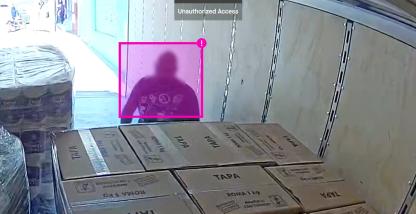
- Secure Parking and Facilities. Implement security measures at depots and yards. AI dash cams and AI Omnicams are your eyes in the yard. When a vehicle is parked, the cameras can be configured to record upon detecting motion, capturing evidence of potential theft, vandalism, or suspicious activity. When you add an omnicam, you can monitor a 360-degree view around the vehicle.
- Leverage real time alerts. Use telematics data and weather alerts to reroute vehicles away from hazardous conditions. Motive’s Fleet Dashboard displays a live map of your entire fleet’s location and status. When you receive an external report, like a severe weather warning, a major traffic accident, or a road closure, you can instantly see which vehicles are in or approaching the affected area and reroute them.
Tom Grille, a dispatcher at All Chemical, recalls a time when one of his drivers was headed toward a tornado zone. “After looking at the weather overlay in Motive, I gave one of our drivers a heads up that he should take cover. That weekend, my driver called to thank me because later he saw the damage from the tornado. He was safe at home at the pool with his grandchildren.”
Essential fleet risk management software features
Modern fleet risk management software makes it possible to effectively manage the broad range of risks to your fleet.
As Jared Whitson, Director of Safety at the Bennett Family Companies, puts it, “I cannot imagine trying to manage the amount of data and the safety events the technology is pulling in. The efficiencies that the [Motive] platform has added, where it’s doing a lot of that work for us, that’s a huge deal.”
Here’s what to look for when choosing fleet risk management software.
Driver management tools
These tools focus on managing driver and vehicle risk.
- Driver behavior monitoring and scoring. These systems use data from telematics and dash cams to create objective safety scores for each driver.
- Digital driver qualification (DQ) file management. A system for storing and managing all essential driver documents, such as licenses, medical certificates, and training records.
- Electronic driver vehicle inspection report (DVIR). A mobile application that allows drivers to conduct pre- and post-trip inspections digitally.
- Automated coaching tools. Emerging tools use AI to deliver personalized, scalable safety training and coaching to drivers based on the specific risky behaviors detected by in-cab cameras and telematics.
In-vehicle hardware
In-vehicle hardware is the equipment installed in your vehicles that captures critical, real time data from the road.
- GPS and telematics devices. These devices track a vehicle’s real time location, and engine hours, along with other telematics, and use geofencing to create virtual boundaries around important locations like yards, job sites, or restricted areas.
- AI-powered dash cams. These devices record video footage of the driver and the road. Advanced systems use AI to automatically detect and flag high-risk events.
- 360-degree cameras. Expanding on dash cameras, these cameras display the sides and rear of the vehicle. This view is crucial for detecting sideswipes, managing blind spots, and securing vehicles when parked.
- ELDs. A regulatory necessity, ELDs automatically track a driver’s Hours of Service (HOS), eliminating manual paper logs and ensuring compliance with federal mandates. Automating the process drastically reduces the risk of costly fines during audits.
These AI Dashcams are worth a million dollars. There’s simply no price you can put on how valuable these cameras are to our business.
Fleet management software
A fleet management platform is the command center where all the data from your vehicles is centralized, analyzed, and turned into insights.
- Fleet maintenance and diagnostics software. This software automates preventative maintenance schedules based on real time data like mileage or engine hours. It also captures and interprets engine fault codes.
- IFTA fuel tax reporting automation. Software that automatically compiles state-by-state mileage data from your GPS devices and integrates with fuel card purchases to generate accurate IFTA reports.
Manage fleet risk effectively with an integrated operations platform
While all these features are useful on their own, you don’t just want to invest in tools piecemeal. Fleet risk management is interconnected: A safety issue creates a maintenance issue, which impacts your finances. A compliance problem takes a vehicle off the road, hurting your productivity.
When you’re operating out of a single system, you can see how one area affects the others. The Motive Integrated Operations Platform brings fleet management together to give you a complete view of your business.
With this level of visibility and control over your operations, you can identify and reduce risk, turning your fleet risk management program into a competitive advantage.
Want to learn more about Motive? Get in touch.