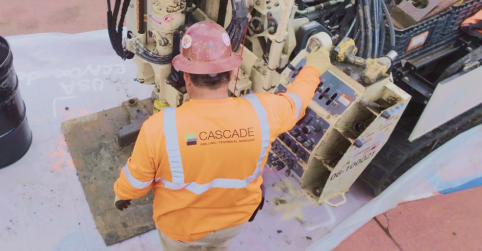



These days, vehicles aren’t the only assets that can be tracked in the physical economy. Instead, assets from the most expensive (heavy equipment, reefer trailers, hydraulic dumpsters) to the smallest (toolboxes, generators, containers) can be tracked in one cohesive system.
This process of asset inventory management helps fleet-based organizations keep track of their valuable assets to stay on schedule and maximize ROI on equipment they already own.
What is asset inventory management in the physical economy?
Asset inventory management is the practice of continuously tracking where assets are, their status, and how they’re being used. Hardware on the asset uses location technology to transmit location and usage data back to a central dashboard.
Fleet-based organizations with a wide number and mix of assets and equipment — such as trucking & logistics and delivery teams with many trailers or construction contractors with numerous dumpsters, pumps, and generators — can benefit from an asset inventory management system to help them eliminate the blind spots that lead to inefficiency.
What types of organizations or scenarios should use asset inventory management? If your organization fits any of the following scenarios, it’s likely a good fit for you:
- Fleet includes a wide mix of assets, both powered and unpowered.
- Operations with large, distributed, high‑volume asset inventories.
- Busy yards and high‑density job sites.
- Managing multiple projects across numerous job sites or yards.
3 benefits of asset inventory management
What are the benefits of investing in a good asset inventory management system? They include:
- Gain visibility
- Get more ROI
- Maximize productivity
1. Gain visibility across your essential asset inventory
With connected asset inventory management, you can see every piece of essential equipment in a single, real-time view. Long-life, GPS-based trackers capture data on your high‑value assets, while low‑profile Bluetooth tags ride along with smaller gear, updating last‑seen location whenever they pass a connected vehicle or mobile device.
Together, they help you discover underused assets, prevent theft, and keep jobs moving on schedule.
2. Get more ROI by reallocating underutilized assets
With asset inventory management, you have the data to make smarter decisions about what to buy, what to redeploy, and where to scale back. Historical movement and last‑seen locations replace guesswork with facts.
Teams can right‑size inventories, avoid unnecessary rentals or purchases, and keep more of their existing assets earning.
3. Maximize productivity instead of searching for missing assets
When crews don’t know where equipment ended up, they waste time chasing it down instead of getting work done.
Connected asset inventory management gives teams a live map of their equipment so they can quickly find each asset. Multi-layer location data, geofences, and automatic associations between vehicles and equipment cuts down on lengthy searches and late‑night phone calls to track down equipment.
4 best practices for asset inventory management
Adopt these 4 techniques for the most effective asset inventory management system.
1. Centralize tracking in one platform, not spreadsheets.
Pen‑and‑paper or an array of systems make it difficult to improve efficiency within your asset inventory management program. Move from manual tracking to a cloud‑based platform that tracks every asset’s location, status, and history in one place.
Unlike other fleet management technology providers, Motive enables us to manage our whole fleet on a single platform. Now we can see all our operations in one place, whether it’s compliance or safety, maintenance or asset tracking. Having 360-degree visibility into our operations saves us time and improves productivity.
2. Standardize coverage across all asset types with the right hardware mix.
Use GPS tracking devices for high‑value or large assets in tandem with more economical Bluetooth Low Energy (BLE) tags. This extends visibility to smaller assets that would traditionally go untracked.
3. Improve ROI using utilization metrics.
With the data you can get from asset tracking hardware, such as engine hours, active vs. idle time, and dormancy, you can make strategic decisions to redeploy underused assets, right‑size counts, and avoid unnecessary purchases.
4. Tie asset data directly to preventive maintenance.
Use usage-based triggers, such as engine hours and mileage, instead of calendar‑only schedules to plan maintenance. This reduces unplanned downtime, extends asset life, and protects inventory value.
Features to look for in asset inventory management software
What features should you look for in asset inventory management software? Consider these capabilities below:
- Full coverage across all asset types
- Real‑time, multi‑layer location technology
- Utilization tracking
- Automatic pairing
- Integrations to OEMs
- Reliable power options and long battery life
- Rugged, environment‑ready hardware
- Plug‑and‑play, wire‑free installation
Full coverage across all asset types
Being able to track everything that matters — powered or unpowered, large or small — is the foundation for an effective inventory view or optimization. Look for hardware types that can span all your assets and locations, ideally centralized in one platform. For example, Motive provides two types of hardware to cover your operationally-essential assets:
- Motive’s Asset Gateway Mini is the optimal choice for trailers, heavy equipment, and other high-value assets that need GPS location, telematics, and engine-hour data.
- Motive Beacon is the right fit for smaller, non-powered assets where bluetooth low energy (BLE)-based last-seen visibility is the most economical way to track movement and utilization.
Motive integrates all asset tracking data into a single dashboard, allowing businesses to see drivers, vehicles, and assets in one place. This unified view simplifies management and enhances visibility.
Real‑time, multi‑layer location technology
Traditional GPS tracking can struggle in urban environments and remote areas. Motive overcomes these limitations by layering multiple technologies into its GPS asset tracking:
- GPS tracking. Collects location data with GPS receivers.
- Assisted GPS. Uses internet data to help GPS receivers identify the best satellites.
- Cellular tower triangulation. Provides a backup when GPS is weak.
- Bluetooth. Locates assets even in obscure environments.
You can also create geofences, or virtual boundaries, in Motive to be alerted when your assets enter or exit an area.
Utilization tracking
Utilization data such as engine hours, active vs. idle time, and availability status indicates what assets you have and how they’re being used. Managers can use this data in Motive to quickly see what’s being underutilized and where to redeploy equipment for higher ROI.
Automatic pairing
Automatic pairing makes managing groups of assets easier and prevents errors. Motive automatically pairs drivers, vehicles, trailers, and most equipment in one view, so teams can quickly see which assets are together.
Integrations to OEMs
Look for hardware that can integrate with OEMs and bring data back into the same platform to enrich utilization and maintenance views. Motive integrates with a variety of OEMs to make upkeep painless.
Reliable power options and long battery life
Power options, such as cable or battery, and multi‑year battery life make it realistic to track high‑volume, mixed assets at scale without constant maintenance. Motive engineers batteries to work long term and be easily replaceable, ensuring reliable performance when you need it most.
Rugged, environment‑ready hardware
Asset inventory devices have to survive a wide variety of conditions: pressure washing, dust, and harsh weather. Look for industrial‑grade ratings (such as IP67/IP69K) on asset tracking hardware. Motive designs asset tracking hardware to be compact and rugged-built for industrial use.
Plug‑and‑play installation
Easy, fast installation make it feasible to roll tracking out across an entire inventory, not just a subset of assets.
How different industries can use Motive for asset inventory management
Discover how organizations from across a variety of industries use asset inventory management to gain visibility and grow ROI.
Agriculture: Agmark uses Motive asset tracking to improve utilization
After facing a chassis shortage, Agmark, a global bulk liquid logistics company, decided to use Motive asset tracking to find out exactly where their chassis were located and how long they were idle. Chris Jaffe, Agmark’s senior vice president of technology, explained, “We could identify equipment that wasn’t being utilized and move it to another location where it was needed.”
They were ultimately able to decrease their chassis count by 11%. “We’ve been able to decrease the size of our fleet and still operate effectively, because we’re able to get better visibility of the chassis that are sitting for a long time and utilize them so much better,” Jaffe said.
Construction: Staker Parson schedules more efficiently and keeps track of assets on job sites
Staker Parson needed a better way to manage its construction equipment — such as pavers, water tanks, and traffic control signs — at and in between job sites. They decided to move away from their manual asset inventory management process and start using Motive hardware to track equipment. Because the devices are battery powered, they can always monitor equipment on the move, even in remote locations.
Our scheduler isn’t getting calls at 1 a.m. because a roller can’t be located. The Asset Gateways have really helped us schedule more efficiently and make sure the right equipment is at the right location.
Staker Parson also values being able to track equipment that stays on job sites for long periods of time. The Motive Asset Gateway Mini pings twice each day to keep locations up to date. “We can lose track of equipment easily on some of these job sites. Equipment could be behind a huge pile of aggregate and we wouldn’t know without the AG Minis,” said Region Telematics Manager Cristian Zuniga.
Oil and gas: STEP Energy Services gets a new level of visibility and control over daily operations
The equipment STEP Energy Services uses to service its clients is expensive. Knowing where each piece of equipment is also critical to good customer service: Scheduling for each job, moving it from site to site, routing it for preventative maintenance.
They’ve used Motive asset tracking hardware to revitalize this process. “When we know where our equipment is, we can utilize it better, keep it working for clients and we can move quickly to serve their needs,” explains Jayme Borgstrom, STEP’s DOT manager. “It also helps when one piece of equipment breaks down in the field. We can immediately know where the nearest replacement is and get it to the site quickly.”
Trucking and logistics: JMS Transportation maximizes trailer utilization
The Iowa‑based carrier JMS Transportation owns more than 100 power units but roughly 800 trailers, and they were struggling to track them. JMS solved their problem with the help of Motive asset tracking hardware.
“We’re able to track our trailers and get an accurate report when they’re sitting somewhere too long,” says Safety Director Heather Walerius. Since investing in Motive, Walerius estimates the company’s utilization has improved by at least 30%.
Field services: Paul Davis Restoration will rely on asset tracking as they scale their business
A Paul Davis franchise uses asset inventory management to keep track of equipment that’s essential to their home restoration jobs: air movers, dehumidifiers, and large pumps.
Dan Hamburg, Mitigation Manager at Paul Davis Restoration, described how they’re benefiting from Motive’s asset tracking hardware: “The Motive Beacon works exactly as we expected it to, tracking our small equipment with precise location updates at regular intervals. This will be huge as we scale our business, especially in our industry where equipment is crucial to the work we do. Without it, we cannot run our business.”
Asset inventory management made simple with Motive
When you use the Motive Integrated Operations Platform for asset inventory management, you have a single dashboard for all asset tracking data. This unified view simplifies management and enhances visibility.
Want to learn more about Motive’s asset inventory management capabilities? Check out the Asset Gateway Mini or discover the new Motive Beacon.