

Many landscaping companies do not start with a formal safety program. They start with an owner or operations manager trying to keep crews safe while they travel between jobs, tow trailers, and transport equipment.
A safety score can provide a practical starting point — but only if you understand what it measures and how consistently events are being captured.
That is why a declining score deserves attention even after driver training. It may point to a driving behavior that needs follow-up, or it may reflect new visibility into events that previously went unnoticed. Either way, the score can help turn a broad goal — improving crew safety — into specific actions. The goal is not to build a complicated program overnight. It is to establish a repeatable way to identify risk, coach drivers, and measure whether changes are working.
Before adding another course, confirm whether the score change reflects driver behavior or a change in the underlying data. Then focus on the highest-risk behaviors, coach to specific events or trends, and review progress over comparable periods.
Training may be part of the answer, but start by diagnosing the signal before changing the training plan.
Why landscaping fleet safety scores decline after training
A lower Safety Score after training does not necessarily mean training failed; it may reflect new or repeated behaviors, changed operating conditions, different data coverage, or gaps in follow-up.
A Safety Score is a useful signal to monitor. It is not, by itself, a diagnosis of why performance changed. First confirm whether Safety Score settings or event definitions changed, such as event thresholds, behavior weights, or the scoring window. Then make sure you’re comparing like-for-like periods with similar mileage, trip volume, camera coverage, driver and vehicle assignments, routes, and job-site conditions.
Landscaping operations also change throughout the year, and mixed-experience crews may change the conditions managers need to account for when interpreting safety trends. Routes and job sites can change. Supervisors may need to reinforce the same expectations across multiple crews or branches.
Start with the data before changing the training plan
Compare the current period with a similar period using the same score definitions and time windows where possible.
Review whether:
- The same event types are included.
- Mileage and trip volume are comparable.
- The same drivers, vehicles, or branches are represented.
- Camera or telematics coverage changed.
Then look beneath the aggregate score at the events and behaviors driving it. Review trends by driver, vehicle, branch, event type, route, and time period. Ask whether the decline is broad-based or concentrated among a few drivers, locations, or behaviors.
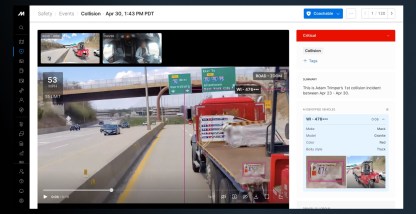
Event context matters, too. Video, telematics data, trip history, and event details help managers understand what happened and choose appropriate follow-up. The goal is to make coaching specific, consistent, and useful.
Prioritize the behaviors that need attention
Move from “the score is down” to identifying which behaviors need attention first.
Consider:
- The potential risk associated with the behavior.
- How often it occurs.
- Whether it repeats after coaching.
- Whether it is getting worse over time.
- Whether video, telematics, and event details provide enough context for a fair conversation.
Focus on a few behaviors at a time. A short list of priorities is easier for drivers and supervisors to act on. Start with the highest-priority behaviors and define what improvement should look like during the next review period.
Pair periodic training with ongoing coaching
Training and coaching support different parts of a safety program.
Training provides periodic instruction or refreshers. Coaching provides ongoing feedback tied to specific behaviors, events, or trends. Training can establish the policy, but timely feedback helps address a behavior when it occurs.
A coaching conversation should help the driver understand:
- What happened.
- Why it matters.
- What behavior should change.
- What support or clarification is needed.
- When the behavior will be reviewed again.
Landscaping companies may need to coach seasonal employees, mixed-experience crews, and drivers working across branches or job sites. A shared process can help supervisors identify the event, review the context, deliver coaching, document the follow-up, and check whether the behavior continues.
How Motive can support a repeatable coaching workflow
Once a team defines what it wants to measure, Motive can connect driver safety data with coaching workflows.
- Motive Safety Score: Use as a high-level indicator alongside the events and behaviors that affect the score.
- Event Validation Engine, or EVE: Validates safety events and removes false positives before they reach managers.
- AI Coach and Driver App experiences: Automatically delivers personalized weekly coaching videos to eligible drivers through the Motive Driver App. AI Coach requires an active Workforce Management subscription.
- Coaching Sessions: Can help managers review coachable events and coaching history in a structured workflow.
- Workforce Management: Supports training and coaching workflows, depending on the selected products and configuration.
Automation can surface and route events, but managers still interpret context, decide on follow-up, and support behavior change.
Measure whether coaching is working
Use the Safety Score alongside behavior and process measures. Track behavior trends such as:
- Repeat-event rate for the coached behavior.
- Frequency and severity of relevant events.
- Behavior trends across comparable review periods.
- Whether improvement continues after the initial conversation.
Also track coaching execution: time from event identification to coaching, completion and follow-up status, coverage across crews or branches, and time spent on manual review.
No single measure proves that coaching caused a particular outcome. Together, these indicators can help leaders understand whether the safety process is being used consistently and where it needs attention.
Build a repeatable landscaping fleet safety loop
A practical process can follow six steps:
- Detect: Identify relevant safety events and behavior trends.
- Validate: Review the event and available context.
- Prioritize: Focus on the highest-risk or most persistent behaviors.
- Coach: Deliver specific, timely feedback.
- Follow up: Review whether the behavior changed.
- Refine: Adjust priorities as crews, routes, seasons, and job sites change.
Diagnose the score before adding more training
A declining Safety Score is a signal to investigate, not a diagnosis. Validate the underlying events, coach the behaviors that matter most, and measure change over time.
See how Motive can support driver safety, coaching, and Workforce Management for landscaping operations. Request a demo.
Frequently asked questions
Why can a landscaping fleet’s Safety Score decline after driver training?
Training is periodic. A declining Safety Score may reflect changed driver behavior, score settings, operating conditions, camera coverage, or follow-up. Review the underlying events before changing the training plan.
What should I check before assuming drivers are driving worse?
Check event thresholds, behavior weights, scoring windows, mileage, camera coverage, assignments, and routes. Then review underlying event trends. Compare like-for-like periods where possible.
What is the difference between driver training and driver coaching?
Training provides periodic instruction or refreshers. Coaching provides ongoing feedback tied to specific behaviors, events, or trends.
Is a Safety Score enough to measure fleet safety?
No single score should stand alone. Use it as a high-level indicator alongside event trends, coaching completion, and behavior change during comparable review periods.
How can landscaping companies coach consistently without reviewing every event manually?
Use validated events and workflow automation to surface relevant events, while managers review context and decide on follow-up.