

Running a construction fleet is hard enough when everything is working. When a critical excavator, crane, or haul truck goes down, crews stand still, schedules slip, and costs climb fast. Unplanned breakdowns still eat up an estimated 14% of annual operating hours for heavy equipment fleets, at a cost of $500–$20,000 per hour of downtime, depending on machine type. That level of disruption is no longer competitive when projects are tighter, labor is scarce, and owners expect real-time visibility.
That’s why more contractors are asking a simple question:
“What are the latest construction equipment maintenance technology trends — and how can we use Motive to cut downtime?”
The good news: maintenance is quietly becoming one of the most high‑impact areas for innovation in construction. This breakdown keeps things simple. We’ll focus on:
- What’s changing in construction equipment maintenance.
- What it looks like in day‑to‑day operations.
- How Motive helps fleets put these trends into practice.
Why maintenance tech is having a moment
A few high-level shifts explain why maintenance is getting so much attention:
- Connected equipment and sensors are now common on jobsites.
- Owners expect fewer delays and more transparency.
- Skilled technicians are hard to find — so every hour they spend has to count.
Industry analysts estimate the IoT in construction market will grow from billions of dollars today to more than $60B+ by the mid‑2030s, driven largely by monitoring and maintenance use cases. At the same time, the equipment diagnostics market is forecast to grow more than 10% per year as fleets invest in smarter tools instead of just more iron.
In that world, paper logs and gut feel aren’t enough. Fleets need real‑time data and simple automation to stay ahead of breakdowns.
That’s exactly where Motive comes in.
- Fleet Maintenance helps you prevent breakdowns with automated schedules, alerts, and work tracking.
- Equipment Monitoring gives you live visibility into where your equipment is, how it’s being used, and when it needs attention.
- Motive Vehicle and Asset Gateways stream engine hours, fault codes, and location data into one platform, so maintenance, operations, and safety all see the same truth.
- AEMP 2.0 API integrations pull OEM equipment data into Motive, so you can see mixed-brand machines in one place instead of bouncing between portals.
From there, the main trends become easier to understand and easier to act on.
Trend 1: From “fix it when it breaks” to “catch it early”
Old way: Many fleets still run equipment until something fails, then scramble for parts, rentals, and overtime repairs.
New way: Use data from the machine itself — hours, fault codes, temperatures, usage patterns — to spot issues early and schedule repairs before they become emergencies.
You don’t need a PhD in data science to do this. In practice, it looks like:
- A fault code shows up for a cooling issue before the engine overheats.
- An operator flags a vibration in a digital inspection, and it’s routed to maintenance immediately.
- You see that one dozer is racking up far more idle time and hours than others, so you rotate it before it becomes a problem.
How Motive helps
With Motive, you get:
- Automatic maintenance reminders based on mileage, engine hours, or time — not sticky notes.
- Real-time fault code alerts from the Vehicle Gateway, so the team knows what’s happening without plugging in a handheld scanner.
- Digital inspections in the Motive Driver App, so operators can add photos and notes, and defects automatically show up in Fleet Maintenance.
Fleets using Motive’s maintenance tools have reported up to 20% lower annual maintenance costs and big drops in downtime, simply by catching issues earlier and planning work instead of reacting.
Trend 2: Telematics as a maintenance dashboard — not just “dots on a map”
Telematics used to be mainly about tracking vehicles. Now, leading fleets use that same connectivity to run maintenance.
Instead of:
- One system for GPS
- Another for inspections
- Another for shop work orders
…they’re pulling everything into one place so they can answer questions like:
- “Which machines are actually due for service this week?”
- “Which assets are throwing the most fault codes?”
- “Where are we overservicing, and where are we behind?”
How Motive helps
Motive is built as a unified platform across safety, operations, and finance, not a bunch of disconnected tools:
- Fleet Telematics and Equipment Monitoring show where every truck, loader, and generator is — plus engine hours and basic health.
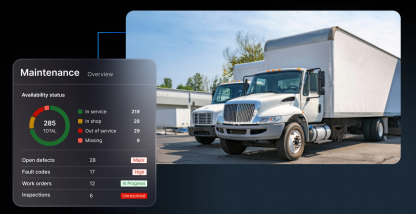
- Fleet Maintenance turns all that data into:
- Upcoming preventive maintenance (PM) schedules
- Open defects and their status
- A history of what was done, when, and on which asset
Operations sees the same information as maintenance, so it’s easier to:
- Plan around upcoming downtime.
- Decide which units to send to which job.
- Avoid renting extra equipment “just in case.”
Trend 3: Smarter scheduling that protects uptime
Most construction teams know the feeling: a key haul truck is due for service right when you need it most, or the site’s main generator fails in the middle of a concrete pour.
The trend here isn’t fancy tech — it’s using data to schedule work at the right time:
- Plan preventive maintenance for nights, weekends, or slower days, instead of guessing.
- Pull units into the shop based on actual usage, not conservative fixed intervals.
- See which assets are under‑used so you can move them to busy sites instead of overworking a small subset of your fleet.
How Motive helps
Motive makes this practical:
- Track true utilization and engine hours across all your equipment, so you can see which units are overworked and which are idle.
- Use that utilization data plus automated schedules to book preventive maintenance where it will hurt least.
- Combine maintenance status with location to move the “right” machine — one that is healthy and not about to go out of service.
Instead of maintenance constantly fighting operations, Motive gives both teams shared, real‑time context so you can make tradeoffs together.
Trend 4: AI and cameras that protect equipment as well as people
When people hear “AI on the jobsite,” they often think about safety — and that’s a big part of it. But the same behaviors that cause incidents also beat up your equipment:
- Hard braking and harsh cornering.
- Overspeeding with heavy loads.
- Constant jackrabbit starts in tight yards.
How Motive helps
Motive’s AI Dashcam Plus and driver coaching tools give fleets:
- Real‑time alerts when drivers or operators are doing things that put people and vehicles at risk.
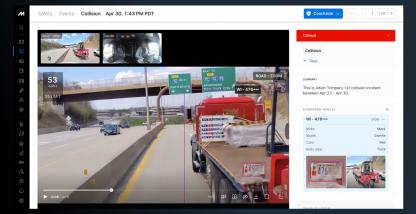
- Event videos and scores that safety and operations teams can use for coaching.
- The ability to connect behavior data to maintenance outcomes — for example, seeing that rough operation on a certain route is driving up repairs on specific units.
When you reduce risky behavior, you’re not just preventing incidents — you’re also:
- Reducing wear and tear
- Protecting tires, brakes, and suspensions
- Lowering long‑term repair bills
That’s why more construction fleets are treating safety and maintenance as two sides of the same coin, and using Motive to tie the data together.
Trend 5: Full visibility into mixed fleets — heavy equipment, rentals, and small assets
Most construction companies don’t just run trucks. They have:
- On‑road vehicles and lowboys
- Trailers, air compressors, light towers, and other small equipment
- Short‑term rentals mixed in
The trend here is simple: see everything in one system, instead of piecing together spreadsheets, whiteboards, and phone calls.
How Motive helps
With Motive, construction fleets can:
- Use Vehicle Gateways on trucks and heavy equipment to track location, hours, and diagnostics.
- Use Asset Gateways on high-value powered equipment and track engine hours and basic telematics data
- Use Motive Beacons on smaller equipment and support gear across yards and sites.
- Bring it all into one dashboard, so you can:
- Find the nearest available asset
- See if it’s healthy and in compliance
- Decide whether to move it, rent, or sub out
The result is a kind of “live digital map” of your operations: not a complex 3D model, but enough context to keep jobs moving and equipment where it needs to be.
Trend 6: Data foundations instead of “black box” AI
A lot of vendors talk about AI as if it’s magic. In reality, the fleets that get the most value out of maintenance technology are the ones that:
- Digitize inspections
- Log repairs and PM consistently
- Use one platform (instead of scattered spreadsheets and apps)
Once you have that foundation, it becomes much easier to:
- Spot patterns in repeat failures
- Build more accurate PM schedules
- Layer on more advanced analytics when you’re ready
How Motive helps
Motive is designed to help you build that foundation without extra busywork:
- Drivers and operators complete digital inspections in the Motive Driver App, no retyping or scanning.
- Defects automatically flow into Fleet Maintenance, where you can track status and repair time.
- Every event — inspection, alert, repair, PM — is tied back to the asset, so you have a real history when you decide whether to fix, rebuild, or replace.
You don’t have to start with full‑blown predictive maintenance. Simply using Motive for basic digital inspections and maintenance tracking puts you in a much better position than paper ever can.
How to put these trends into practice with Motive
If you’re just getting started, you don’t need to “boil the ocean.” Here’s a simple path:
- Connect your fleet and equipment to Motive
- Install Vehicle Gateways on trucks and large equipment.
- Add Asset Gateways or beacons on high‑value assets that tend to go missing or sit idle.
- Move inspections and maintenance into Motive
- Have operators use the Motive Driver App for daily inspections.
- Set up Fleet Maintenance to track PM schedules, fault codes, and repairs.
- Use the data to make 2–3 specific changes
- Shift PM to lower‑impact windows.
- Rotate overworked equipment with under‑used units.
- Tackle the top recurring faults you see in the dashboard.
- Layer on AI and automation as you go
- Add AI Dashcams where you have the highest risk and equipment damage.
- Use Motive’s alerts and reports to move from reactive to planned work.
Each step is manageable on its own and each one cuts a little more downtime, wasted spend, and chaos from your operations.
The bottom line
The latest trends in construction equipment maintenance technology aren’t about buzzwords. They’re about:
- Seeing problems earlier
- Planning work instead of reacting
- Using one platform to connect equipment, people, and data
Motive was built for exactly this shift. By combining fleet telematics, equipment monitoring, inspections, and maintenance in a single AI‑powered platform, Motive helps construction fleets:
- Reduce unexpected breakdowns
- Extend equipment life
- Keep projects on schedule — without drowning in complexity
If you’re ready to turn these trends into real uptime on your sites, Motive can give you the visibility and automation to get there.