
Every day, millions of people rely on public transportation to get where they need to go. Whether it’s a ferry, bus, or train, passengers trust that operators will stay alert and be ready to respond to any scenario.
Now imagine this scenario: a train operator nodding off at the controls with hundreds of people onboard. That’s what happened in September when a San Francisco Municipal Transportation Agency (SFMTA) N-Judah operator appeared to fall asleep while traveling through a curve at more than 50 mph. Passengers were jolted, and several fell; the incident highlighted how quickly fatigue can turn routine operations into a risk.
Events like this also highlight where AI dash cams can help. By detecting visible signs of fatigue — such as frequent yawning, rubbing eyes, or reduced movement — AI-powered video safety can prompt operators to re-engage before fatigue escalates into something far more serious.
Fatigue is a growing risk in public transit
Transit operators often work long or irregular hours, start early or finish late, move between automated and manual modes, and manage crowded passenger environments. These conditions make fatigue common — and difficult to detect until it’s too late. In the SFMTA case, investigators found no mechanical or braking failure; the root cause was operator fatigue.
How AI Dashcams detect early signs of fatigue
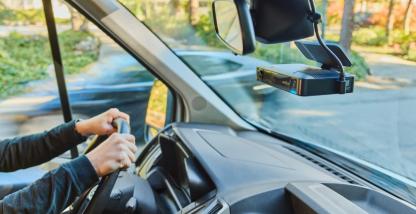
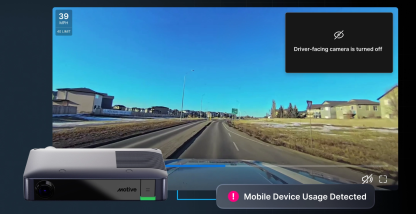
Motive’s AI Dashcam helps detect visible indicators of fatigue, such as frequent yawning, and delivers in-cab alerts that prompt operators to re-engage.
With our upcoming AI-powered Fatigue Detection, Motive analyzes yawning, lack of movement, lane swerving, and nearly 10 other behaviors, combining them with telematics, time of day, and drive time to predict fatigue early, before an accident occurs.
Here’s how the incident could have played out differently with Motive’s solution in place:
- Alert operators in real time before risk escalates – When an operator shows visible signs of drowsiness, the AI Dashcam issues an immediate in-cab alert. Even a brief warning can help the operator snap back to attention and re-engage with the controls.
- Give operations teams visibility to step in sooner – Safety managers receive an alert and a safety event video in their dashboard. With this real-time visibility, managers can check in with the operator and direct them to pull the train into a safe stop, switch to manual backup, or hand off control—well before the train enters a curve at high speed.
- Enable meaningful coaching and follow-up – Fatigue events reveal patterns such as early-morning fatigue, long shifts, or schedule-related risks. Agencies can use this data to coach operators, adjust schedules, and develop targeted fatigue-mitigation plans.
- Reduce the chance of near-misses and severe outcomes – In the SFMTA case, passengers were jolted as the train entered a curve at high speeds. With earlier detection and immediate alerts, the operator might have re-engaged sooner — potentially avoiding the unsafe scenario altogether.
Preventing the next incident
As SFMTA noted, “Safety is always our top priority…we are taking all necessary steps to keep Muni safe and reliable for all riders and the public.”
Fatigue detection is becoming a key part of that effort. Just as agencies rely on braking systems, signals, and operator training, tools like the AI Dashcam that surface early signs of fatigue can help teams intervene sooner and prevent risks from escalating. Ultimately, increasing visibility helps protect passengers — and the public trust that transit systems depend on.
Click here to learn more about how Motive Fatigue Detection can help your organization.