


Safety is a year-round commitment. The Commercial Vehicle Safety Alliance (CVSA) works closely with regulatory and enforcement agencies across North America to promote safer roads. One of the most targeted efforts each year is Brake Safety Week, taking place Aug. 24-30, 2025.
Brake Safety Week emphasizes the importance of having properly functioning brake systems in commercial motor vehicles. While inspections take place all year, this week highlights just how common — and preventable — brake issues are.
Why brake safety matters
Insufficient brake systems are a leading cause of out-of-service violations. Last year, 12.8% of the 16,725 vehicles inspected during Brake Safety Week were placed out of service for brake-related violations.
The 20% defective brake rule is one of the most common causes of citations during Brake Safety Week. The rule triggers an out-of-service condition when 20% or more of a vehicle’s service brakes are considered defective. Last year, 1,216 vehicles — 56.6% of those taken out of service for brake-related violations — met this threshold, while another 1,355 vehicles were sidelined for other brake issues.
These numbers show just how often brake problems can ground trucks, trailers, and motor coaches, and why proactive maintenance is critical.
Disc brakes have become more common in recent years due to their durability and superior performance under extreme or wet conditions. But even disc brake systems aren’t exempt from issues. Cracked rotors, worn pads, and improper lining thicknesses continue to be identified in inspections, particularly on motorcoaches and high-mileage fleet units.
Regardless of type, all brakes are subject to problems if not inspected routinely by qualified personnel. In fact, safe operation depends on it.
What to expect during Brake Safety Week
During Brake Safety Week, certified inspectors will be out in full force across North America, inspecting commercial vehicles for issues involving brake linings, pads, rotors, and overall performance.
- Technicians will conduct applied brake tests and verify air system components, including buzzer functions and the operation of the tractor protection valve.
- CVSA-certified personnel will apply the North American Standard Out-of-Service Criteria, removing any vehicle from the road until brake-related defects are corrected.
As a reminder, out-of-service criteria are updated annually, and many shops, safety managers, and mechanics still reference outdated materials. If you haven’t already, now is the time to access the latest version of out-of-service criteria.
In addition to standard roadside inspections, some jurisdictions may utilize performance-based brake testers (PBBTs), which measure a vehicle’s braking force at the wheels using rolling dynamometers. These performance-based systems give a pass/fail result based on the vehicle’s braking efficiency. In 2024, 18 states utilized PBBTs, and 26 vehicles were placed out of service due to test failure.
Education and outreach
Education remains a huge focus of Brake Safety Week. CVSA encourages inspectors to engage with carriers, maintenance teams, and drivers to raise awareness about brake maintenance and inspection procedures.
Outreach efforts often include:
- Sharing visual checklists and step-by-step walkthroughs for checking linings, pads, drums, and rotors.
- Explaining common violations so technicians and drivers can address issues before reaching a scale or roadside inspection site.
Teaching drivers about what inspectors look for empowers them to make better pre- and post-trip decisions. Mechanics who understand inspection patterns can proactively correct issues before they result in a citation or out-of-service event. Building safety from both the cab and the shop floor is key to changing these statistics.
The role of DVIRs in ensuring vehicle safety
Driver Vehicle Inspection Reports (DVIRs) are the first and often only line of defense against roadside brake violations. While thorough inspections by mechanics are critical, it’s the driver who sees the vehicle every day.
Motive’s electronic DVIR system enables drivers to:
- Flag brake defects during pre- and post-trip inspections.
- Annotate issues directly on their mobile devices in real time.
- Instantly communicate problems to shop teams and fleet managers
This immediate flow of information helps maintenance crews address issues before roadside inspectors find them.
Many maintenance teams never see a vehicle until something goes wrong. That’s why fleets depend heavily on consistent, accurate DVIRs, not just for compliance, but for safety.
With Motive’s electronic DVIR system, you create a two-way flow of information between the driver and the maintenance team, making sure issues don’t fall through the cracks.
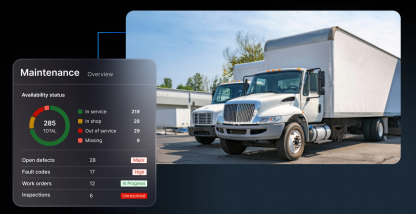
Electronic DVIRs also help management track resolution status, recurring issues, and fleet-wide trends. This leads to faster repair cycles, better audit documentation, and stronger FMCSA compliance across the board.
What do inspectors do with the data?
Each year, Brake Safety Week inspections contribute to a national snapshot of brake safety across North America. Inspectors upload violation data to the CVSA, which later compiles and publishes a full report on brake violations, defect trends, and areas of concern. This data isn’t just about enforcement; it shapes future safety campaigns, informs changes to inspection criteria, and helps fleets benchmark their performance year over year.
The 2024 report highlighted lining violations, missing or contaminated pads, out-of-adjustment brakes, and air leaks as the most common violations. Carriers can use this data to prioritize training in the months leading up to future enforcement events.
Brake Safety Week is ultimately about awareness, education, and prevention. For drivers and fleets who take this week seriously, it becomes an opportunity to stay ahead of costly repairs, avoid roadside delays, and prevent collisions.
This initiative underscores the critical role of brakes in fleet performance, uptime, and, above all, road safety. Stay ahead of the next brake inspection. Discover how Motive can help keep your fleet safe and compliant.