

Transportation incidents remain the leading cause of workplace fatalities, representing more than a third of on‑the‑job deaths. For fleets, AI accuracy in driver safety technology is critical. It’s not just the human cost of accidents, but the financial impacts as well — up to $5.6 million for a single fatal collision. That’s why AI fleet safety technology, especially accurate AI dash cams, is quickly becoming essential for preventing collisions, reducing risk, and protecting drivers.
These realities set the stage for Motive’s most recent webinar, Saving Lives with Smarter Technology: What to Consider When Choosing AI. The discussion brought together industry leaders Chris Jaffe of Agmark Logistics and Ryan Ennis of FusionSite Services, with Gary Johnson, Motive’s head of safety and compliance strategy, moderating.
Together, they explored how fleets are using AI to reduce risk, improve safety outcomes, and protect drivers.
As Johnson put it, “Your most valuable asset is your people. Prevention is always the best investment.”
Why AI accuracy is the first test in fleet safety technology
Both Agmark and FusionSite have put AI‑powered safety technology at the heart of their operations, proving that the right safety approach doesn’t just reduce incidents — it reshapes culture and strengthens the business itself.
It was ingrained in me a long time ago — try before you buy.
For Jaffe, the turning point came when his safety team realized their former dash cams were holding them back. False alerts had become so common that managers stopped paying attention to them.
That changed when Agmark piloted AI dash cams from multiple providers side by side.
“It was ingrained in me a long time ago — try before you buy,” Jaffe said. ”When we put the dash cams together side by side [in a trial], we could see that one camera was providing AI and the other ones were not. Or they said they had AI, but they weren’t as accurate. It really made a big difference to us. So it became a clear choice when we saw the dash cams working side by side.”
The stakes — and the payoff
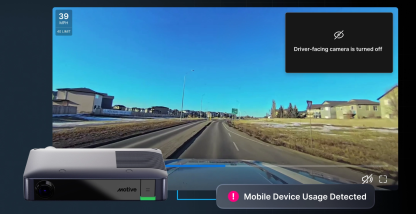
Ennis faced the same challenge at FusionSite Services, but the stakes were even higher. With more than 1,000 vehicles on the road, his team needed dash cams that could identify and reduce risk in real time. Accuracy, and the speed at which unsafe driving behaviors were detected, were non‑negotiable.
“The speed in which events came in allowed us to actively manage our drivers,” Ennis said. That’s a game‑changer.” The results spoke for themselves.
- Unsafe driving events dropped by more than 90%.
- Turnover fell from 7% to 1%.
- The company saved $2.5 million on insurance costs in a single year.
Making AI accuracy part of your safety culture
Jaffe and Ennis stressed that technology alone doesn’t drive lasting change. AI delivers the greatest impact when paired with strong leadership — especially consistent driver coaching and meaningful recognition.
At FusionSite, Ennis built a program that turned safety into a source of motivation. Drivers with scores above 90 earned monthly bonuses, while top performers at the site and regional levels could receive up to $5,000.
“It’s about raising the bar,” he said. “Not just for drivers, but for the leaders coaching them.”
Agmark took a similar approach, and the cultural shift was immediate. “Our average safety score is 97, and almost half of our drivers have a perfect score of 100,” Jaffe said. “Our drivers love that instant feedback. Safety Scores have actually become a badge of pride for them.”
But Ennis and Jaffe warned not to take marketing claims at face value. Pilots, they agreed, are essential to finding technology that truly works. After all, AI isn’t just a tool to reduce risk. When paired with transparency, coaching, and trust, it becomes a catalyst for cultural change and measurable ROI.
Hear more from Chris Jaffe, Ryan Ennis, and Gary Johnson about how accurate AI detection is raising the standard for driver safety.