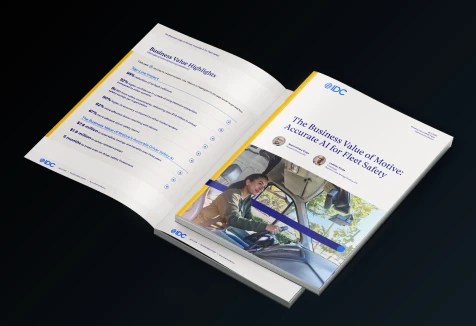
This guide covers the ROI of workforce management: coaching returns, turnover costs, and what Motive’s data says about how to improve outcomes and retention. For more information about the ROI of driver safety, fleet management, equipment monitoring, and spend management, check out the 2026 ROI Report here.
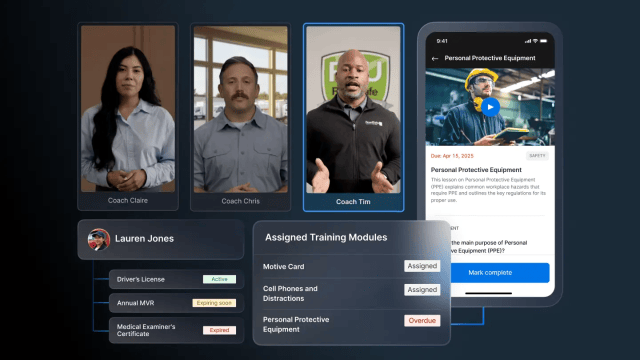
Every fleet has a version of this conversation: A driver gets flagged for a hard brake on a regular route. Someone on the management team plans to talk to them about it, but by the time anyone does, it’s a week or a month later. The driver barely remembers the trip; the manager barely remembers what they planned to say. The whole conversation lands as a belated reprimand instead of trying to help.
Workforce management is the work of closing that distance: coaching, training, qualification, recognition, time tracking – all run from the same platform as the vehicles and safety data. With unified data, managers can coach closer to the event and use more context.
Drivers who actively review their AI Coach sessions see 8x more Safety Score improvement and a 50% drop in total driving events. Critical risks like cell phone usage may also drop close to zero.
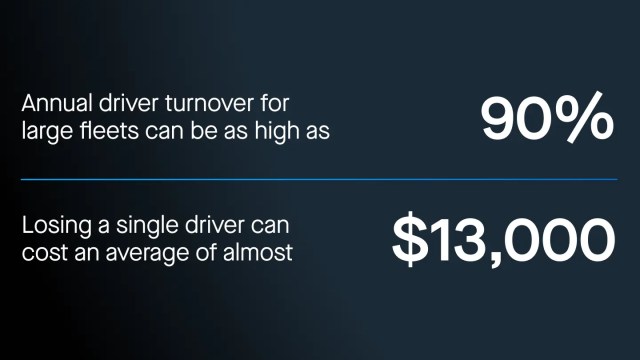
Managers can also reward desired behavior, helping reduce the turnover bill and raise retention rates. Large fleets can see annual driver turnover as high as 90%, and losing a single driver can cost an average of almost $13,000. Multiplied across a full fleet of hundreds or thousands of drivers, it can become a significant expense for any organization. Retention costs rarely appear neatly as a line item, which is part of why they can elude managers and persist.
In Motive’s ROI report, 30% of the 351 customers surveyed ranked labor shortages and talent retention among their biggest challenges. Managers and organizations who approach the problem from the lens of technology and empathy-driven program design can see improvement in both the budget line and the HR perspective.
How much time can automated coaching save?
Fleets take 16 days on average to coach a driver after an event. AI Coach generates the session automatically rather than scheduling it, which Motive reports can reduce the time spent planning and delivering coaching sessions by up to 100%. At the platform level, AI Coach cuts coaching time in half, and since launching, Motive estimates it has returned more than 100,000 hours back to managers since launch.
Motive’s internal analysis puts the per-fleet version at 6 to 8 days faster to coach drivers, and $236 per driver annually in safety-manager time: about $70K a year for a 300-driver fleet, with the fleet-size assumption stated because the total scales directly with headcount.
Every AI Coach session is personalized to the driver’s week, opening with positive reinforcement before addressing the events with the biggest Safety Score impact. Coaching activity is tracked automatically in the dashboard, creating a consistent, auditable record that supports compliance — especially in unionized environments. And Coaching Score, part of Performance Hub, tracks behavior change after each session, so managers can see where the program works and which coaches need support.
How does a better workforce management platform affect retention?
Retention improves when recognition stops depending on a manager remembering. Think about how lopsided most programs are: every hard brake generates a record and a conversation, while a driver who goes six months without an incident hears nothing at all. In many fleets recognition remains manual, inconsistent, and difficult to scale, and drivers who feel only the corrective half of that are the ones most likely to leave. A structured driver rewards program turns the ratio around. It automatically identifies positive behaviors and recognizes them in real time, through challenges, points, leaderboards, and real-world rewards.
“With Driver Rewards, we’ve replaced manual tracking with automated, data-driven challenges that score and track performance in real time. Recognition is now consistent and scaled.
“We started with the obvious top performers that drive high mileage and are most at risk, but now we are using the platform to improve engagement, strengthen safety and have reduced the time our team spends managing rewards.”
Rodney Fetters, Fleet Director, SPATCO Energy Solutions
Bennett, a trucking enterprise running 4,500 drivers across 14 companies, ties Safety Scores to its driver incentive program — a better score means a bigger payout, which turns the safety data drivers already generate into money they can see coming.
How do you calculate workforce management ROI?
Workforce management ROI is avoided cost plus recovered time. Start with turnover: at an average cost of almost $13,000 per lost driver, every point of retention improvement is directly priceable against headcount. Add manager time returned by automated coaching and automated recognition. Then add the performance layer — fewer safety events, and the accident, claims, and insurance costs that follow them, which the 2026 ROI Report covers in depth on the safety side.
In the same survey, top respondents (the top quartile of surveyed customers by reported ROI) reported $1M in average business savings per organization. That gives some indication of the possible ROI across an entire platform that includes workforce management.
See what Workforce Management could return for your operation. Talk to Motive or explore the product.
What does workforce management actually cover?
| Module | What it does |
| Performance Hub | The single view for coaching, training, and rewards, with Coaching Score tracking behavior change after each session |
| Automated Coaching / AI Coach | Personalized, AI-generated coaching delivered to drivers automatically, across safety, fuel usage, compliance, and equipment health |
| Integrated Training | Assign and track training tied to the behaviors that triggered it |
| Driver Rewards | Automated recognition, points, badges, leaderboards, and data-driven challenges |
| Driver Qualification | Digital qualification files and document workflows, with expirations flagged before they disqualify a driver |
| Timecards | Time tracking that runs in the same platform as safety, coaching, and vehicle data |
Source: Workforce Management product pages
Key takeaways
- Workforce management develops the people who drive fleet results — coaching, training, qualification, recognition, and time tracking, on the same platform as vehicles and safety data.
- Drivers who actively review their AI Coach sessions see eight times more safety score improvement and a 50% drop in total events, with critical risks like cell phone use dropping to zero, per Motive’s May 2026 announcement.
- Turnover has a price: almost $13,000 per lost driver on average, with large-fleet turnover running as high as 90% — nearly $12 million a year for a 1,000-driver fleet.
- Recognition scales when it’s automated. Driver Rewards identifies positive behavior and pays it in real time, including rewards converted to money on the Motive Card.
Frequently asked questions about workforce management
What is Motive AI Coach?
AI Coach is the AI avatar that delivers personalized coaching to drivers automatically. Every session is AI-generated — video, audio, and script — personalized to the driver’s recent performance, opening with positive reinforcement before addressing the events with the biggest Safety Score impact. Coaching now extends beyond safety to fuel usage, compliance, and equipment health.
Does automated coaching replace safety managers?
No — it returns their time. AI Coach cuts coaching time in half and has returned more than 100,000 hours to managers since launch. Performance Hub shows which coaches need support to keep their teams on track. Managers set the program; the platform handles the delivery and the record-keeping.
How does Driver Rewards work?
Fleet managers create data-driven challenges tied to metrics like safe driving, fuel efficiency, compliance, and spend. The platform scores performance and updates points, badges, and leaderboards in real time, and drivers track progress in the Motive Driver App. Rewards can be converted to real money, paid instantly to the driver’s Motive Card.
Is coaching activity documented?
Yes. Coaching activity is automatically tracked in the Motive Dashboard, creating a consistent, auditable record that supports compliance and helps reduce legal risk, especially in unionized environments.
How quickly do drivers get coached after an event?
The industry baseline is 16 days on average. Because AI Coach generates each session automatically, feedback can reach the driver sooner, while the event is recent enough to be useful.
Does workforce management support international operations?
Driver Rewards is built for international operations, with localized units, time zones, and formatting for a consistent experience across regions.