

In many organizations, safety still feels like a rulebook: Do this, don’t do that, sign here. But the businesses seeing the biggest safety gains are treating safety more like a season-long game — one with scores, rankings, and real rewards for doing the right thing.
In our webinar, “Saving Lives with Smarter Tech,” Motive’s Head of Safety and Compliance Strategy Gary Johnson; FusionSite Chief Information Officer Ryan Ennis; and Agmark’s Senior Vice President of Technology Chris Jaffe walked through how to build safety “games” drivers actually want to play. Their stories show how structured incentives can help improve unsafe driving habits, reduce turnover, and improve culture without being punitive.
From ‘big brother’ to game film
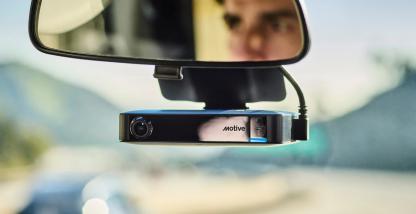
When Johnson started in the industry, even simple technologies like cruise control sparked “big brother” fears. The reaction to AI dash cams and telematics can be similar if they’re introduced as tools that catch drivers doing something wrong.
Johnson encourages fleet-based businesses to reframe driver coaching sessions as game film review:
- Video and events show what really happened on the road.
- Coaches and drivers review the film together.
- The goal is improvement over time, not a single perfect performance.
By the time incentives enter the picture, drivers see the system as a way to protect their job and earn rewards — not as surveillance looking for mistakes.
FusionSite’s game: structured tiers and real stakes
FusionSite is an enterprise fleet with several locations. The company needed a program that would scale. Ennis built a highly structured incentive model around the Motive Safety Score his drivers see every day.
The core of his game involved the following:
- A threshold bonus: Drivers who keep their score above a set bar (for example, 90) earn a monthly bonus.
- A location champion: At each of 53 locations, the top-scoring driver gets an additional payout.
- A regional champion: Across five regions, the best driver in each region receives a larger award.
On paper, it’s a series of line items in a budget. On the ground, it feels like this:
Drivers check their scores in the Motive Driver App the way fans check standings. Location managers compare their leaders. Regional leaders talk about which region is “winning” this month. Safety performance stops being a static metric in a dashboard and becomes a moving scoreboard everyone can see and influence.
Because the rewards are both frequent (monthly) and meaningful (tiered up through the organization), Ennis was able to justify more than doubling the budget for incentives — and saw dramatic drops in unsafe driving behavior as a result. Where the program really shows its value is in retention. When drivers feel the game is fair and winnable, they are far less likely to leave for a fleet that treats them as expendable.
Agmark’s game: micro-rewards and social pressure
Jaffe runs a smaller fleet of about 50 drivers and uses a lighter-weight model built around small rewards and peer dynamics.
His version of the game looks like this:
- Any driver who reaches a perfect Safety Score of 100 earns an immediate reward — a free lunch, gift card, or company gear.
- Managers call out top scorers by name in meetings, and lead drivers get accolades.
- Drivers informally track each other’s progress: “You’re at 98; Eduardo just hit 100 again. What’s your plan to catch up?”
Because the rewards are small, meaningful, and timely, Jaffe doesn’t need a complex budget or policy document to keep the game going. The real engine is visibility and recognition. The score is always there, the goal is obvious, and the social pressure to close the gap does as much work as the gift cards themselves.
Over time, small, meaningful rewards helped pull Agmark’s average Safety Score from the low 90s into a consistent 96-98 range. More important, daily conversations about Safety Scores normalized safety as a shared priority, not a once-a-quarter topic.
Gamifying safety effectively
Ennis and Jaffe run different operations, but their programs share a few traits that make gamification work.
First, the rules are visible and simple. Drivers know:
- Which behaviors affect their score.
- How often that score is updated.
- How score ranges map to rewards — or to a performance plan if they do not improve.
Second, rewards are frequent enough to matter. Ennis uses monthly bonuses and tiered awards; Jaffe uses small, immediate prizes for perfect scores. In both cases, drivers don’t have to wait a year to feel the impact of safer habits.
Third, coaching stays close to the moment. When a high-risk event happens, managers follow up quickly, often the same day. They use specific video clips as “game film” to talk about what happened and what to change, then connect improvements back to the score and the driver’s standing.
Finally, there’s still a clear bottom line. Both leaders say drivers who don’t respond to coaching eventually enter a performance improvement plan. Gamification provides the “carrots” and rewards used to entice, but it doesn’t remove accountability. That clarity keeps the game credible for top performers and protects the culture from regressing.
Designing your own safety game
If you’re building or refining your own incentive program, Jaffe, Ennis, and Johnson’s experiences suggest a logical sequence:
- Start with the Safety Score. Decide what you want to measure, how often it updates, and how drivers will see it.
- Layer in rewards and recognition. Use a mix of:
- Baseline bonuses for meeting a threshold.
- “Champion” awards at a location or region level.
- Small, fast rewards for milestones or perfect weeks.
Then, formalize the coaching and consequence side. Define how quickly you expect coaches to respond to events, what a performance plan looks like, and when someone has effectively opted out of the game by not changing behavior.
You don’t have to launch the full program on day one. Many fleets start by socializing scores, then add light recognition. Only later do they introduce cash incentives or formal tiers. The key is that, at every step, drivers understand the game they’re playing and believe they have a real chance to win.
See these playbooks in action
Watch the full webinar, “Saving Lives with Smarter Tech” to understand:
- How FusionSite and Agmark introduced scoring and incentives without losing driver trust.
- The specific bonus structures, budgets, and timelines they used.
- How they fine-tuned gamification over time as behavior improved and the business grew.