

Asset maintenance with traditional methods can be murky. It’s hard to know which assets are due for service, plan a maintenance schedule, or keep ahead of breakdowns.
But with modern asset tracking hardware, organizations can bring a new level of oversight to their asset maintenance programs.
Learn how you can develop an asset maintenance strategy that improves efficiency and reduces operational hurdles.
What is asset maintenance?
Asset maintenance is the process of keeping assets in working order by performing scheduled maintenance and correcting issues when they appear.
Operations teams across logistics and transportation, field and site services, and off-highway and heavy industry can use telematics, inspections, and usage data to implement effective asset maintenance programs.
Why a strong asset maintenance strategy is important
Traditionally, it’s been easier to maintain fleet vehicles than other fleet assets. Vehicles have fault codes to indicate problems, while unpowered assets such as trailers or storage containers don’t have engines with computers to tell you what’s wrong. You don’t know a trailer’s mileage unless someone manually records it.
Another roadblock is visibility: Without a centralized asset tracking solution, tracking is manual and fraught with errors. If you can’t find or don’t know about an asset, keeping it on a regular maintenance schedule is difficult.
But today, there are numerous solutions, such as Motive’s equipment monitoring product, that make asset maintenance manageable and efficient.
By using asset tracking hardware to maintain your assets, you can:
- Increase reliability. Regular maintenance keeps assets ready for jobs, so that unexpected downtime doesn’t stop or delay work.
- Reduce unexpected repairs. Fixing issues before they become major problems helps avoid disruptions and keeps repair costs lower.
- Increase asset lifespan. Simple maintenance upkeep can extend the lifespan of your assets.
- Improve safety. Keeping machines and equipment in good working order reduces the likelihood of workers being injured by breakdowns.
3 common asset maintenance strategies for fleet-based organizations
Common asset maintenance strategies for fleet-based operations include preventative, predictive, and reactive.
Preventative maintenance
Preventative maintenance uses proactive service to avoid issues before they impact operations or cause costly damage. Service is typically based on time, mileage, or engine-hours:
- Time-based. Service is performed after a set period of time has elapsed.
- Mileage-based. Maintenance is scheduled after the asset travels a certain distance — these are often manufacturer-recommended intervals.
- Engine-hour based. Maintenance happens when a certain engine hour limit is reached. Engine hours are typically used for vehicles or equipment with low mileage but high operational hours, such as heavy construction equipment.
Predictive maintenance
Predictive maintenance tracks asset health, using data science and analytics to forecast when assets will need maintenance.
Reactive maintenance
Reactive maintenance is performed when something breaks or malfunctions. It’s impossible to eliminate all reactive maintenance, but good preventative and predictive asset maintenance can reduce the number of unexpected repairs.
However, without the proper tools and planning, an organization’s default asset maintenance strategy will default to reactive. A purely reactive maintenance strategy can let small problems become big ones, which means more costly breakdowns, unplanned downtime, and safety risks.
What is the right asset maintenance strategy for a fleet-based organization?
For organizations with a mixed fleet and a wide variety of assets, it often makes sense to choose an asset maintenance strategy by asset type.
Breakdowns by different assets will have a varying impact on revenue. For example, specialized heavy machinery that’s absolutely necessary to generating revenue should have a more dedicated maintenance strategy, such as a mix of predictive and preventative maintenance.
| Asset Type | Impact of a Breakdown | Maintenance Strategy | Examples |
| Critical revenue-generators | High: Stops all operations; creates massive lost revenue or safety risks. | Predictive and preventive | Large engines, primary vehicles, specialized heavy machinery such as forklifts, excavators, or backhoes). |
| Core support assets | Medium: Slows operations or reduces efficiency, but backups may exist. | Preventive | Utility vehicles, trailers, power tools, HVAC systems, chassis. |
| Non-critical or high-volume | Low: Easy to replace, cheap to fix, and has no impact on the overall timeline. | Reactive | Hand tools, porta potties, office equipment, non-powered attachments, furniture. |
A system like Motive provides preventative maintenance tools for vehicles and assets across your fleet:
- Usage data that prompts automated service reminders.
- Fault code and diagnostic trouble alerts for fixing issues in real time.
- Centralized schedules and reminders to ensure vehicles are maintained without manual tracking.
Tools needed for a successful asset maintenance program
To develop a strong asset maintenance program, you need to move beyond manual tracking. Asset tracking hardware and software provide the automation, data collection, and alerts that are essential to improving maintenance efficiency.
Tracking hardware
Use asset tracking hardware like the Motive Asset Gateway Mini to capture accurate location and engine hours (continuously when wired). Maintenance teams get the usage data they need to prevent breakdowns and keep underused assets in rotation.
I… made the leap to the Motive Asset Gateway Mini, which is perfect to tuck into our smaller skid steers, trenchers, tractor mowers, and more. Its discreet size and unpowered mode mean we can easily track each equipment’s location and engine hours, saving us valuable time and boosting utilization.
Central maintenance dashboard
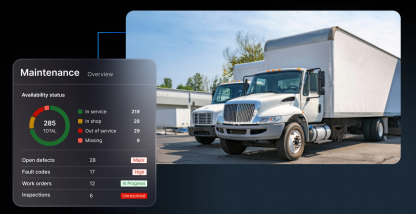
Use a centralized platform like the Motive Dashboard to connect operations and maintenance teams. Look for these features so teams can plan work, prioritize repairs, and track uptime:
- Live asset data
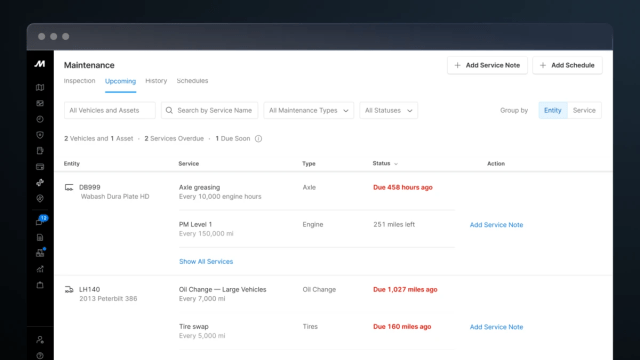
- Engine-hour and mileage-based maintenance schedules
- Automated maintenance reminders
- Fault codes
- Service history
3 best practices for asset maintenance
Improve the effectiveness of your asset maintenance program with these three best practices.
1. Base maintenance on usage
Instead of relying on intervals recommended by the manufacturer, customize maintenance schedules based on real-time data about vehicle usage. When wired to the ignition, Motive’s Asset Gateway Mini tracks engine hours and idling time and sends data back to the Motive Dashboard. Teams don’t have to rely on odometer guesses or manual logging to plan maintenance.
2. Automate service reminders
Use automated reminders to service assets. Within the Motive Dashboard, Asset Gateway Mini-equipped assets can generate maintenance reminders based on time or usage thresholds, so teams don’t miss service windows. And instead of creating spreadsheets, you can create vehicle maintenance schedules directly in the Motive Dashboard.
3. Centralize maintenance
Unify asset health and tracking in one dashboard instead of logging into separate systems. For example, all Asset Gateway Mini data rolls into the Motive Dashboard. This way, maintenance teams, operations, and dispatch are working from the same system of record.
Asset maintenance for fleet-powered organizations
With modern technology, a structured, efficient system for asset maintenance that improves the bottom line is possible.
Want to learn more about Motive’s asset maintenance capabilities? Check out the Asset Gateway Mini or our full suite of equipment monitoring products.