

In a recent conversation, Craig S. Smith, host of the Eye on AI podcast, sat down with Motive Chief Product Officer Hemant Banavar and FusionSite Services Chief Information Officer Ryan Ennis to unpack what safety AI should look like when real lives and reputations are on the line. The discussion explored how accurate, real-time detection can improve driver behavior, prevent collisions, and scale across fast-growing fleets.Ennis shared the measurable impact FusionSite has seen since switching to Motive, while Banavar explained why Motive builds safety AI with a level of precision organizations can trust in the field.
Precision turns AI alerts into collision prevention
In environments where safety is paramount, precision is non-negotiable. A system that’s merely acceptable can still leave businesses reacting after something goes wrong.
“There are so many situations where you have a need for safety,” Banavar said. “AI that’s simply ‘good enough’ doesn’t cut it. The difference between AI that’s only good enough and being really precise is the difference between reacting to an accident — and preventing it. And that’s why we obsess over what we have built, in terms of the solution that we offer.”
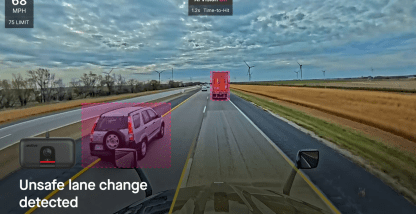
Motive pairs edge-run models with real-time alerts drivers can trust. The goal is simple. Stop risk in the moment, then reduce it over time through coaching that sticks. The Motive AI Dashcam detects unsafe driving behaviors in real time to help prevent collisions. With safety, operations, and finance in one unified platform, safety insights move smoothly into daily workflows.
The difference between AI that’s only good enough and being really precise is the difference between reacting to an accident — and preventing it.
How real-time AI coaching works
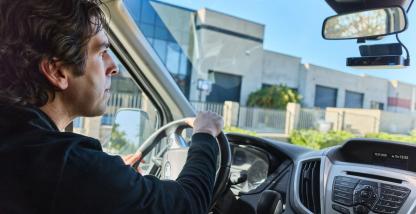
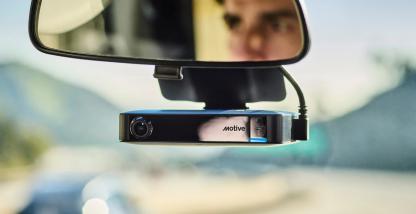
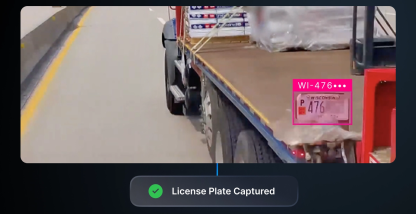
Inside the vehicle, context matters. The Motive AI Dashcam uses dual-facing cameras to monitor the road and the driver while AI runs on the device. A hard brake when someone cuts in is defensive driving. A hard brake while the driver looks at a phone is a risk event. That split-second interpretation keeps alerts relevant. The AI Dashcam detects 15+ unsafe behaviors with up to 99% accuracy, helping reduce false alerts.
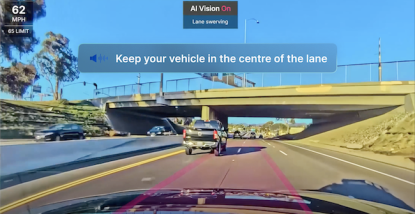
Drivers get immediate feedback through a short audio prompt and LED visual cue. If an unsafe behavior occurs past a customer-chosen threshold, managers are notified. Drivers get coaching in real time, right when it matters. Safety teams get prompted to follow up in the Safety Hub.
Why humans stay in the loop
False alerts waste managers’ time, frustrate drivers, and erode trust in technology. Motive’s answer is an integrated system of hardware, software, and human validation. The Motive Safety Team reviews every safety event video to remove false positives so drivers aren’t penalized unfairly.
FusionSite got results with precision AI
Ryan Ennis has spent two decades in transportation. He notes that technology doesn’t drive adoption, an effective rollout does. “Drivers need to feel that a system is protecting them, not policing them,” Ennis said.
FusionSite tested roughly six camera systems side-by-side for several months. Motive checked the boxes for accurate AI, precise GPS tracking, and the ability to scale across a diverse fleet.In 2023, FusionSite ran about 470 vehicles and logged about 280,000 safety events across 14 behaviors such as phone use and close following. Today, the organization operates about 1,300 vehicles, and events are down to 25,000 a year.
“That’s about a 98% reduction in safety events, even while increasing our fleet,” Ennis said. Insurance claims followed the same trend, with 76 in 2023 and just one to date in 2025. Insurance premiums decreased, with savings around $2 million to $2.5 million year-over-year.
Listen to the episode
Hear the whole Eye on AI interview, as Hemant Banavar and Ryan Ennis break down the build-and-prove side of safety AI — and the real-world steps organizations with fleets can take to measure it for themselves.