

Commercial fleet insurance costs can be enormous. But they’re not set in stone. They’re often a reflection of your safety record, accident history, and overall risk profile. If you can proactively address these factors, you can improve safety while reducing insurance premiums and other accident-related expenses.
How much is commercial fleet insurance? Understanding the costs.
According to the American Transportation Research Institute (ATRI), truck insurance premiums have reached a new record high (averaging 10.2¢ per mile or $4.11 per hour). Other types of commercial fleets, such as bus fleets, may have even higher premiums because of higher liability limit regulations.
But the most important fact to know about commercial fleet insurance premiums is that they’re not determined by just one factor. Underwriters do a multi-faceted risk assessment, including accident and claims history.
The final premium you pay reflects the entire risk profile of your business.
4 ways to lower your fleet insurance costs
If you can improve your overall risk profile, you may be able to reduce your commercial insurance premiums and insurance-related expenses.
It’s a simple formula: Reduce accidents and breakdowns, and when accidents do happen, be able to provide evidence about who was at fault.
Although it’s easier to say than to do, there are practical steps you can take to reduce your risk profile. With the help of an AI-powered platform like the Motive Integrated Operations Platform, you could see results like these:
- Since adopting Motive, customers in one survey saved 21% annually on insurance expenses.
- Through the Motive safety program and AI dash cams, 91% of surveyed customers said they reduced at-fault accidents.
The impact of AI-powered safety can be huge. For example, FusionSite Services, a leading waste services provider, cut insurance claims by 98% with AI, even as the fleet more than doubled in size.
The strategies below can help lower commercial fleet insurance costs and improve your risk profile.
1. Collect data on driving behavior.
Improving driver safety can help reduce accidents, a primary contributor to higher insurance rates.
To coach drivers about safety, you need to know when risky driving behavior is happening and how individual drivers are performing. A safety system that combines video and vehicle telematics — and alerts you and the driver in the moment — is an effective way to improve driver behavior.
For insurance, we dropped our rates from $1,200 per driver to $900 per driver. That all makes a huge impact on where we can take our business.
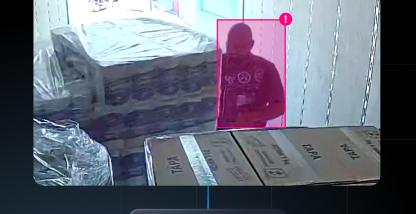
An AI dash cam uses artificial intelligence to detect and alert to unsafe driving behaviors in real time. The best AI dash cams provide high-definition (HD) video footage of both the driver and the road, providing clear data about high-risk driving behaviors affecting the fleet.
The Motive AI Dashcam detects about 15 safety events — including cell phone use, close following, and hard braking — issuing real-time alerts so drivers can correct unsafe habits on the spot.
AI dash cams have developed a strong following. Motive’s Physical Economy Outlook shows that 73% of fleet leaders say roads are safer with AI-powered cameras.
In fact, 91% of Motive customers surveyed say they’ve reduced at-fault accidents with the help of the Motive AI Dashcam. Accident prevention means you can save in other ways, too: 30% of customers surveyed said they saved annually on accident-related expenses.
By pairing video telematics data from AI dash cams with vehicle telematics, fleet managers can get a comprehensive picture of driver behavior. Vehicle telematics include data points like vehicle location, vehicle activity, and real-time engine diagnostics. Fleet managers can use the data to understand driving trends across the fleet, and address the behavior of individual drivers who require coaching.
The Motive solution has been an invaluable investment, saving us millions on accident claims.
2. Create a strong driver coaching program.
With data in hand, you can create a driver coaching program that shows drivers where to improve and encourages positive driving behavior. Based on a 2023 coaching study, surveyed customers saw 57% fewer accidents within four months of regular coaching.
For example, Southwind used Motive as the foundation of their internal safety program, DriveSafe. Their Senior Director of Safety and Compliance, Dwayne Morrison, implemented written and driving tests, ongoing education, and immediate feedback to coach drivers on safer practices.
Leveraging Motive Driver Safety, Southwind detects unsafe driving behaviors and generates Motive Safety Scores to keep track of driver performance over time. Morrison has built rewards for drivers with safe driving habits into the program, which fosters accountability and pride.
“Without Motive, it would be pure chaos,” Morrison said. “There’s no way I would be able to achieve the goals I’ve set out to achieve for the organization.” Their collaboration with Motive has led to a savings of $2 million in annual insurance premiums.
3. Practice preventative maintenance.
The third factor in reducing your risk profile: avoiding breakdowns. Breakdowns may not seem directly related to high commercial fleet insurance costs. But unexpected breakdowns can happen anywhere, and if drivers are on congested roads, they’ll need to exercise increased vigilance to avoid an accident.
If a vehicle breaks down, you’re also risking towing and roadside assistance expenses. If a critical defect caused the breakdown, it could even impact your CSA score — which can affect your insurance costs.
Motive’s fleet maintenance software can help you stay ahead of maintenance issues:
- Automate maintenance reminders. Set up a preventive maintenance schedule and alerts to ensure that vehicles are being regularly checked.
- Review diagnostic codes. Get real-time insight into engine fault codes to know whether a vehicle can safely stay on the road or needs immediate attention.
- Schedule data-based maintenance. Customize maintenance schedules based on real-time data about your vehicle usage.
- Review centralized data. Review comprehensive records of services completed, along with costs, service notes, and service type.
4. Exonerate drivers faster.
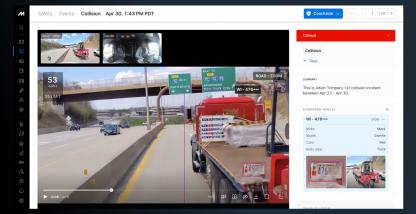
In the event of an accident, you can also use dash cams to save on costly insurance claims and spend less time managing those claims. Data shows that dual-facing dash cams exonerate drivers in more than half of insurance claims and nearly half of court cases.
The AI Dashcam shows real-time visibility into an accident. Without Motive, it’s our word against theirs.
In fact, 80% of Motive customers surveyed reported being exonerated for not-at-fault accidents. Rapid exoneration can minimize costly litigation and liability expenses. Having clear evidence at hand can also make resolving insurance claims faster. For example, 57% of surveyed customers reported saving time on insurance claim resolution.
With the Motive cameras, it took us 17 seconds to understand what happened and exonerate our driver.
Invest in safety, save on insurance
To reduce commercial fleet insurance costs, focus on decreasing risk. A safer operation gives you a much stronger negotiating position with insurance providers. With Motive, you have the tools you need — in one platform — to practice a proactive, effective safety strategy.