Products

How much will you save with Motive?
Improve your bottom line with Motive’s cutting-edge technology that enhances safety, boosts productivity, and drives profitability.
Solutions
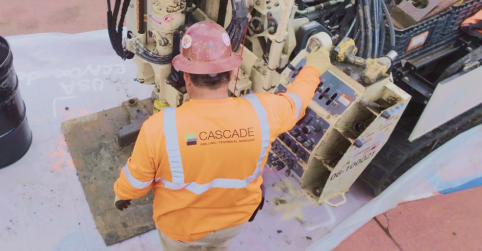
Cascade improves safety by 50%, reclaims ~10K hours per year.
With the Motive platform, Cascade has a consolidated view of fleet and spend management across its fleet of more than 3,000 vehicles.
Resources

Company

Vision 26: May 26-28
Join us in Nashville to connect with other industry leaders, get hands-on training, and see how AI and automation can transform your business. Register today and save!
CUSTOMER CASE STUDY
Groome Transportation reduces safety events and boosts accountability with Motive’s AI-powered technology.
How the Motive Integrated Operations Platform protects passengers and reduces liability at scale.


Overview
Groome Transportation is a national passenger transportation provider, operating two core business models. One connects regional cities to major airports through shuttle services. The other provides campus and hospital shuttle operations, transporting employees and students between parking facilities and their destinations.
Groome operates branded vehicles on behalf of major universities and hospital systems across the U.S. In these environments, safety, reliability, and brand protection are non-negotiable. Every trip reflects not only on Groome, but on the partners whose names are displayed on the side of each vehicle.
With a safety-first culture focused on getting passengers where they need to go safely and on time, Groome has long prioritized risk reduction. But as the company scaled, new challenges emerged. Risky driving behaviors, passenger incidents, and liability claims required constant attention, and limited visibility made proactive intervention difficult. The need for real-time insight and faster action set the stage for Groome’s partnership with Motive.
71%
Decrease in miles spent speeding
46%
Decrease in cell phone usage
36%
Reduction in seat belt violations
Challenge
As they grew, Groome’s longstanding commitment to safety ran into a critical barrier: visibility. With more than 850 vehicles operating across 40+ locations, it was difficult to see what was happening in the moment — both on the road and inside the vehicle.
Without real-time visibility, the safety team was often forced to investigate incidents after the fact, rather than proactively avoid them. Unsafe behaviors and passenger incidents could go unnoticed until a claim was filed or an accident had already occurred.
“We were seeing behaviors that were occurring, but we weren’t being notified of it unless you pulled the video and knew exactly when it happened,” said Craig DeCarlo, Senior DOT Compliance and Safety Manager at Groome Transportation.
Key challenges included:
- Limited insight into high-risk behaviors: Existing hardware did not proactively detect behaviors such as cell phone use, seat belt neglect, speeding, or rolling stops.
- Reactive investigations: Managers often learned about issues only after an incident occurred, then had to manually search for video — if it existed at all.
- Exposure to false claims: Without reliable dashcam footage, Groome struggled to defend against common collision and slip-and-fall claims in passenger transportation.
- Brand and partner risk: As a branded operator for universities and hospital systems, Groome needed fast, objective proof to preserve partner trust and protect reputations.
DeCarlo brought more than two decades of law enforcement experience to his role, shaping his approach to safety and accountability.
“I spent 26 years in law enforcement, and the first thing they teach you is that your goal is to go home at night,” he said. “That mindset carries over directly to how we think about safety.”
Groome needed a solution that could identify unsafe behaviors as they happened, deliver actionable insights to the right people, and help protect passengers, drivers, and the company’s reputation. And DeCarlo needed a partner who shared his non-negotiable mindset toward safety.
Solution
Groome implemented Motive AI Dual-Facing Dashcams to close the visibility gap. The cameras provided immediate insight into both on-road driving behavior and in-cab activity, allowing the safety team to address risks sooner and more effectively.
Motive’s AI detects critical safety violations — including cell phone use, seat belt neglect, speeding, and rolling stops — in real time.
“With AI, we get the alerts and can set tolerances to the level we choose,” DeCarlo said. “It gives us a much greater ability to modify driving behavior.”
The technology supports both management oversight and driver self-correction. In-cab alerts notify drivers immediately, enabling them to adjust behavior in the moment, while managers receive alerts that allow for timely coaching.
“Drivers can self-coach, and management can also coach as soon as the alert hits,” DeCarlo explained. “That directly impacts driver behavior and reinforces our safety-first culture.”
To strengthen accountability, DeCarlo’s team tied Motive safety scores directly to incentive programs for both Groome drivers and managers. Drivers are evaluated based on their Motive safety score, Hours of Service (HOS), compliance, and adherence to company policies. Managers are held accountable across four categories: Motive compliance and safety event management, HOS compliance, drug and alcohol testing, and driver qualification file compliance.
“Everyone is accountable,” said DeCarlo. “The criteria are clear, and the expectations are shared across the organization.”
Motive AI dual-facing dashcams also play a critical role in helping protect passengers and reducing liability.
“Passengers see the cameras when they get on, and we clearly communicate that they’re being recorded,” DeCarlo said. “It gives them peace of mind and shows that we care.”
That visibility has helped build trust with riders, drivers, and partners — while also providing the evidence needed to respond quickly and fairly to claims.
“It also helps us eliminate or relieve liability from false claims,” he added.
While adoption required training and adjustment, early wins and clear communication accelerated buy-in.
“There’s a learning curve with AI technology,” DeCarlo noted. “But once that curve passes, you’re changing driving behavior with accurate, actionable alerts.”
Results
Groome’s partnership with Motive has delivered measurable improvements in safety, efficiency, and accountability.
“Since implementing Motive and launching our new driver training program, we’ve seen an overall decrease in safety events by 12%,” said DeCarlo. “Combined with Motive coaching, we also reduced accidents by 10%.”
Driver behavior improved across multiple high-risk categories:
- 71% decrease in miles spent speeding, driven by AI alerts, vehicle governors, and the removal of cruise control
- 46% reduction in cell phone usage, supported by AI detection and strict policy enforcement
- 36% decrease in seat belt violations
- 30% reduction in stop sign violations
- 16% improvement in miles driven per safety event, indicating fewer incidents per mile traveled
“That’s 100% attributable to AI detecting behaviors and us enforcing policy,” DeCarlo said.
Motive’s dual-facing cameras have also changed the way Groome manages claims. Video evidence allows the team to quickly review incidents and refute false collision and slip-and-fall claims, reducing unnecessary payouts and protecting the company’s standing with airport, university, and hospital partners.
Operationally, managers now spend less time searching for unidentified driving events and more time coaching drivers.
“We’re allowing managers to spend their time on behavior modification instead of administrative work,” DeCarlo explained.
That shift has strengthened Groome’s safety culture and sparked healthy competition among drivers and locations. Teams regularly review scores, set goals, and celebrate progress.
With Motive’s AI-powered technology in place, Groome Transportation has been able to improve passenger safety, reduce operational risk, and strengthen accountability across a large, complex operation. The company now operates with greater confidence, deeper visibility, and faster response — while reinforcing trust with drivers, passengers, and partners.
As Groome continues to scale, Motive remains a critical partner in helping the company deliver safe, reliable transportation on every trip.
Ready to get started?
Explore Motive’s fleet management solutions and see how your fleet could benefit.
Quick Links