Products
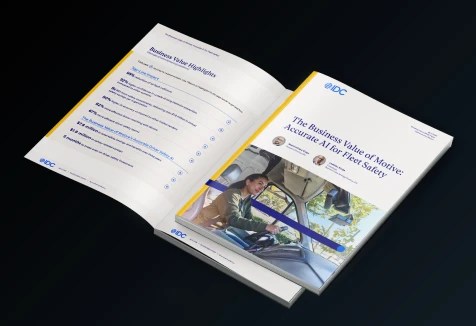
Why AI accuracy and benchmarking matter in safety-critical environments.
Explore accurate AI’s impact on fleet safety and operations, and see the measurable results Motive customers achieved.
Solutions
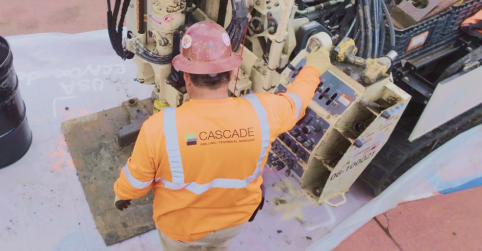
Cascade improves safety by 50%, reclaims ~10K hours per year.
With the Motive platform, Cascade has a consolidated view of fleet and spend management across its fleet of more than 3,000 vehicles.
Resources
Ranked #1 by real customers on G2.
Read our customer reviews and learn why we have a 99% satisfaction score.
Company
Watch the Vision 26 keynote.
See everything announced at Motive’s annual innovation conference, including AI models, automations, and hardware.
CUSTOMER CASE STUDY
How Convergint transformed fleet safety coaching and built driver trust across 3,500 vehicles with Motive
By pairing video context with real-time in-cab alerts, Convergint changed coaching conversations, improved driver trust, and built a foundation for a consistent safety program as it expands globally

Overview
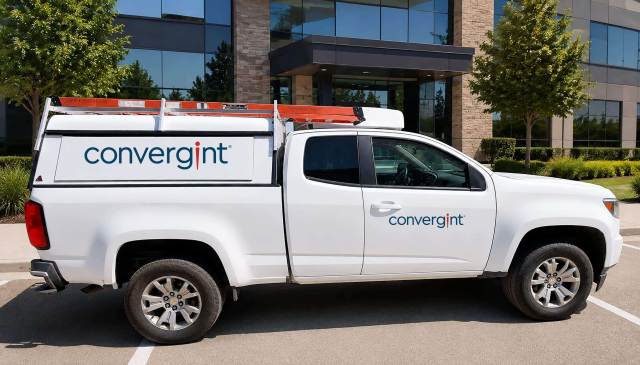
Convergint is the world’s largest global systems integrator whose teams serve critical environments such as utility infrastructure, hospitals, and campuses. Their field technicians design, install, and maintain the systems that help keep those operations secure.
To support that work, Convergint operates a fleet of more than 4,500 vehicles around the world and drives more than 55 million miles annually in the United States alone. As the organization expands, they need a driver safety program that can match the scale of its fleet and the high standard Convergint sets in the field.
Kevin Todd, Director of Safety, leads that effort. His team oversees coaching strategy, technology rollout, and the regulatory and cultural challenges that come with growing a global footprint. Their goal was to build a driver safety program that was consistent, data-driven, and trusted by the colleagues it was designed to protect.
With Motive AI Dashcams, Convergint gained the visibility it had been missing. Video helped the team move beyond spreadsheet-based coaching and toward conversations grounded in what actually happened on the road. Real-time, in-cab alerts also gave colleagues a chance to self-correct in the moment, before risky behavior turned into an incident or a claim.
24%
Decrease in preventable accidents
19%
Decrease in accidents that resulted in a claim
Challenge
For Convergint, any safety program had to work at the scale of its operations. The company had already invested in fleet safety technology, but its systems were fragmented, leaving the program both reactive and unreliable.
Safety leaders could see driving data and recorded footage separately, but they could not easily connect the two to understand what had actually happened during an event. When a hard brake or another alert came through, managers knew something had happened, but they could not quickly see why.
That gap made coaching difficult. Conversations often started with spreadsheets listing event counts instead of evidence, which could make those conversations feel accusatory rather than constructive. Without easy access to video, the team had no reliable way to distinguish unsafe behavior from defensive driving. A hard brake to avoid a collision looked the same in the data as a hard brake caused by inattention.
After Convergint’s CEO made it clear that new technology had to support global operations, the team focused on finding a partner that could provide one platform and one source of truth across every fleet and every market they operated.
Solution
Convergint chose Motive because the relationship felt like a partnership from the start. After a year-long selection process among 12 vendors, Motive helped the team understand aspects of telematics they hadn’t previously considered.
“Motive listened to what we said we wanted, what the outcome was, and then worked to align the system to our needs,” Todd says. “It wasn’t a take-it-or-leave approach. It was really about understanding our needs and how they could help us get there together.”
By combining AI Dashcams with accurate tracking and telematics in a single platform, Motive gave Convergint video context for every driving event. That changed how coaching worked across the organization. “It changed the conversation from ‘you need to work on this behavior’ to ‘wow, we saw what happened and what led to this behavior – thank you for being alert and avoiding that incident,’” Todd explained. Coaching became more accurate, more collaborative, and more effective.
Motive listened to what we said we wanted, what the outcome was, and then worked to align the system to our needs. It wasn’t a take-it-or-leave approach. It was really about understanding our needs and how they could help us get there together.
Equally important was Motive’s real-time, in-cab alert system. “It’s the single biggest driver of the improvement we saw,” said Todd. When team members are speeding, following too closely, or otherwise at risk, they receive immediate audio feedback. The result: technicians that self-correct in the moment, before a behavior becomes a safety event and before a safety event becomes a collision and a costly claim.
Transparency works in both directions. Brittny Zavala, Convergint’s National Safety Coordinator, explains, “Colleagues can come back to us and ask a question. We can pull up video and show them in the moment why they had that in-cab alert or event.” This ability to review footage together is now a core part of how the team explains alerts and builds understanding.
As the program rolled out across dozens of U.S. offices, Motive data revealed that each location faced many of the same safety challenges, making lessons learned in one market immediately applicable to others. Motive Fleet View and Analytics keep that insight flowing. New patterns emerge regularly, allowing Convergint to refine coaching and improve the program over time rather than relying on static assumptions.
The strength of the partnership has also positioned Convergint to deploy Motive next in the UK and Ireland, with additional international markets on the roadmap — all anchored in the promise of one platform and one source of truth across every fleet in every market.
As that rollout expands, Convergint will navigate added complexity, including privacy requirements, country-specific regulations, and local operating differences. Todd says having a partner that can help the team manage those requirements will be especially valuable.
Results
Since deploying Motive, Convergint reports a 24% reduction in overall preventable vehicle accidents and a 19% reduction in accidents that resulted in a claim. The Convergint safety team credits these improvements to three key shifts: real-time behavior feedback, evidence-based coaching, and a culture rooted in empathy and service.
Motive AI Dashcam footage helps the team distinguish unsafe behavior from defensive driving and recognize team members when they make the right decision. Zavala illustrates, “Before, it was ‘why did you hard brake?’ Now it’s ‘I can see you were avoiding an accident.’”
Todd has seen similar benefits in how colleagues perceive the safety program. When colleagues realized the system could show evidence of their good decisions — not just their mistakes — trust followed. Coaching that used to feel like a one-sided lecture now starts with footage. Todd says that, in many cases, the first response from a technician is “thank you,” because the conversation is grounded in what actually happened and acknowledges the conditions they faced.
The result has been a culture shift from assumption to understanding. “Driving is an immensely frustrating endeavor,” Zavala said. “We always knew it, but now we can see it, we can have empathy for our colleagues and understand what they have to deal with on an everyday basis.”
For Todd, the case for Motive goes beyond the numbers. His advice to peers struggling to get leadership buy-in: “Don’t stop short. Go back to the edge cases — the incidents leadership has already been worried about. That’s where you’ll find your ROI story.”
For Convergint, the journey from reactive technology and adversarial coaching to proactive, empathetic, insight-driven safety management has delivered more than lower accident rates. It has given the company a meaningful advantage in protecting its people, its customers, and its brand, at home and around the world.
Ready to get started?
Explore Motive’s fleet management solutions and see how your fleet could benefit.
Quick Links