


Maintaining food safety throughout the supply chain is good for everyone. It’s also a mandate.
The 2016 Sanitary Transportation of Human and Animal Food rule, which enforces the Sanitary Food Transportation Act of 2005 and the Food Safety Modernization Act of 2011 (FSMA), outlines the FDA’s expectations for safe food transportation.
Compliance with these food safety transportation standards is crucial for anyone involved in moving food — carriers, shippers, and receivers.
Learn what the rule requires and what you can do to maintain compliance for perishable foods.
4 FDA requirements for food transportation safety
1. Vehicle integrity and proactive temperature control
Vehicles (road or rail) transporting food need to carry food in conditions that actively prevent contamination and maintain product safety. The FDA expects:
- Safe design and maintenance. Transportation equipment needs to be designed and rigorously maintained to ensure it won’’t make the food unsafe. For example, a reefer shouldn’t have mold growing in it, since that could contaminate the food it transports.
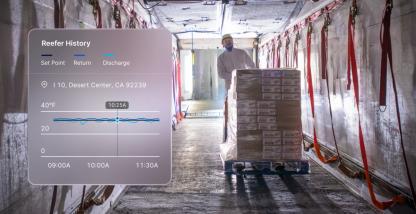
- Temperature control. Carriers with refrigerated or frozen products need to maintain the specific temperature range required for that product throughout the route — along with records proving that temperature was maintained.
- Maintain sanitary practices. This means taking steps to prevent contamination of food products. For example, some organizations might stack raw foods below ready-to-eat foods so there’s no risk of anything raw leaking.
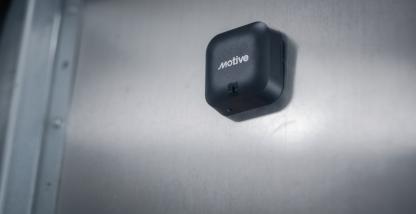
With Motive, it’s easy to prove cargo was kept at the correct temperature throughout transportation. Motive environmental sensors monitor the temperature and humidity conditions of temperature-controlled cargo. You can also set up Motive’s door monitors to get alerted when a door opens. Reports provide historical temperature and humidity logs with specific time periods and assets.
2. Mandatory training and documented competence
Compliance with food safety transportation standards rests on more than equipment. It also depends on well-trained employees. The FDA expects the following from carriers:
- Required training. The rule requires that carrier personnel receive training on potential food safety problems and basic sanitary transportation practices. For example, employees should be trained on how to properly pre-cool the reefer or sanitize a unit between trips.
- Documented competence. Training alone isn’t enough. You also have to prove it happened. The FDA requires that you document training to create a formal record of compliance with food safety transportation standards.
Managing training records can be a headache. The Motive Integrated Operations Platform simplifies this with integrated document management, training, and AI document capture. Audit-ready records are centralized and easily accessible so you can prove that your team is trained.
3. Cross-contamination prevention
To comply with the Sanitary Transportation of Human and Animal Food rule, you’ll also need strict, proactive measures to prevent contamination during loading, transport, and unloading. The FSMA rule requires protection from three key sources of contamination:
- Raw vs. ready-to-eat. Prevent contamination of ready-to-eat (RTE) food by raw food. For example, a vehicle used for raw meat must be thoroughly cleaned before being used for an RTE product like cereal.
- Non-food items. Protect food from contamination by non-food items carried in the same load or from residue from a previous load on the vehicle. For example, the same bulk tanker used to transport industrial cleaning chemicals shouldn’t be used for food unless a rigorous, documented cleaning procedure is followed (and agreed upon by the shipper).
- Food allergens. Take measures to prevent cross-contact, which is defined as the unintentional incorporation of a food allergen into another food product. For example, if you transport a load of peanuts and then plan to transport boxed milk, you need cleaning procedures that will prevent peanut dust or residue from transferring to the milk shipment.
With Motive AI Dashcam footage, you can verify that proper loading protocols were followed before the doors were sealed.
4. Record-keeping
The FDA mandates that carriers keep records related to food transportation activities, including:
- Written procedures. Any required written procedures for transportation operations, such as specific cleaning or temperature protocols.
- Agreements. Any formal agreements between the carrier and the shipper that assign responsibility for sanitary conditions. For example: Who is responsible for providing the temperature specifications?
- Communication. Shipper-to-carrier communication about required sanitary specifications.
- Training. All documentation of required training for carrier personnel.
You generally need to retain any documents other than training documents for 12 months.
With Motive, you can be audit-ready with a centralized, digital repository for documents. Instead of sorting through binders or file cabinets, house all your records — including automated temperature logs from reefers, training certifications, and uploaded agreements — in a cloud-based system.
5 strategies for staying compliant with the FDA’s food safety transportation standards
Staying compliant with food safety transportation standards at all times takes resources and careful attention. Make it easier for your fleet by practicing these strategies:
- Install door opening monitors and temperature monitoring inside reefers to continuously monitor and record temperature data.
- Conduct regular maintenance and calibration of reefer cooling systems.
- Train employees on proper handling and loading techniques to prevent damage and cross-contamination.
- Follow best practices for sanitation, cleanliness, and pest control within trailers to maintain hygiene standards.
- Retain thorough, digital records in the event of a food safety issue or audit.
When you use the Motive Integrated Operations Platform, you have the tools you need to keep indisputable, centralized records for FSMA compliance. See why Motive is the solution that food and beverage fleets need.
The whole package came together for us with Motive.