


If you drive a lorry across Britain, you already know the story. Those outer sidewalls on the tyres always look battered, scuffed, chunked, or chewed up. It isn’t necessarily a sign of bad driving. It’s often a consequence of road conditions.
Our infrastructure simply wasn’t built for modern 44-tonne artics. High streets designed in the 1800s, tight village corners, roundabouts stacked mile after mile, and kerbs that don’t give an inch. All of it forces tyres into constant contact. Add in bus lanes, cycle lanes, and cars trying to squeeze in, and drivers often have no choice but to let the rubber brush the kerb. The result? Sidewalls get chewed, even when the tread still looks fine.
The cost of sidewall damage
A damaged sidewall can result in a vehicle failing its MOT or lead to a potentially dangerous blowout on the road. The scale of the problem is evident in the numbers. On England’s major roads last year, tyre problems caused more than 51,500 breakdowns, a 14% increase from the year before. Faulty tyres, often caused by sidewall damage, also remain the top cause of motorway and A-road breakdowns, making up 20% of all call-outs, according to National Highways.
The scale of this problem extends beyond damaged tyres. There’s also the broader issue of keeping up with vehicle maintenance under challenging conditions. Many breakdowns could be prevented with proper tyre checks, but for commercial drivers, it is more complicated. While National Highways advises checking for cuts and wear across the whole tyre, including the sidewall, constant battering from kerbs and tight corners can cause damage to accumulate rapidly between inspections.
Tyres that pass morning walkaround checks can sustain sidewall damage in a matter of hours on Britain’s congested roads and in tight urban layouts. What looked sound at 6 a.m. might be compromised by lunchtime after a few deliveries through narrow high streets or tight roundabouts. Drivers and operators must balance travelling on infrastructure that wasn’t designed for modern Heavy goods vehicles (HGVs) and meeting legal safety requirements.
MOT statistics tell the same story. In 2023–2024, 2.15 million reported MOT failures were tyre-related. Strikingly, more than a third of those failures involved issues that had been flagged in previous advisories but never fixed.
For operators, each of these statistics translates into costs like roadside recovery bills, late delivery penalties, and vehicle downtime. For drivers, it could mean another lost shift or being stuck on the hard shoulder waiting to be rescued.
Why visibility matters in fleet management
Operators and drivers can’t widen Britain’s roads overnight, but they can change how they manage tyre damage. This is where real-time visibility becomes a powerful asset. Seeing where and why tyres are taking punishment allows fleets to act before the problem becomes another costly breakdown.
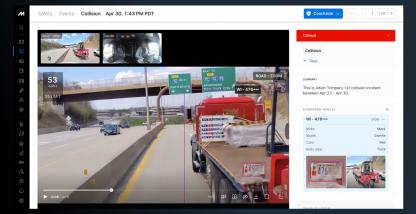
With Motive, operators gain insights from Motive’s proven AI-powered dash cams and telematics expertise that thousands of fleets have used to reduce risks and cut costs. These automated tools provide context into every incident, capturing exactly what happened on high-definition video.
For drivers, that kind of proof is invaluable. Tyre damage is often pinned on “poor care,” but difficult situations frequently dictate the outcome. Motive can detect and capture video of incidents that cause damage.
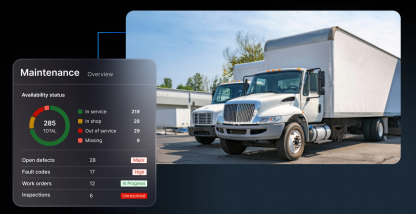
For operators, the benefits stack up quickly with a more robust fleet management system in place. Visibility allows managers to:
- Re-route vehicles away from roads known to cause damage.
- Gather video evidence to show how damage occurred.
- And even challenge councils when local layouts are unsafe.
Most importantly, it gives fleets a defensible record that walkarounds were carried out and issues logged, something paper walkaround check reports can’t do.
Getting ahead of the problem
The reality is tyres wear out, especially in the United Kingdom, where road conditions tend to be impacted by damp weather patterns or centuries-old city planning. Fleets that embrace visibility aren’t stuck reacting after a blowout or an MOT failure. They can spot patterns, address risks, and better support their drivers.
UK haulage will only get more complex, especially since roads aren’t getting wider and costs aren’t going down. Fleets that invest in an Integrated Operations Platform can save money on tyres, cut downtime, and most importantly, keep their drivers safe.