
Fleet compliance has become a front-line issue for safety, operations and finance leaders. In 2026, tighter oversight, new fuel types and data-heavy audits make it harder to stay ahead without the right tools and processes.
Think of fleet compliance as the total system — the rules, habits, and tech — you use to meet safety standards and government mandates. It’s what keeps your hours-of-service (HOS), inspections, and emissions records in check so your trucks stay on the road.
For organizations that run physical operations, a unified platform that connects ELD, telematics, safety, and spend data gives you a single view of compliance risk instead of juggling point tools.
This guide shows you the platform features and ELD tools that make life easier for busy teams in 2026.
Key compliance drivers shaping fleets in 2026
A few big shifts are changing how fleets handle their paperwork and safety in 2026:
- Electric and mixed fleets: Electric vehicles and alternative fuels require new ways to track inspections and energy use.
- AI-powered safety tools: Instead of looking at what went wrong, teams are using real-time alerts to stop accidents before they happen.
- Digital-first audits: Regulators like the FMCSA are moving away from paper and toward instant, electronic data transfers.
- Sustainability pressure: Tracking emissions and idling is now a standard part of doing business.
Leading fleets are moving toward a single system where real-time information from vehicles and drivers underpins every compliance decision, not just routing.
Managing EVs and mixed-fuel fleets
EVs are great for urban routes, but many fleets still need diesel for the long haul. Managing both at once adds a layer of complexity to your records.
To keep audits clean, your platform needs to:
- Simplify charging logs: Track battery health and downtime alongside traditional fuel stats.
- Unify emissions reporting: Combine energy use and fuel data into one report for tax and business filings.
- Standardize inspections: Use digital checklists that work for both electric and combustion trucks.
To stay ahead, standardize Driver-Vehicle Inspection Reports (DVIR) and inspection workflows, integrate EV and charger data into your main compliance system, and automate mileage, fuel, and energy reporting by jurisdiction.
Using smart tools to stay proactive
The goal is to spot risks before they turn into violations or incidents . Motive uses accurate AI to connect real-time driver behavior, HOS data, vehicle health, and telematics signals in the Motive Compliance Hub so you can surface issues early and prevent violations.
Here’s how it helps your bottom line:
- Catch repairs early: Get alerts for engine faults before a truck fails a roadside inspection.
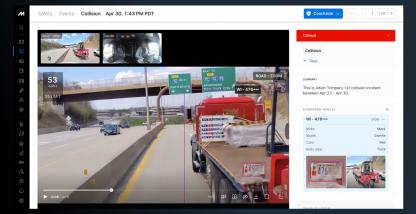
- Support drivers in real time: Use in-cab alerts to help drivers correct behaviors such as tailgating or distraction in the moment.
- Automate log audits: Flag missing signatures or HOS gaps instantly instead of relying on manual review.
- See risk clearly: Use dashboards to see where your fleet is most exposed by driver, route, or region.
Instead of finding out about problems after an inspection or incident, you get clear alerts and simple workflows that let your team intervene sooner, keep drivers compliant and prevent small mistakes from becoming costly events.
Safety, security, and driver trust
Compliance is ultimately about the people behind the wheel, not just the truck. When drivers have tools that are easy to use, they are more likely to stay safe and keep accurate logs.
To improve results, focus on:
- Guided, user-friendly apps: Use digital checklists and walkthroughs in the Motive Driver App to make DVIRs fast and clear.
- Fair, context-rich coaching: Base coaching on clear video and event context, not just raw statistics.
- Strong data privacy controls: Protect driver information with strict permissions, encryption, and clear access policies.
- Transparent metrics: Show drivers how their actions affect safety and compliance so they can track progress.
Data privacy compliance means handling driver and fleet information in line with privacy laws and industry rules, and limiting who can see which data. Driver experience still determines whether logs are accurate and inspections get done on time.
What to look for in a fleet compliance platform
A modern fleet compliance platform should bring all your data into one view, cutting out the need for multiple logins and manual spreadsheets. These tools don’t just tick a box; they reduce manual work and protect your business when regulators call.
With Motive, the Compliance Hub centralizes ELD compliance, driver qualification, IFTA reporting, and CSA score management in one place, supported by the Motive ELD and Driver App.
Must-have features include:
| Feature | Benefit |
|---|---|
| Certified ELD and HOS management | Pulls drive time from the engine and supports U.S. and Canadian rules. |
| Real-time telematics and GPS | Tracks routes, speed, idling and jurisdiction mileage. |
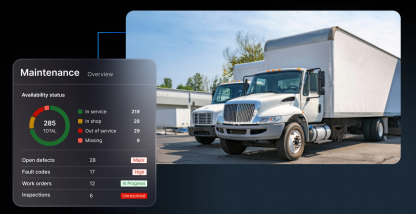
| Integrated DVIR and maintenance workflows | Ensures defects and repairs stay linked for better oversight. |
| Automated alerts | Notifies teams of upcoming HOS violations, missing inspections and critical faults. |
| Compliance dashboards | Provides violation breakdowns, CSA trends and fleetwide metrics. |
| Audit-ready reports and exports | Simplifies HOS, DVIR, IFTA and maintenance record keeping. |
| Security and privacy controls | Offers granular permissions and activity logs to protect data. |
| Open APIs and integrations | Connects with TMS, HR, safety and back-office systems. |
Your 2026 fleet compliance roadmap
To get ready for the year ahead, start with these steps:
- Unify your data: Choose one platform for ELD, tracking, and maintenance so teams share the same source of truth.
- Automate repetitive work: Use technology to handle logs, alerts, and reports wherever possible.
- Support your drivers: Provide guided workflows and clear expectations so drivers know exactly what to do and when.
- Watch the right stats: Track HOS violation rates, inspection completion, and audit readiness on a regular cadence.
Together, these capabilities replace paper logs with simple, digital workflows. Fleets that treat compliance as a daily habit — rather than a one-time project — will be the ones that grow in 2026.
Ready to simplify your strategy? Learn how Motive can help you protect your bottom line.
Frequently Asked Questions
What are the biggest fleet compliance trends in 2026?
Electrification, stricter emissions rules, wider use of AI and predictive analytics, integrated telematics platforms, stronger driver support and growing cybersecurity and privacy demands.
How will electrification and alternative fuels change compliance?
They add new inspection, charging and emissions reporting needs, and often require upgraded systems to combine fuel and energy data across EVs and combustion vehicles.
How can AI improve fleet compliance and safety?
AI automates checks, highlights at-risk drivers or assets earlier, predicts violations and backs up coaching and routing decisions with clear data.
What features should I prioritize in a fleet compliance platform?
Focus on certified ELD and HOS tools, integrated telematics, automated alerts, strong security, unified DVIR and maintenance workflows, dashboards and audit-ready reports.
How do integrated data platforms simplify audit readiness?
By centralizing ELD, GPS, DVIR and maintenance records, integrated platforms make it faster to generate accurate reports and answer auditor questions without hunting through multiple systems.