

Fuel is typically the largest controllable operating expense for commercial fleets, representing 30–40% of total fleet operating costs. Because fuel prices fluctuate and inefficiencies compound across thousands of miles, even small performance improvements can produce meaningful savings.
In 2026, leading operators treat fuel as a controllable, data-driven operational metric — not a fixed cost. Telematics, AI analytics, and integrated fuel spend management tools make it possible to monitor fuel in real time, prevent theft, and enforce policies automatically.
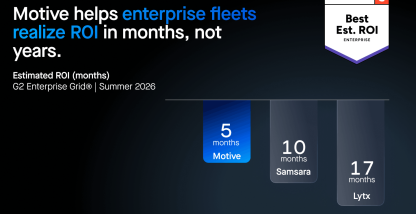
AI-driven fleet fuel management software connects telematics data, driver behavior analytics, and fuel card transactions in one platform. By implementing an AI-driven fleet fuel management software strategy, fleets can reduce fuel waste and see a fast payback, often in less than 12 months.
This checklist outlines the technologies and operational strategies that leading fleets use to reduce fuel waste and maximize ROI.
What is AI-driven fleet fuel management software?
AI-driven fleet fuel management software uses machine learning, telematics, and automated analytics to monitor fuel usage, detect inefficiencies, and control fuel expense across a fleet.
Unlike traditional fuel tracking tools, modern platforms analyze multiple data streams simultaneously, including:
- Vehicle telematics
- Driver behavior metrics
- Fuel card transactions
- Route and trip data
- Maintenance diagnostics
This integrated approach helps fleets to detect fuel waste, fraud, and operational inefficiencies in real time. Platforms such as Motive’s Integrated Operations Platform combine fleet and spend management to automate fuel monitoring and provide managers with data-driven insights that improve efficiency and reduce costs.
Characteristics of high-performance fuel-efficient fleets
Fleets that achieve the greatest fuel savings consistently follow these four practices:
- Measure fuel performance continuously, tracking cost per mile and MPG alongside safety and operational metrics.
- Coach drivers using data, supported by scorecards and in-cab coaching.
- Maintain strict vehicle health standards with preventive maintenance.
- Centralize fuel data, replacing fragmented spreadsheets with integrated operations platforms.
The fuel efficiency ROI snapshot
Fuel optimization technology typically delivers measurable financial returns. The following table outlines common ROI expectations for key solutions:
| Technology / Strategy | Fuel Impact | Time-to-Value | Estimated ROI |
| Idle monitoring and coaching | Reduces average fuel consumption | Weeks to months | High |
| AI theft and fraud detection | Reduces losses from theft and misuse | Near-instant (once configured) | Immediate |
| Route optimization | Cuts route miles and wasted driving | Months | Moderate |
| Predictive maintenance | Improves efficiency and uptime10–15% efficiency gain and lower breakdown risk | Less than a year | Long-term |
| Integrated fuel cards | Lowers net fuel costs | Weeks | Consistent |
Together, these technologies form the foundation of modern fleet fuel expense controls.
Motive’s AI-driven fleet fuel management platform
Leading fleets rely on integrated platforms to manage fuel performance at scale.The Motive Integrated Operations Platform connects vehicles, drivers, and spending data into a unified system powered by AI, with capabilities that include:
- Telematics and ELD integration
- Real-time fuel usage reporting
- AI-powered safety and efficiency event detection
- Automated fuel card reconciliation
- Driver coaching dashboards and benchmarking
Motive’s Vehicle Gateway collects engine diagnostics, vehicle activity, and driver behavior. This data feeds into Motive Fuel Hub, which analyzes fuel consumption patterns and highlights opportunities for improvement.
Research across hundreds of fleets shows organizations using Motive fuel insights can achieve up to 13% improvements in fuel efficiency, translating to millions of gallons saved annually for large fleets.
2026 Fleet fuel management checklist
1. Deploy AI-driven fleet fuel management
AI-driven fleet fuel management software uses machine learning and telematics to optimize fuel consumption, spending, and reporting across a fleet. Instead of manually reconciling spreadsheets and fuel reports, AI-powered platforms automatically detect patterns humans can’t easily see. Examples include:
- Ghost idling
- Out-of-route fueling
- Abnormal consumption patterns
- Siphoning or fuel theft
High-performance fleets also improve driver behavior. For example, fleets using driver coaching analytics report up to 79% fewer hard acceleration events, which directly improves fuel economy.
An AI-driven fleet fuel management software platform like the Motive Integrated Operations Platform unifies telematics, ELD data, and fuel card transactions into a single source of truth for fuel expenses.
2. Implement real-time fuel level tracking
Real-time fuel level tracking is the continuous remote monitoring of fuel tank levels and consumption patterns. Second-by-second visibility allows fleets to detect leaks, theft, and abnormal fuel usage immediately.
Modern fuel monitoring systems can achieve up to 99.5% measurement accuracy, enabling precise real-time fuel usage reporting when levels change faster than expected. This real-time visibility forms the foundation for theft detection, expense control, and predictive fuel analytics.
3. Activate AI-powered theft and fraud detection
Fuel theft detection uses real-time tank sensors, transaction data, and location analytics to identify and verify fuel theft.
AI-powered systems can cross-reference vehicle GPS, fuel card transactions, and tank-level sensors.
If a transaction occurs without a vehicle present, exceeds tank capacity, or doesn’t match a fuel-level change, the system flags the event within 5-10 seconds and automatically declines suspicious transactions.
When fully enforced, AI-powered theft and fraud detection can dramatically reduce fuel theft incidents. Integrated platforms like Motive use card fraud detection and Vehicle Gateway data so finance and operations teams only review true exceptions.
4. Optimize fuel card integration and expense controls
Fuel card integration connects card transaction data with telematics to enable real-time monitoring, auditing, and cost allocation. When integrating fuel cards with your telematics platform, fleets gain full visibility into fuel spend and can enforce policies automatically..
Key benefits include:
| Benefit | Description | Impact |
| Automated policy enforcement | Block transactions outside working hours, at non-preferred merchants, or in unauthorized regions | Reduces unauthorized fueling and enforces fleet policies |
| Rebate maximization | Leverage Motive Card savings network and tools like Missed Savings to guide drivers to lower-cost stations | Can net thousands in annual rebates; ~$27,000/year for a midsize fleet |
| Audit readiness | Capture digital transaction data and receipts instead of manual recordkeeping | Simplifies tax season, IFTA reporting, and internal audits |
Leading fuel card programs are accepted at most U.S. fuel stations, and rebates can meaningfully improve margins.
5. Route optimization and geo-fencing
Route optimization software plans and adjusts routes in real-time to avoid congestion, minimize mileage, and maximize delivery efficiency. By minimizing unnecessary mileage and avoiding traffic, fleets typically reduce both fuel consumption and wear and tear.:
Below is a side-by-side route comparison table:
Geo-fenced fueling zones create virtual boundaries around approved fueling locations.If a driver fuels outside these zones, the system triggers an instant alert, helping fleets enforce pricing agreements, approved vendors, and fueling policies.
6. Idle monitoring and driver coaching
Idle monitoring uses telematics to flag engine run-time without movement and pairs that data with coaching and policies to change driver habits. Idling is one of the most common sources of fuel waste in commercial fleets.
Motive data shows that the most fuel-efficient fleets have 20% less idling than their peers. Fleets implementing idle reduction programs typically see a 5-10% reduction in fuel consumption with ROI in 1-2 months, and MPG gains of 8-12% with a 2-3 month ROI:
An example workflow:
- Identify offenders with idle reports.
- Send real-time alerts when idle thresholds are exceeded.
- Track idle reduction over time to help with behavioral change.
- Correlate fuel expense improvements to quantify fuel savings and ROI.
This combination of monitoring and coaching provides rapid, measurable fuel savings while reinforcing long-term efficiency habits across the fleet.
7. Leverage predictive consumption and maintenance
Definition: Predictive consumption analytics uses machine learning to forecast fuel usage and flag abnormal patterns. AI models can highlight vehicles or routes that deviate from their “normal” fuel profile so teams can investigate quickly.
Predictive models analyze:
- Historical fuel usage
- Driver behavior
- Vehicle diagnostics
- Route characteristics
Fuel waste is often a symptom of a mechanical or operational issue. Combining predictive consumption analytics with maintenance insights helps fleets identify root causes instead of treating symptoms.
Even small issues like underinflated tires or missed maintenance can negatively impact miles per gallon. Predictive maintenance helps fleets address these issues proactively, improving fuel efficiency and reducing the risk of unplanned downtime.
The fuel efficiency ROI snapshot
Fuel optimization technology typically delivers measurable financial returns. The following table outlines common ROI expectations for key solutions:
| Technology / Strategy | Fuel Impact | Time-to-Value | Estimated ROI |
| Idle monitoring and coaching | Reduces average fuel consumption | Weeks to months | High |
| AI theft and fraud detection | Reduces losses from theft and misuse | Near-instant (once configured) | Immediate |
| Route optimization | Cuts route miles and wasted driving | Months | Moderate |
| Predictive maintenance | Improves efficiency and uptime10–15% efficiency gain and lower breakdown risk | Less than a year | Long-term |
| Integrated fuel cards | Lowers net fuel costs | Weeks | Consistent |
Together, these technologies form the foundation of modern fleet fuel expense controls.
Conclusion
Fuel is no longer just a cost center for fleet operators. With AI-driven fleet fuel management software and integrated platforms like Motive, fleets can transform fuel data into practical ways to reduce waste, prevent fraud, and generate measurable financial ROI.
Frequently Asked Questions
How can fleet managers accurately monitor real-time fuel usage?
By using integrated telematics and fuel management systems that connect directly to the vehicle’s engine control module (ECM), fuel sensors, and fuel card data. This provides a live feed of real-time usage reporting, tank levels, and spend in a single dashboard.
What is the fastest way to see ROI on fuel technology?
Idle reduction and driver coaching typically offer the fastest ROI (often 1–2 months) because they address human behavior (idling, speeding, harsh acceleration) without requiring major mechanical changes to the fleet.
Does fuel card integration actually stop theft?
Yes. When fuel cards are integrated with GPS, tank-level, and driver/vehicle assignment data. The system can automatically decline a transaction if the assigned vehicle is not physically present, doesn’t have capacity for the purchased volume, or if spend patterns fall outside configured policies. This dramatically reduces both card fraud and unauthorized fueling.