Products
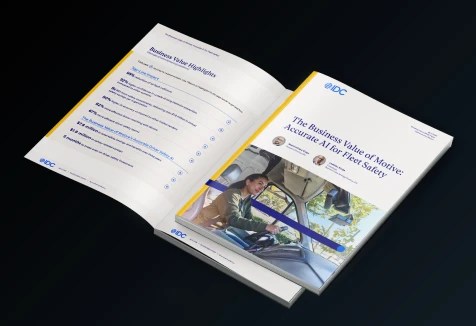
Why AI accuracy and benchmarking matter in safety-critical environments.
Explore accurate AI’s impact on fleet safety and operations, and see the measurable results Motive customers achieved.
Solutions
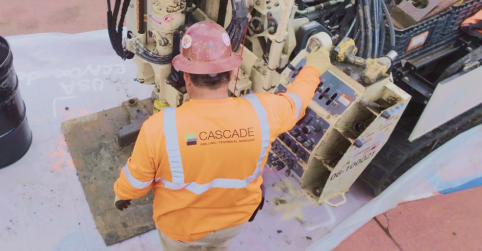
Cascade improves safety by 50%, reclaims ~10K hours per year.
With the Motive platform, Cascade has a consolidated view of fleet and spend management across its fleet of more than 3,000 vehicles.
Resources
Ranked #1 by real customers on G2.
Read our customer reviews and learn why we have a 99% satisfaction score.
Company
Watch the Vision 26 keynote.
See everything announced at Motive’s annual innovation conference, including AI models, automations, and hardware.
CUSTOMER CASE STUDY
How KLX Energy Services reduced at-fault incidents by 68% and achieved full ROI in one year with Motive.
By reducing unsafe driving events by 91% per 1,000 miles and saving $12,000 each month on fuel, KLX strengthened safety, efficiency, and accountability across its oil and gas fleet.
Overview
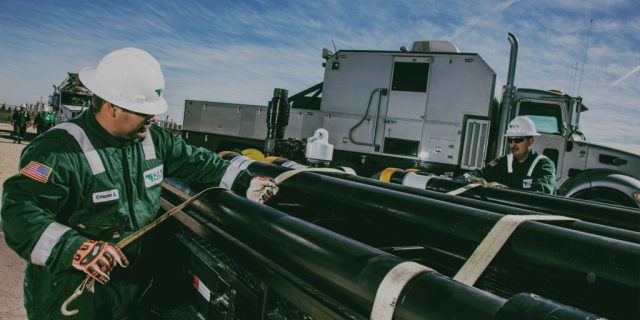
KLX Energy Services, a leading oil and gas service company, runs a fleet of about 1,700 vehicles and employs roughly 1,700 people. The team delivers critical services around the clock in remote, challenging locations, so safety and efficiency are always a top priority. Additionally, the work is complex: Drivers face difficult terrain, heavy-duty oilfield vehicle traffic, and continuous operations in isolated areas.
After a merger in 2020, KLX needed a more advanced platform to improve visibility into driver behavior and operating conditions. After adopting Motive, KLX has achieved measurable improvements in safety, efficiency, and cost savings over time, even fully recouping their investment within a year
68%
Reduction in at-fault incidents
$12,000
Saved in monthly fuel costs
91%
Reduction in events per 1,000 miles
Challenge
Operating an oil and gas fleet presents unique challenges, especially with operations in remote, high-risk environments. While KLX had a solid safety foundation in place, the company’s legacy GPS telematics system was designed primarily for incident reporting after the fact, with limited visibility into everyday driving behavior or near-miss events.
“We could only see incidents when police were involved,” said Douglas Barnette, KLX’s vice president of quality, health, safety, environmental fleet, and risk. “But we didn’t have the level of insight needed to understand patterns or proactively coach before something more serious occurred.”
As the business grew, operational complexity increased as well. Administrators had to move between multiple systems to access fuel data, safety events, and compliance information. “Previously, we had to jump from portal to portal just to identify the information we needed,” Barnette noted. The fragmented experience slowed workflows and made it harder to connect insights across teams.
Fueling added another layer of complexity. Declined transactions often required after-hours intervention and manual troubleshooting, pulling time away from higher-value work.
KLX saw an opportunity to modernize. The team set out to consolidate safety, visibility, and day-to-day fleet operations into a single platform — one that could support proactive coaching, simplify workflows, and deliver reliable, real-time data at scale.
Solution
KLX implemented the Motive Integrated Operations Platform to modernize fleet safety and operations. With dual-facing Motive AI Dashcams in place, the team gained what Barnette called “complete transparency of what’s happening day in and day out on the roads.” The dash cams revealed daily driving behaviors and near-miss events, which helped KLX prevent accidents before they happened. The company took a performance-based approach to driver-facing cameras, focusing on vehicles that most needed enhanced monitoring. That targeted rollout let the team address specific risks with precision.
Turning on audible alerts made a clear difference. “Once we turned on audible alerts, there was a significant reduction in distracted driving events, hard braking, and close following,” Barnette said. He added that the alerts led to an “immediate reduction in those events, and that can be said for distracted driving across the board, whether it be eating, smoking, seat belt usage, everything has improved significantly.”
Real-time feedback helped drivers correct behaviors in the moment, which reduced risky habits and improved overall safety scores.
KLX also simplified fueling with the Motive Card. Drivers can now handle declined transactions directly through the Motive Driver App without waiting for administrative support. “The self-service option, where our employees can see exactly what they’ve done, allows them to troubleshoot the problem themselves and be successful fueling the vehicle,” Barnette said.
This change cut down on after-hours calls, saved time for managers, and helped drivers get back on the road faster.
Coaching became more structured and efficient through the Motive platform. The process starts with drivers reviewing their own events, followed by targeted coaching from managers and supervisors. “When our employee does have an event, the first step is the employee reviews their own events, does self-coaching, but then that is followed up by our managers and supervisors,” Barnette explained.
This mix of self-accountability and guided coaching supports sustained improvement, one driver at a time.
By bringing safety, fueling, and coaching into a unified system, KLX addressed its visibility challenges and streamlined its workflows. The result is a safer, more efficient fleet backed by clear data and practical tools that can handle operating in the oil and gas sector.
Results
Since implementing Motive, KLX has seen measurable gains in safety, efficiency, and cost control. The most important metric, at-fault vehicle incidents, fell sharply. The company went from 31 at-fault vehicle incidents in 2022 to 10 in 2024, a 68% reduction, and had recorded only 9 incidents year to date in November 2025.
Driver behavior improved across the board. Events per 1,000 miles dropped from 18.1 to 1.6, a 91% reduction in safety events per 1,000 miles. Across vehicles equipped with driver-facing Motive AI Dashcams and audible alerts, KLX saw a 51% reduction in cell phone usage and a 48% decrease in seat belt violations. The company’s overall driver score rose as well.
“Our driver score was probably an average of 84, where today the average corporate driving score is 96. So, that tells me that our drivers are driving safer, and that we’re just being a more responsible company on the road today,” said Barnette.
Fueling operations are now faster, more secure, and less costly. With the Motive Card, KLX saves about $12,000 each month through partner discounts and rebates, while significantly strengthening fraud prevention.
In one incident, three drivers fueled at the same station on their way back to the workforce housing and later received alerts in the Motive Driver App that their cards had been locked — an immediate signal of a skimming attempt. KLX shut down the compromised cards, issued replacements, and avoided losses, even as those same cards were later flagged being used at multiple gas stations across Texas. “We were able to shut down the cards, get them new cards, and prevent any unauthorized transactions,” said Barnette.
Requiring drivers to unlock fuel cards through the Driver App also increased Driver App adoption and accountability, leading to an immediate drop in unidentified events in the Motive system while keeping drivers on the road.
Motive’s exoneration tools help protect drivers and reduce legal risk. In one deeply unfortunate incident, a KLX driver was involved in a serious multi-vehicle accident while following a third party, when an oncoming vehicle struck the vehicle ahead and spun into the KLX vehicle. Video from the Motive AI Dashcam clearly showed that the KLX driver was not at fault.
The footage was shared with law enforcement at the scene, and, as Barnette explained, “We were able to pull the video and show it to the police, and that minimized any future litigation.” Having clear, objective evidence helped bring clarity during a difficult situation, reduced stress for the team, and ensured the incident was handled fairly and accurately.
Financial results followed the safety gains. KLX realized a full return on investment within one year, driven by lower insurance rates and fewer collision-related costs.
“I saw our return on investment in one year just with insurance rate reductions. Motive pays for itself,” Barnette said.
He also highlighted the quality of the partnership and support. “Motive has been an absolutely wonderful partner… the relationship with my customer service manager with Motive is almost like having another employee.”
KLX’s experience shows what happens when safety, coaching, and daily operations work together. Better data leads to smarter coaching. Real-time alerts prompt better decisions behind the wheel. Easier fueling and fraud controls save time and money. The team’s drivers are safer, the business is more efficient, and the company is better prepared for the challenges of operating in remote, high-risk environments.
Barnette and his team at KLX remain committed to continuously improving operations and safety. Oil and gas will always be demanding, with changing conditions, complex routes, and long hours. With Motive as a partner, the company has the visibility, tools, and support it needs to keep people safe, reduce risk, and run a stronger fleet.
Ready to get started?
Explore Motive’s fleet management solutions and see how your fleet could benefit.
Quick Links