Products
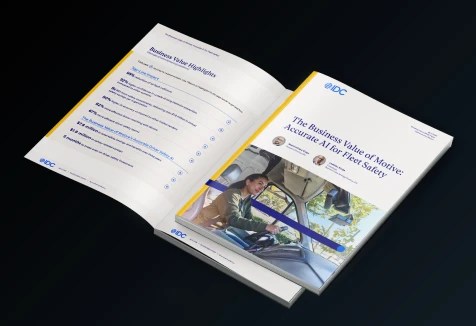
Why AI accuracy and benchmarking matter in safety-critical environments.
Explore accurate AI’s impact on fleet safety and operations, and see the measurable results Motive customers achieved.
Solutions
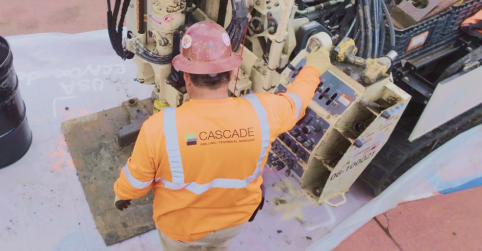
Cascade improves safety by 50%, reclaims ~10K hours per year.
With the Motive platform, Cascade has a consolidated view of fleet and spend management across its fleet of more than 3,000 vehicles.
Resources

Ranked #1 by real customers on G2.
Read our customer reviews and learn why we have a 99% satisfaction score.
Company

Watch the Vision 26 keynote.
See everything announced at Motive’s annual innovation conference, including AI models, automations, and hardware.
CUSTOMER CASE STUDY
How SPATCO energy solutions used Motive Driver Rewards to build driver buy-in and a stronger safety culture.
By combining fleetwide AI Dashcam deployment with Safety Score-based coaching and automated driver recognition, SPATCO replaced a punitive safety model with a more consistent, trusted approach across its distributed workforce.

Location
Charlotte, North Carolina
Type
Oil & Gas
Fleet Size
1,400
Ready to get started?
Get startedOverview
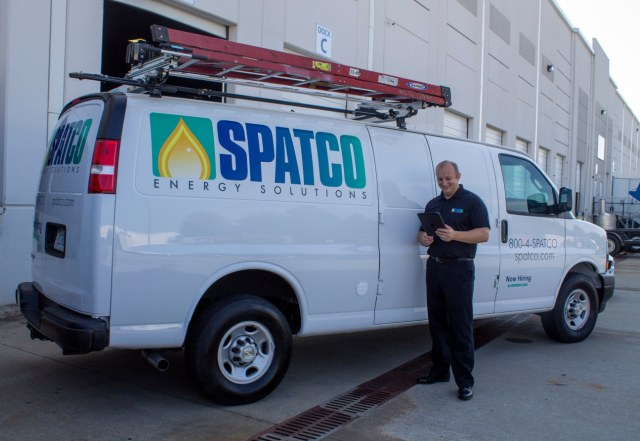
SPATCO Energy Solutions is a large petroleum field services organization operating approximately 1,400 trucks across 39 locations in 14 states and covering about 8 million miles per month as teams travel to multiple job sites each day. Operating in a high-risk, highly distributed environment, the company needed a way to maintain consistent safety standards, keep drivers engaged, and protect the business from costly claims while supporting a mix of remote, in-town, and fill-in drivers whose safe driving habits often went unseen.
Before Motive, inconsistent camera coverage, punitive policies, and manual recognition programs made it difficult to build trust or fairly evaluate performance across the fleet. Drivers were wary of surveillance, safety teams lacked reliable video evidence when incidents occurred, and many high-performing drivers never received formal recognition for their efforts.
To create a more consistent and credible safety program, SPATCO chose Motive for its AI Dashcams, configurable Safety Score, and Workforce Management tools including Performance Hub and Driver Rewards. Together, those tools helped SPATCO’s Fleet Director, Rodney Fetters, and his team shift the culture from punitive to positive — creating clear, consistent accountability while using cameras to protect drivers, improve safety, clarify what really happened in an incident, and recognize good driving.
Instead of treating cameras as something drivers received only after they made a mistake, SPATCO began using Motive to build a program drivers could see as supportive rather than punitive.
35%
Reduction in accidents
13 Drivers
Achieved 100 Safety Score in Hard-Braking Challenge
What safety and driver engagement challenges did SPATCO face before deploying Motive?
Before partnering with Motive, SPATCO’s approach to fleet safety was inconsistent, reactive, and difficult to manage at scale. Camera deployment was incomplete, which meant drivers across the fleet were not being measured against the same standard.
That inconsistency made accountability harder and undermined trust from the start. SPATCO’s prior approach often introduced cameras only after an accident, turning safety technology into a symbol of punishment instead of prevention. Drivers viewed new monitoring tools with suspicion because they felt watched rather than supported. As Fetters put it, “When we said we’re putting cameras on windshields that are looking at people, no one wants intrusion. They don’t want Big Brother watching them.”
The absence of reliable video evidence also created material business risk. Without dash cam footage, the team had limited ability to quickly challenge false claims or defend drivers in serious incidents.
At the same time, SPATCO struggled to recognize the people who were already doing the right things behind the wheel. Drivers with excellent scores, especially those working in town or filling in across routes, could easily be overlooked in a system that was not designed to reward safe behavior consistently across every role.
SPATCO needed more than a camera rollout. The company needed a safety program that could create one standard across the fleet, produce credible evidence when incidents occurred, and give drivers a reason to engage with the program positively.
You’ve got to get people involved in a positive way. It can’t always be punitive; it has to be different. That’s where the buy-in comes in, and then you will see their performance improve.
How did SPATCO make safety coaching and driver recognition more consistent?
SPATCO deployed Motive AI Dashcams across its entire fleet, replacing selective camera placement with uniform coverage for every driver.
That shift established a consistent foundation for the safety program. Instead of some drivers feeling singled out while others operated without the same visibility, everyone was held to the same standard. As Fetters explained, “Now we have cameras fully deployed with everyone. It puts everybody in the exact same box, and we go from there.”
With that consistency in place, SPATCO focused on changing how safety was communicated. Rather than positioning cameras as surveillance, they framed safe driving around what mattered most to the people behind the wheel: getting home safely and protecting the value of a day’s work.
As Fetters told his teams, “We want you to wear your seat belt because there’s someone at home waiting on you to get home tonight. We want you to go home better than what you showed up.” Motive’s Safety Score and coaching tools helped reinforce that message through ongoing conversations centered on behavior, accountability, and care rather than top-down enforcement.
To address specific driving habits, SPATCO used Motive’s Performance Hub within Workforce Management to create targeted challenges around behaviors such as hard braking. SPATCO leaders understood that drivers are competitive by nature, and they wanted to build a program that could actually change behavior rather than simply document mistakes.
Motive also gave SPATCO a more reliable way to review events and understand what happened on the road. Dash cam footage created an objective record the team could use when assessing incidents and evaluating claims, giving safety leaders a clearer basis for decision-making than they had before.
The result was a program built around consistency, visibility, coaching, and recognition. As Fetters put it, “There are so many things inside the platform that can help you. The answers are there for you. You just have to go get them and then figure out how to use them with your people.”
What results did SPATCO achieve with Motive? or How did SPATCO achieve 35% reduction in accidents with Motive?
SPATCO’s new approach translated into measurable performance gains and stronger cultural buy-in. Since implementing Motive’s AI-powered coaching and Driver Rewards tools, SPATCO reports a 35% reduction in accidents across its fleet.
At one location, SPATCO turned a hard braking challenge into a tangible example of how positive reinforcement can change behavior. By the end of May, all 13 participating drivers at that site had earned a 100 Safety Score.
Motive also played a critical role in one of SPATCO’s most high-stakes incidents. After a five-vehicle crash on a Friday evening, the company was facing a gross negligence lawsuit by Monday morning.
Dash cam footage showed the SPATCO driver was traveling 46 miles per hour in a 45 zone and clearly captured that the other driver caused the collision. According to SPATCO, the video evidence helped exonerate the driver and supported the company’s successful defense against the lawsuit, protecting both the employee and the business from significant financial exposure.
That incident also became a turning point in driver perception. The employee involved had previously been one of the most vocal critics of cameras, but after the dash cam cleared his name, he became an advocate for the program. Because he traveled and had relationships across the company, his change in perspective helped build broader buy-in across the fleet.
Over time, that buy-in evolved into something deeper: personal ownership. Fetters shared one memorable example: “One of our drivers, Aaron, is a 100 score driver. When he blew a stop sign one day, he came up to me and said, ‘I know you already know — what are you gonna say to me?’ He didn’t want to disappoint. That’s the kind of culture we’ve built.” For SPATCO, that kind of self-accountability is evidence of a culture shift from compliance to commitment.
The company continues to refine and expand its driver rewards program using feedback from drivers themselves, with a focus on making recognition fair across in-town drivers, fill-ins, and others whose safe performance may not always show up in mileage-based rankings.
By using Motive’s Performance Hub and Driver Rewards to scale that effort, SPATCO is building a safety culture that is not only more consistent, but also more motivating for the people it depends on every day.
Across safety, legal protection, and driver engagement, SPATCO’s story reflects a clear principle: driver buy-in is strongest when safety is reinforced positively, supported by evidence, and applied consistently.
Ready to get started?
Explore Motive’s fleet management solutions and see how your fleet could benefit.
Quick Links