


For commercial fleets operating across state and province lines, the International Fuel Tax Agreement (IFTA) is intended to simplify fuel tax reporting. But even with this improved system, you need to know the fine print, including IFTA due dates, to avoid penalties.
When are the official IFTA filing due dates?
IFTA operates on a quarterly reporting schedule. (Fleets with very low mileage can request annual filing; the deadline for annual taxes is January 31).
This means you must file a single fuel tax report with your base jurisdiction four times a year, detailing all miles traveled and fuel purchased in each participating state or province.
The IFTA tax return and full payment of any taxes owed is due on the last day of the month following the close of the quarter. For example, taxes and reports for the quarter ending in March are due on the last day of April.
These are the IFTA quarterly reporting periods and their corresponding due dates, according to the IFTA Articles of Agreement:
- First quarter (January 1 to March 31): Due April 30
- Second quarter (April 1 to June 30): Due July 31
- Third quarter (July 1 to September 30): Due October 31
- Fourth quarter (October 1 to December 31): Due January 31
3 facts to know about IFTA due dates
- Weekends/holidays affect due dates. Sometimes one of these due dates lands on a Saturday, Sunday, or legal holiday. In these cases, the due date is automatically extended to the next business day.
- Deadlines are standard. These deadlines do not vary by state or province.
- Zero reports are required. Even if your fleet didn’t operate (e.g. you have seasonal drivers) or you didn’t use any taxable fuel during a quarter, you are still required to file your IFTA tax return for that quarter. These are often referred to as “zero” reports, and submitting them ensures you remain compliant.
Tired of looking for IFTA reporting questions and answers? Use Motive to manage IFTA reporting and avoid the headaches of manual tracking and filing.
Consequences of missing IFTA due dates
Missing an IFTA due date means your taxes are considered delinquent. There’s no grace period for missing any of the IFTA deadlines. Your base jurisdiction may assess a penalty of $50 or 10% of the late tax payment you owe, whichever is greater. Interest will also accrue on all delinquent taxes. Worst of all, if your taxes are more than 30 days past the due date, you risk losing your IFTA license.
When we switched to using Motive to complete IFTA reports, we calculated time savings of more than 800 hours a month just from trip reports.
How to make it easier to keep track of IFTA
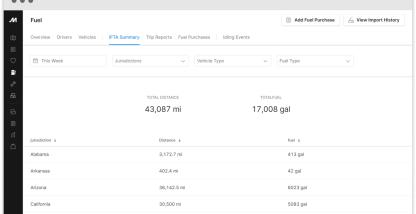
While IFTA was intended to simplify fuel taxes, it’s still not simple. Using fleet management software with built-in IFTA fuel tax reporting will help. With Motive, you can quickly improve your IFTA reporting process.
See how Motive makes it easy to manage the IFTA reporting process.
Here’s how it works:
- Use the Motive Vehicle Gateway to automatically record state- or province- border crossings and calculate jurisdictional mileage.
- Use the Motive Card for fleet expenses, and create IFTA reports directly from the Motive Dashboard.
- Allow drivers to upload fuel receipts directly to the Motive Dashboard.
- Automate and calculate IFTA reporting.