
In winter, the margin for error on the road disappears quickly. It may be still dark out when most drivers start their shift, and the fatigue that builds quietly in the background can feel almost normal. That’s the problem.
“Winter blues” are often talked about as a lack of energy or motivation. In fleet operations, it can be the difference between a close call and a collision.
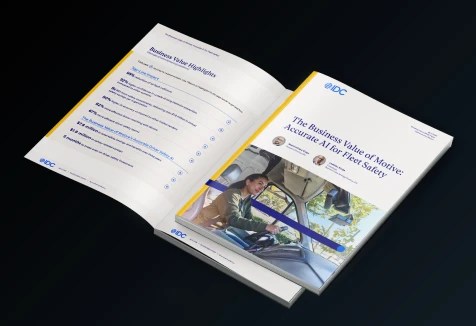
Motive’s 2026 AI Road Safety Report looks at how collision patterns evolved over the past year and where risk is headed. Using insights drawn from 1.2 billion hours of AI Dashcam video across the United States, Canada, and Mexico, along with publicly available data from the Federal Motor Carrier Safety Administration, the U.S. Census Bureau, and the U.S. Department of Transportation, Motive’s data makes one thing clear.
Fatigue isn’t just a personal issue for drivers. It’s one of the most consistent, measurable signals tied to collision risk, with consequences for everyone on the road.
The most dangerous moments aren’t the ones organizations might expect
When assessing road risk, it’s easy to focus on rush hour. Heavy traffic feels like the obvious threat. But Motive’s analysis shows that collision risk is far more concentrated when drivers are tired and visibility is low. Here are some of the report’s key findings:
- Late-night driving is more dangerous than rush hour, with collision risk peaking at 3 a.m., when it triples compared to midday.
- Risk also spikes around midnight and 1 a.m., reinforcing how dangerous overnight hours can be.
Dusk has emerged as another high-risk period, with collisions rising sharply around 6 p.m. after daylight savings time ends and darkness comes earlier.
Fatigue amplifies other high-risk behaviors
Motive’s data shows that collisions are rarely the result of a single mistake. They’re often preceded by a slate of risky behaviors. And fatigue makes that accumulation of behaviors harder to manage.
In the report, distraction follows a clear daily rhythm:
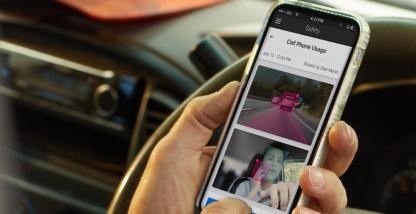
- Cell phone use peaks between 4 p.m. and 6 p.m., the same window when fatigue builds and traffic intensifies.
- Smoking behind the wheel shows up nearly 4,000 times per day, creating the same type of split attention that leads to mistakes.
These aren’t rare edge cases. They’re repeat patterns organizations can measure, coach, and reduce — especially when they’re visible in real time.
How the AI Dashcam Plus changes the outcome
The report’s biggest takeaway isn’t just when risk shows up. It’s what changes when organizations have visibility.
The Motive AI Dashcam Plus can detect risky behaviors linked to collisions and surface early warning signals before damage occurs, shifting driver safety away from post-incident review and toward prevention.
With the visibility safety managers get from the AI Dashcam Plus, they can:
- Detect behaviors that consistently precede collisions, including fatigue and distraction.
- Surface near-collisions as leading indicators, giving teams a chance to coach earlier.
- Support real-time intervention, not just reactive problem solving.
And coming in late 2026, live two-way calling will let managers reach drivers directly through the AI Dashcam Plus. By calling from the Motive Dashboard or Fleet App, managers can address time-sensitive issues like fatigued driving, weather emergencies, and maintenance issues. Drivers can respond safely hands-free without having to use their phones.
That kind of real-time connection matters because risk shows up long before a collision does. The report showed there are seven near-collisions for every one collision. Near-collisions surface risk in real time, so managers can coach drivers and help prevent repeat incidents.
“What’s changed over the last few years isn’t the risks on the road or the demands on drivers — it’s visibility,” said Hamish Woodrow, head of strategic analytics and data engineering at Motive. “If anything, driving is getting harder, with more distraction from cell phones, denser traffic, and tighter delivery pressure. Risk has always been there. What’s different now is that AI allows organizations to see it earlier, coach drivers more consistently, and intervene before unsafe behavior turns into a collision.”
What to watch for in 2026
The 2026 AI Road Safety Report points to a clear shift ahead. AI-powered, real-time intervention is becoming the primary driver of collision reduction, and near-collisions are becoming the most important leading safety indicator. While collision rates still tend to peak in Q1 due to winter weather and shorter daylight, risk can decline when organizations address unsafe driving behaviors earlier, before they escalate.
Read the full 2026 AI Road Safety Report to see more trends behind today’s most preventable collisions.