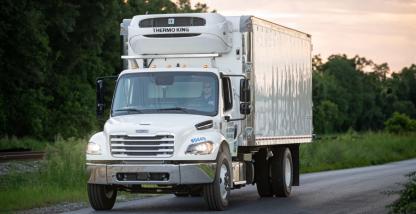

In cold chain logistics, the margin for error is virtually non-existent. If temperature is off by a few degrees, or humidity is slightly too low, you’re not just dealing with a spoiled load. You’re potentially staring down a claim, a lost customer, or damage to your brand.
It’s easy to talk about productivity in theory, but in the food and beverage industry, productivity has to be achieved without compromising temperature and humidity control, delivery windows, or compliance documentation. That’s a unique challenge that managers in other industries don’t often have to think about.
This is all the more important when you consider that approximately 13% of all food produced globally is lost due to poor cold storage supply chains every year. While there are a lot of variables impacting food wastage, approximately 7% to 15% of the wastage happens during transport. Even at near-freezing temperatures, food quality can begin to deteriorate and bacteria can start to grow in just one hour.
Where productivity breaks down
If you’ve ever managed temperature-controlled fleets, the lesson is always the same. Productivity in this space comes down to visibility, speed of action, and trust in technology.
Without accurate technology, fleet managers have limited visibility into their reefers. They can’t see if the reefer is set to the right temperature or staying there. Sometimes they want to adjust the temperature from the back office, and they have no way to do it.
While technology can help, adding multiple point solutions isn’t the answer. If your team is juggling 10 different systems instead of getting real-time insights from one, you’re exposed. Motive’s Physical Economy Outlook shows that:
- 46% of leaders say they’re already using more than 10 individual tools to manage operations, with 30% saying it’s too many to count.
- As a result, 58% spend most of their time dealing with reactive issues instead of proactively managing their workers, fleet, or assets.
Just a day without complete visibility can erase weeks of productivity and efficiency gains. The worst part? You don’t always know what you’ve missed until it’s too late.
The biggest obstacle to productivity isn’t a lack of effort; it’s fragmentation. When data is scattered across disconnected systems, critical information becomes difficult to retrieve, leading to widespread problems.
Reefer trailers, for example, can be divided into zones each set at a different temperature depending on the cargo inside. One zone might be kept at 36 degrees for refrigeration, another at 15 degrees for frozen goods. Variability like this makes having real-time visibility into, and control of, cargo conditions an absolute necessity.
Sometimes, reefers need up to six temperature and humidity zones for different kinds of goods, but OEM systems may not provide that level of visibility.
How fragmentation impacts the fleet
If you use multiple systems to manage your cold chain operation, some of these problems may sound familiar:
- Dispatchers can’t see which reefer unit can handle which temperature zone — or even confirm that a driver is available.
- Maintenance teams can’t tell whether a unit is running too hot until it’s already failed.
- Safety managers can’t coach drivers effectively without reliable video footage and telematics data that shows exactly what went wrong.
- Fleet managers don’t have easy access to the data they need to prove compliance around food traceability for FDA and USDA regulations.
Motive’s Physical Economy Outlook shows that:
- More than one in three leaders admit they don’t have the visibility they need to perform their jobs effectively.
- 44% say they lose track of vehicles at least once a month.
Why a unified platform matters
Inaccurate AI, alerts that can’t be trusted, and disconnected systems create more work for your team. It’s easy to get overwhelmed by reviewing irrelevant safety videos, forcing managers to spend nearly 10 hours a week reviewing false positives or double-checking sensor data.
An integrated, AI-powered platform that unifies all your operations in one place changes everything. When fleet safety, reefer monitoring, GPS tracking, fuel management, compliance, and maintenance all live under one roof, blind spots disappear.
Instead of juggling disconnected systems, fleet managers can manage everything in one place and share data across teams to save time. When physical operations are connected and automated using a solution like Motive, businesses gain real-time visibility and greater context that drives better, data-based decisions. Inefficiencies and waste that were once invisible are now easy to spot, leading to gains:
- Dispatch or headquarters can remotely adjust temperature zones and monitor real-time conditions across multiple zones.
- Maintenance teams spot fault codes early and fix problems before they get bigger. In fact, Motive cut operating costs by up to 20%.
- Compliance teams can get instant reports that satisfy FMCSA, USDA, and FDA standards without having to chase down logs.
- Fleet managers get immediate clarity on which vehicles are road-ready after maintenance and which drivers were operating in a given location — without relying on phone calls, texts, or incomplete data.
- Finance leaders can consolidate spend and fleet data to uncover hidden costs, reduce fraud, and manage expenses with more confidence.
- Safety managers gain exoneration tools and proven insurance benefits, with fleets seeing insurance cost reductions of up to 21%.
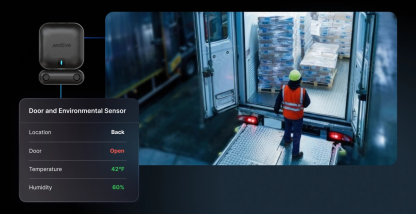
With Motive, inefficiencies are addressed and eliminated instantly. Motive Reefer Monitoring with remote temperature and humidity control allows cold chain fleets to make adjustments without pulling a driver off the road.
- Temperature excursions — when a reefer’s temperature drifts out of normal range — trigger alerts, not surprises.
- Cargo door events are logged and timestamped.
- Documentation isn’t just easier — it’s automated.
All of this adds up to a lot more than convenience. It’s what saves cargo, customers, and reputations.
Motive Reefer Monitoring enables us to set a report for every 15 minutes to ensure there are no issues with the load. Having this level of visibility saves us 5 to 10 hours per week in fleet manager productivity and prevents any spoilage.
How Motive delivers control and consistency
For cold-chain fleets, the benefits of automation go beyond reefer management. With Motive AI Dashcams, those same advantages extend to fleet safety, where real-time visibility helps shape safer driving habits, prevent costly collisions, and defend against false claims.
Driver coaching shifts from reactive discipline to proactive support. And when fleets recognize progress through Motive Safety Scores — rewarding drivers who improve and celebrating safety wins — the payoff goes deeper than fewer incidents. It can open the door to meaningful driver retention improvements and reductions in insurance costs.
Furthermore, Motive enables preventive maintenance, helping you move from reactive breakdowns to predictive repairs.
- Track wear patterns
- Schedule service before failures occur
- Reduce downtime by up to 50%
The future of food and beverage fleets
In the food and beverage industry, things move quickly. Real-time monitoring, sensor integration, and multi-temp delivery capabilities aren’t “innovations” anymore; they’re expectations. With Motive, you gain real-time visibility and control in the seconds that matter most. And across the cold chain, that can mean the difference between spoilage and success.
Ready to make cold chain your competitive advantage?