


Reducing fleet idling can pay off, to the tune of thousands of dollars’ worth of cost-avoidance. Before you can make a case to reduce idling, you first have to understand what it is, what it’s costing you, and how to identify the causes.
The meaning of fleet idling: What is considered idling?
Fleet idling refers to running a vehicle’s engine when the vehicle is not moving. What does it mean when a truck is idling, specifically? Heavy-duty vehicle idling is defined as a wheel speed less than 1 mph with an engine speed greater than 0 revolutions per minute.
A common fleet idling example is when drivers are stopped and resting, and have the fleet vehicle’s engine on to heat, cool, or use appliances in the cab.
The costs of fleet idling
As seen above, fleet idling leads to higher fuel expenses, increased vehicle wear and tear, and pollution.
1. Wastes fuel
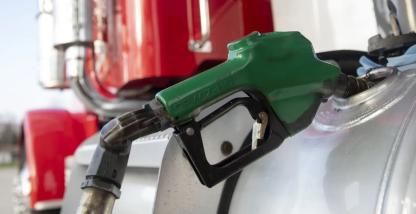
Idling fleet vehicles consume lots of unnecessary fuel. For example, a heavy-duty diesel truck can consume up to one gallon of fuel per hour when idling. That’s significant, especially when average fuel costs per hour ($19.32) are the second highest operational cost after driver wages ($32.10).
2. Reduces vehicle lifespan
Idling increases wear and tear on your fleet vehicle engines. Because fuel is only partially combusted at lower temperatures, it leads to a residue buildup that can damage cylinders, spark plugs, and exhaust systems.
3. Produces unnecessary carbon emissions
Fleet idling emits unnecessary air pollutants. For example, in the U.S., trucks consume an estimated 1 billion gallons of fuel each year while idling during rest periods, costing about $3 billion, and emitting about 11 million tons of carbon dioxide, 55K tons of nitrogen oxides, and 400 tons of particulate matter.
How much fuel is your fleet wasting on idling?
To calculate your wasted fuel from idling, you’ll need to calculate your total idling fuel consumption, total fuel cost from idling, and total fleet idling fuel cost. From there, you can go on to calculate the costs of engine wear and amount of carbon emissions produced by idling.
Fleet idling cost formulas
| To calculate your idling fuel consumption (per vehicle, per period):Total idling fuel (gallons) = idling fuel consumption rate (gallons/hour) * average idling time (hours) Example: A heavy-duty truck idling at 0.8 gallons/hour for 1,800 hours/year consumes: 0.8 gal/hr * 1,800 hrs/year = 1,440 gallons/year. |
| To calculate your fuel cost from idling (per vehicle, per period): Total idling fuel cost = total idling fuel (gallons) * average fuel cost ($/gallon) Example: 1,440 gallons/year * $4.00/gallon = $5,760 per year. |
| To calculate your fleet idling fuel cost (per period): Total fleet idling fuel cost = total idling fuel cost (per vehicle) * number of vehicles in fleet Example: For a fleet of 25 trucks: $5,760/truck/year * 25 trucks = $144,000 per year. |
| To quantify your estimated wear and tear, or “ghost miles”:Ghost miles = average idling time (hours) * 25 miles/hour (approximate wear equivalent)Example: 1,800 hours/year * 25 miles/hour = 45,000 ghost miles per year. |
| To estimate your CO2 emissions: CO2 emissions (lbs) = total idling fuel (gallons) * CO2 per gallon (approx. 22.45 lbs for diesel, 19.37 lbs for gasoline, per EIA)Example (Diesel): 1,440 gallons/year * 22.45 lbs CO2/gallon = 32,330 lbs CO2 per year. |
Effective steps to reduce fleet idling
To help your fleet cut down on idle time, you’ll need to gather data, and then use that data to implement coaching programs.
Gather data on idling time across the fleet
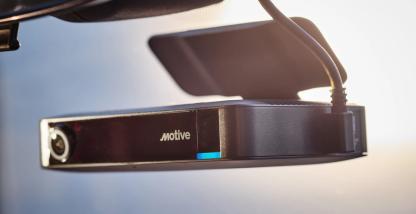
Start by getting telematics data from among your fleet vehicles and drivers. You can install hardware like the Motive Vehicle Gateway to gather data on vehicle activity. Then, you can see when excessive idling is happening, and which vehicles they belong to. If your vehicle-driver pairings aren’t always the same, you can add the Motive AI Dashcam or other Motive tools to the Gateway to identify which drivers idle the most.
Identify and coach drivers with idling habits
Coach drivers with poor idling behaviors on how their idling time directly affects fuel spend, and suggest strategies they can use to reduce it.
You could also use fleet data to dig into why idling events are happening and understand how to incentivize drivers not to idle. For example, you could create an incentive program that rewards fuel-saving behaviors.
You can also set up custom alerts in Motive to let you and the driver know instantly if they’ve been idling for longer than company standards allow.
Reducing fleet idling time is a bottom line issue
Using data strategically to cut back on fleet idling times can save your company a lot in fuel expenses. For example, Southwind, a home and commercial services provider, partnered with Motive and reduced their engine idle time, resulting in fuel savings of more than $500,000 in one year. Want to learn more about how Motive’s fleet management software can help?