



Everything you need to know about operating commercial vehicles legally in England, Scotland, and Wales.
Introduction
Running a compliant commercial vehicle operation requires reliable systems, accountability, and discipline. Fleet operators in Great Britain work within a regulatory framework that’s highly structured and actively enforced, with oversight from the Driver and Vehicle Standards Agency (DVSA) and independent Traffic Commissioners who hold judicial powers over operator licences.
Compliance in Great Britain is permission-based. An operator’s licence isn’t a one-time registration but an ongoing privilege and regulatory obligation. DVSA roadside inspections, maintenance investigations, and driver conduct hearings all feed into a regulator’s view of whether an operator remains fit to hold a licence.
This guide breaks fleet compliance into 12 practical steps while reflecting the realities of the current regulatory environment. It’s designed to help new operators understand what’s required to stay compliant, and to help established fleet-based organisations strengthen systems, train teams, and remain audit-ready as regulations evolve.
(Please note: This guide is written for Great Britain and does not cover Northern Ireland, the Isle of Man, or the Channel Islands, which have different regulatory structures.)
The reality of non-compliance
Traffic Commissioners conduct more than 1,000 public inquiries each year. More than 15,000 vocational driver cases were closed during the year, according to the most recent statistics. And DVSA examiners conduct thousands of roadside inspections annually. The standards are high because the stakes are high. A single serious incident can cost lives. Systematic non-compliance can cost you your licence, and with it, your livelihood.
The good news? Compliance is manageable. With proper systems, trained staff, and consistent oversight, compliance becomes routine rather than overwhelming.
Step 1. Obtain authority to operate
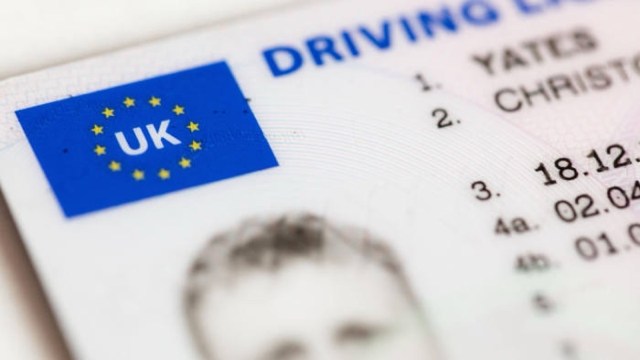
Before any commercial vehicle is used for business purposes, the operator must hold the correct authority to operate. In Great Britain, this authority takes the form of an operator’s licence issued by a Traffic Commissioner. Operating without the appropriate licence is a criminal offence and one of the fastest ways to lose the right to trade.
This guide focuses on Great Britain. Northern Ireland has a separate operator licensing system administered by the Driver & Vehicle Agency (DVA), and Northern Ireland requirements should not be treated as interchangeable with Great Britain’s rules.
Understanding operator licence types
The type of operator’s licence required depends on what you carry and where you operate.
Restricted licences apply to own-account operations, where an operator transports only their own goods. These licences do not require a professionally qualified transport manager, but all compliance responsibilities still sit with the operator.
Standard National licences allow the carriage of goods for hire or reward within Great Britain. These licences require a transport manager holding a valid Certificate of Professional Competence (CPC) and higher financial standing.
Standard International licences cover the same activities as a Standard National licence but include international operations. If you carry goods for hire or reward outside of Great Britain, you generally need a Standard International licence (including for EU operations).
Passenger-carrying operations follow a similar structure under Public Service Vehicle (PSV) licensing, with restricted, standard national, and standard international variants, depending on the nature of the service.
Meeting the licence requirements
To be granted a licence, an operator must demonstrate four core capabilities.
Financial standing must be proven through bank statements or audited accounts and maintained throughout the life of the licence. Falling below the required threshold without notifying the Traffic Commissioner is treated as a serious breach.
Professional competence requires the appointment of a CPC-qualified transport manager for standard licences. Traffic Commissioners expect genuine, continuous, and effective management. Nominal or disengaged arrangements are routinely challenged.
Operating centre suitability must be demonstrated for the number and type of vehicles authorised. This includes adequate space, lawful planning use, and appropriate access. Applications must be advertised publicly, allowing objections from local residents or competitors.
Good repute applies to the operator, directors, partners, and nominated transport managers. Relevant convictions, previous licence failures, or attempts to conceal regulatory history can result in refusal of the operator’s license application or lead to a public inquiry.
Maintenance arrangements at application stage
Applicants must also show that systems are in place to keep vehicles roadworthy. That means having documented inspection intervals, defect reporting procedures, qualified inspectors, and record retention arrangements. Traffic Commissioners assess whether these systems are realistic and workable, not just written down.
After a licence is granted
An operator’s licence is not static. It is monitored continuously, and compliance failures can trigger regulatory action at any point. Treating the licence as an ongoing obligation — not a one-time approval — sets the foundation for every other compliance step that follows.
- Licence discs must be displayed in authorised vehicles (where required), and operators must follow the updated rules introduced in October 2024 for goods vehicles, including recording discs against vehicle registrations and displaying them correctly.
- Vehicles must be correctly marked with the operator’s name, and licence number.
- Financial standing must be maintained.
- Notifiable changes must be reported within 28 days.
Step 2. Define compliance roles and responsibilities

Compliance requires clear ownership, defined responsibilities, and genuine accountability. One of the most common causes of regulatory failure in Great Britain fleet operations isn’t a lack of policies or systems, but a lack of clear ownership. Traffic Commissioners are explicit on this point. A compliant operation must be actively managed, and responsibilities must be clearly defined, understood, and enforced.
Whether an operator runs a single vehicle or a national fleet, every compliance function — from vehicle maintenance to driver oversight — must have a clearly named person accountable for managing it and determining how success is measured. When failures occur, regulators don’t accept “we didn’t realise” or “we thought someone else was dealing with it” as a defence.
The role of the transport manager
For standard licence holders, the transport manager sits at the centre of the compliance system. The role carries personal responsibility and is scrutinised closely by Traffic Commissioners. A transport manager is expected to exercise continuous and effective management of transport activities, not simply oversee paperwork or sign off on reports. Traffic Commissioners have made it explicitly clear that nominal transport managers who simply sign paperwork are unacceptable.
In roadworthiness terms, a transport manager sets appropriate inspection intervals, reviews safety inspection and defect reports, and monitors brake performance arrangements. Transport managers also see that records are complete and retained. They must be able to explain how defects are identified, prioritised, repaired, and prevented from recurring.
Drivers’ hours management is equally critical. Transport managers must ensure tachograph data is downloaded, analysed, and acted upon. This includes investigating infringements, identifying patterns, providing training, and taking corrective action when behaviour doesn’t improve. Simply generating reports is not enough. Regulators expect to see evidence showing that the data is understood and used to influence behaviour.
Driver management and supervision
Driver management is the third core responsibility and a frequent source of non-compliance. Transport managers must ensure that drivers hold the correct licence entitlements and Driver CPC qualification, that checks are carried out at appropriate intervals, and that conduct issues are addressed promptly and consistently.
Operational awareness matters. Route planning, scheduling decisions, and customer expectations all influence compliance. Transport managers are expected to intervene when work cannot be completed legally and to resist commercial pressure that encourages unsafe or unlawful driving.
Time commitment and accountability
Time commitment underpins the credibility of the role. A transport manager may be named on more than one licence, but only where they can demonstrate sufficient time and engagement for each operation. Traffic Commissioners routinely challenge arrangements where a transport manager appears overstretched, disengaged, or unable to explain how compliance is managed day to day.
Restricted licence holders remain fully responsible for compliance, even though they are not required to have a CPC-qualified transport manager on staff. Where no CPC-qualified manager is in place, all compliance obligations sit directly with the operator. The regulatory expectation is the same, regardless of licence type.
Step 3. Implement compliance policies
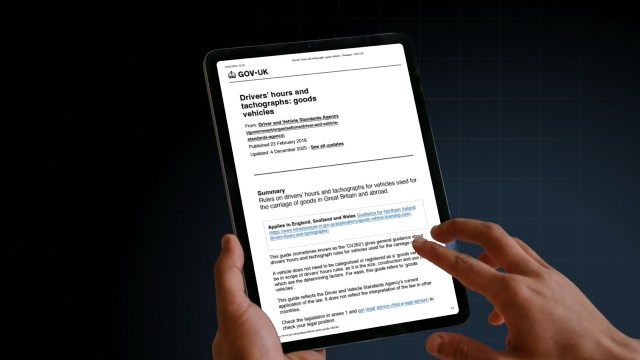
Policies should reflect your organisation’s compliance intentions. They’re the written version of “how we do things here.” Done properly, they protect your business, guide your staff, and demonstrate to regulators that you take obligations seriously. Done poorly, or not at all, they leave you exposed when things go wrong.
Traffic Commissioners expect operators to have clear, accessible policies covering the main compliance areas. While only drug and alcohol testing policies are legally mandated for specific operators, having comprehensive written policies across all areas is considered best practice and demonstrates careful management.
Core policy areas
Recruitment and driver qualification policies should explain:
- Pre-employment checks
- Licence and CPC verification
- Medical requirements
- Reference checks
- Probation arrangements
- Ongoing monitoring
These policies should reflect how drivers are actually recruited and supervised.
Drivers’ hours and tachograph policies must set clear expectations around compliance. They should explain how infringements are monitored and investigated, and outline the consequences of deliberate or repeated breaches. With increased enforcement focus on tachograph manipulation and missing records, policies must state explicitly that any falsification of records will not be tolerated.
Vehicle inspection and maintenance policies are an essential part of a compliant operator’s system. Documents related to inspection and maintenance must clearly detail how vehicle safety is maintained in practice.
Policies should be tailored to the fleet, reflect DVSA expectations, and be practical enough to follow day-to-day. At minimum, they must cover the following areas:
- Daily walk-around checks
- Defect reporting procedures
- Safety inspection intervals
- Brake testing arrangements
- Record retention
From April 2025, policies should reflect updated DVSA guidance on brake performance assessments. This guidance places stronger emphasis on meaningful brake performance evidence, typically through a laden roller brake test or an approved electronic braking performance monitoring system, with limited exceptions supported by written risk assessment and documented justification.
Drug and alcohol policies are legally required for PSV operators and increasingly expected for goods operators. If a policy exists, it must be followed consistently. Regulators treat ignored or selectively enforced policies as evidence of poor management. Many U.K. operators now adopt a zero-tolerance stance for drug and alcohol use, especially following serious incidents or public inquiries involving impairment.
Data protection and monitoring
With widespread use of telematics and dash cams, operators must also address General Data Protection Regulation (GDPR) compliance. Policies should explain what data is collected, why it is collected, and how long it will be retained. Policies should also address who can access the data and show how drivers’ rights can be respected. Driver monitoring requires careful justification and proper impact assessments.
Making policies effective
Policies should be written in easy-to-understand language, accessible to drivers and staff, and reviewed regularly. They also must be supported by training. When breaches occur, responses should be documented and consistent. A policy that exists only on paper offers little protection when regulators start asking questions.
Step 4. Follow driver hiring and documentation requirements

Hiring the right drivers is one of the most important compliance decisions an operator can make. Weak recruitment processes create long-term regulatory risk, particularly when poor conduct or safety issues emerge later. Traffic Commissioners consistently emphasise that operators are responsible for knowing who they employ and why they are suitable for employment.
Pre-employment checks
Before a driver operates a vehicle, operators must verify licence entitlements using DVLA’s online checking service. Operators also must confirm Driver CPC status and make sure that medical fitness requirements are met. Photocopies of licences are not sufficient. Checks must be current, accurate, and repeatable.
Employment history should be reviewed carefully. At least three years of history should be obtained and previous employers contacted. Gaps, frequent job changes, or vague references warrant further scrutiny. Regulators expect operators to ask questions, not simply collect forms.
Drivers must disclose relevant convictions, endorsements and pending proceedings. Failing to ask questions, or ignoring warning signs, is treated as an operator failure if issues arise later.
Driver qualification files
Each driver must have a qualification file containing:
- Licence checks
- CPC records
- Medical certificates
- References
- Right-to-work documentation
- Training records
- Ongoing monitoring evidence
These files must be kept current and retained for the duration of employment and three years afterwards.
Using agency or subcontracted drivers doesn’t erase this responsibility. Drivers operate under the operator’s licence, and regulators expect the same level of oversight regardless of employment status.
Ongoing monitoring
Driver qualification is not a one-time exercise. Licence checks, declarations of convictions, CPC status, and performance must be monitored throughout employment. When drivers are referred to the Traffic Commissioner for conduct hearings, operators are expected to review suitability and take appropriate action.
Strong recruitment and documentation systems reduce risk across every other compliance area. Weak ones compound it.
Step 5. Maintain drug and alcohol programme standards
Impairment at the wheel poses a direct threat to public safety. For PSV operators, drug and alcohol controls are a legal requirement. For goods vehicle operators, these controls are increasingly treated as a marker of a safety-led operation, particularly following serious incidents.
Policy and testing expectations
An effective drug and alcohol policy must clearly define:
- Prohibited behaviour.
- Testing circumstances.
- Consequences of drug and alcohol use.
Testing may include pre-employment screens, random testing, testing after an incident, and testing with cause (e.g., following an incident or suspected impairment). Refusal to test should be treated as if the driver tested positive.
Testing programmes must be properly administered using accredited providers, with clear chain-of-custody procedures and confidential recordkeeping. Random testing must genuinely be random and conducted frequently enough to act as a deterrent.
Managing results and disclosures
Positive test results require prompt action, including suspension, investigation and potential referral to the Traffic Commissioner. If rehabilitation is offered, conditions must be explicit and enforced. Repeated tolerance of impairment undermines regulatory credibility.
Prescription medications present additional risk. Drivers must disclose medications that may affect driving, and operators must assess fitness to drive. Cannabis-based medicines require particular care, as lawful prescription does not remove impairment risk or regulatory scrutiny.
A credible drug and alcohol programme protects drivers, the business and the public. When incidents occur, regulators look first at whether the operator’s controls were actually implemented or merely theoretical. “Controls” is in regard to the practical systems an operator uses to manage risk. For example, training drivers and managers, carrying out testing where required or justified, responding to concerns, documenting decisions, and taking follow-up action.
In Great Britain, DVSA and the Traffic Commissioner will assess whether those controls were lived day-to-day and can be evidenced. If controls exist only on paper, DVSA and Traffic Commissioners will treat that as a management failure.
A credible programme is one drivers understand, managers apply consistently, and the operator can evidence through training records, testing records, and follow-up actions. That’s what protects drivers, the licence, and the public when something goes wrong.
Step 6. Drivers’ hours, tachographs, and recordkeeping

Drivers’ hours rules exist to manage fatigue and protect road safety. In the UK, compliance failures in this area are one of the most common reasons that operators face DVSA enforcement action and Traffic Commissioner scrutiny. These rules are not flexible guidelines. They are legal limits that must be actively monitored and enforced.
Which rules apply
Most goods vehicles weighing over 3.5 tonnes operate under assimilated (retained EU) drivers’ hours rules, which continue to apply in Great Britain following Brexit. These rules govern maximum driving time, mandatory breaks, daily rest and weekly rest. Great Britain domestic drivers’ hours rules apply in limited circumstances, such as certain light goods vehicle operations and local passenger services. Operators must be clear about which regime applies to each vehicle and journey. Applying the wrong rules invalidates compliance controls entirely.
Managing compliance in practice
Compliance depends on reliable systems. U.K. regulators don’t accept driver declarations or goodwill as a compliance control. Operators are expected to have formal systems in place to download, analyse, investigate, and act on tachograph data.
Simply trusting drivers to comply is not sufficient. DVSA and Traffic Commissioners expect to see evidence that infringements are identified, investigated and addressed through training or disciplinary action where appropriate. Operators must make sure that tachograph data is downloaded at required intervals, analysed for infringements, and acted upon. Analysis alone is not sufficient.
Working time regulations add an additional layer of responsibility. Time spent working, waiting, or loading often counts as working time even when driving is not taking place. Failure to monitor working time alongside drivers’ hours is treated as a management failure.
Tachographs and record retention
Digital tachographs are mandatory for most vehicles, and drivers must use their own driver cards correctly. Missing cards, manual record misuse, or altered records attract significant penalties. They’re viewed as serious integrity failures. Records must be retained for the required periods and produced promptly when requested by DVSA.
International operations require additional attention, particularly around smart tachograph requirements and cross-border recording obligations. Because international tachograph and drivers’ hours requirements can change, operators should check the latest Gov.UK guidance before undertaking cross-border work. Compliance with drivers’ hours remains the operator’s responsibility wherever vehicles are operating.
Step 7. Inspecting and maintaining safe, compliant vehicles

Vehicle roadworthiness is a core condition of holding an operator’s licence.
“Roadworthiness” means a vehicle is safe and legal to drive. In practice, that comes down to three basic conditions:
- A valid Ministry of Transport (MOT) for vehicles over three years old;
- regular maintenance covering tyres, brakes, lights, steering, and fluid levels; and
- the vehicle is fit to pass roadside inspections at any time.
Poor maintenance is treated as a systemic failure, not an isolated technical issue. DVSA and Traffic Commissioners place particular emphasis on whether operators have preventative systems in place, rather than reacting only when defects are found.
Safety inspections and maintenance systems
Operators must follow documented preventive maintenance inspection schedules based on vehicle use, age, and operating conditions.
- Inspections must be thorough, carried out by competent personnel, and properly recorded.
- Records must clearly show what was inspected, what defects were found, and how and when they were rectified.
- Daily walk-around checks are a legal requirement. Drivers must be trained to carry them out properly and to report defects immediately. A defect reporting system that discourages reporting or delays repairs undermines the entire compliance framework.
Brake testing requirements
With DVSA’s strengthened expectations on brake performance evidence, operators should be able to demonstrate a meaningful brake performance assessment, normally via a laden roller brake test or an approved electronic braking performance monitoring system. Limited exceptions may be documented via risk assessment. Service inspections alone are not sufficient evidence of brake performance.
Using external maintenance providers
Bear in mind, outsourcing maintenance does not outsource responsibility. Operators remain accountable for inspection quality, defect rectification, and record retention. Traffic Commissioners expect operators to understand what their maintenance providers are doing and to challenge poor standards.
Repeated prohibitions, especially for the same types of defects, indicate that maintenance systems are not working. When this occurs, regulators expect operators to review inspection intervals, assess provider competence, and strengthen internal oversight.
Step 8. Roadside inspections and enforcement
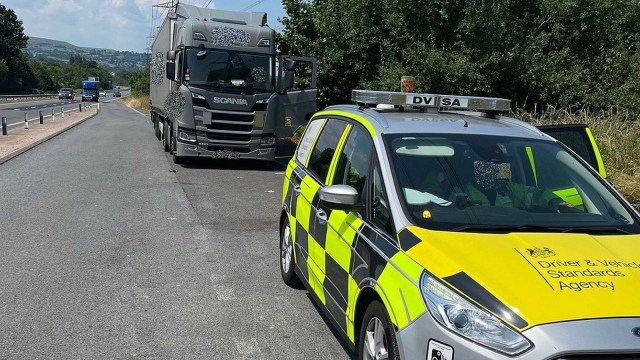
Roadside inspections are a routine part of commercial vehicle operations in Great Britain. DVSA examiners have broad powers to stop vehicles, inspect roadworthiness, check drivers’ hours records and issue prohibitions. How operators prepare for, respond to,and learn from these encounters has a direct impact on regulatory outcomes.
What happens at roadside
During a roadside stop, DVSA may:
- Inspect vehicle condition.
- Check documentation.
- Review tachograph records.
- Assess load security.
- Verify licensing and insurance details.
Serious defects or hours breaches can result in immediate or delayed prohibitions, fixed penalties, or referral to the Traffic Commissioner.
When a vehicle or driver is prohibited, they must stop operating until the issue is resolved. Operators must arrange repairs, submit clearance evidence and investigate why the defect was not identified earlier.
Operator responsibilities after inspections
Drivers are required to pass inspection reports to operators promptly. Operators, meanwhile, must review findings, certify that defects have been corrected, and return required documentation within a specified timeframe. Failure to follow up is treated as a separate compliance failure.
Multiple prohibitions or repeated inspection failures raise concerns about systemic weaknesses. Regulators look for evidence that operators analyse inspection outcomes, identify trends, and adjust maintenance or training accordingly.
Preparing drivers and teams
Drivers should be trained to handle roadside inspections professionally and cooperatively. Arguing with examiners, withholding information, or failing to follow instructions escalates issues unnecessarily. When operators believe a decision is incorrect, challenges should be evidence-based and handled through formal channels.
Roadside inspections aren’t just enforcement events. They’re indicators of how well compliance systems are working in practice.
Step 9. General compliance responsibilities

Beyond licensing, drivers’ hours and vehicle maintenance, operator licence holders have a set of ongoing obligations that underpin regulatory trust. These requirements are often overlooked, but failures here frequently trigger Traffic Commissioner intervention.
Operators must notify the Traffic Commissioner within 28 days of specific changes, including:
- Changes to transport managers, directors or partners
- Changes to operating centres
- Relevant convictions
- Financial circumstances that affect continued operation
Continuing to operate while failing to disclose changes is treated as a serious breach, particularly where it suggests concealment rather than oversight.
Vehicles must display the operator’s licence disc and be correctly marked with the operator’s name and licence number. Records must be retained for required periods and produced promptly when requested by DVSA. Failure to produce documents is treated as evidence that systems are either inadequate or deliberately avoided.
Traffic Commissioners also place strong emphasis on professional conduct. Harassing or coercing drivers into breaking rules, operating vehicles unsafely, or gaining unfair commercial advantage through non-compliance can all result in loss of good repute, even where no single incident is catastrophic.
Step 10. Managing OCRS and compliance data

The Operator Compliance Risk Score (OCRS) is DVSA’s primary risk assessment tool. It is built from roadside inspections, prohibitions, drivers’ hours offences, and maintenance investigations. A poor score results in increased roadside targeting and regulatory scrutiny.
OCRS is split between roadworthiness and traffic compliance. Immediate prohibitions and serious defects carry the greatest weight. A single poor encounter may not cause lasting damage, but repeated failures indicate systemic problems.
Improving OCRS requires sustained compliance improvement. Operators must address root causes by strengthening maintenance systems, better monitoring drivers’ hours, training drivers effectively, and responding decisively to repeat issues.
OCRS should be reviewed regularly as a management tool. A deteriorating score is an early warning sign that systems are not working as intended.
Step 11. Vehicle Excise Duty, road user levy and international operations

Commercial vehicle compliance also includes financial and cross-border obligations that carry significant enforcement risk.
The Vehicle Excise Duty (VED), for example, must be paid before a vehicle is used on the road. Operating without a valid VED can result in immediate prohibition or stoppage. If a vehicle is taken out of use, it must be formally declared off the road by submitting a Statutory Off Road Notification (SORN). Merely stopping VED payments is not sufficient, and the vehicle remains liable unless SORN is in place.
The HGV Road User Levy applies to vehicles over 12 tonnes and must be paid in advance. Following reforms that took effect on 1 August 2023, operators should confirm current levy rates and bands via GOV.UK. Enforcement is largely automated through Automatic Number Plate Recognition (ANPR), and penalties for non-payment include fines, immobilisation, and prosecution.
International operations add further complexity. Operators must hold a Standard International licence, comply with cabotage rules, and meet tachograph and posting requirements where applicable. Smart tachographs are mandatory for certain international journeys, and non-compliance can result in vehicles being turned away at borders.
International work should only be undertaken where operators fully understand permit requirements, customs processes, and liability obligations.
Step 12. Internal compliance auditing
Internal auditing is how operators demonstrate continuous and effective management. Traffic Commissioners consistently distinguish between operators who monitor their systems and those who don’t react until enforcement occurs.
Audit programmes should cover driver qualifications, drivers’ hours compliance, vehicle maintenance systems, and operational records. Audits should verify not only that records exist, but that they’re accurate, current, and acted upon.
Findings must be documented, corrective actions assigned, and follow-up checks completed. Repeated findings in the same areas indicate systemic failure rather than isolated error.
Many operators supplement internal audits with periodic external reviews to validate their systems. Whether audits are carried out internally or by external consultants, what matters to regulators is that operators can show that compliance is actively managed, not just assumed to be in place.
Put compliance on a stronger footing with an integrated operations platform
Fleet compliance in Great Britain is a day-to-day operational discipline, shaped by active enforcement, shifting regulation, and public expectations around road safety. Treating compliance as a one-off exercise, or as paperwork, creates avoidable risk for both the operator licence and the business.
Taken together, the 12 areas in this guide form a practical system that supports safety, protects the operator licence and strengthens commercial resilience.
Motive’s Integrated Operations Platform helps you run that system with clarity and control. It brings drivers’ hours, vehicle maintenance, and compliance records into one place, so teams can spend less time chasing paperwork and more time staying ready.
In particular, the centralised hubs and automated actions available in Workforce Management directly assist with maintaining a robust compliance programme.
In this article