Products
Why AI accuracy and benchmarking matter in safety-critical environments.
Explore accurate AI’s impact on fleet safety and operations, and see the measurable results Motive customers achieved.
Solutions
Cascade improves safety by 50%, reclaims ~10K hours per year.
With the Motive platform, Cascade has a consolidated view of fleet and spend management across its fleet of more than 3,000 vehicles.
Resources
Ranked #1 by real customers on G2.
Read our customer reviews and learn why we have a 99% satisfaction score.
Company

Watch the Vision 26 keynote.
See everything announced at Motive’s annual innovation conference, including AI models, automations, and hardware.
CUSTOMER CASE STUDY
How HeartLand raised its Safety Score by 38% to a 98 in eight months with Motive.
HeartLand leveraged Motive to reduce risk across 27 operating companies and earn the 2026 Organizational Transformation Award.

Overview
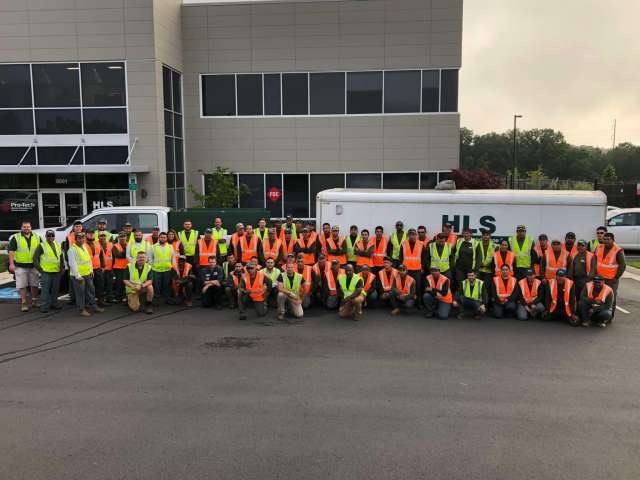
HeartLand improved fleet safety and strengthened its path to ROI with Motive. At Heritage Landscape Services (HLS), one of HeartLand’s 27 operating companies, the program turned fragmented safety data into a repeatable coaching system. Across HeartLand’s operations, real-time coaching and video evidence helped reduce risky events, support faster claims decisions, and give leaders clearer data to protect margins.
58%
Reduction in close-following events (HLS)
94%
Decrease in safety events (HeartLand)
13
Exonerations in 15 months (HLS)
Key results at a glance with Motive AI Dashcams
- 58% reduction in close-following events in month one for HLS.
- When HeartLand turned on the alerts for all operating companies, events fell from more than 4,000 in March 2026 to 500 in April 2026, an 88% reduction.
- 13 HLS exonerations in 15 months; 34 across HeartLand (August 2026).
- 33% fewer claims through April 2026. 68% of third-party collisions were determined not to be HeartLand’s fault.
- 92-94% drop in safety events per 1,000 miles. Events fell from 60 to 80 per 1,000 miles at some operations to 4.4.
What fleet operations challenges did HeartLand need to solve?
HeartLand needed consistent visibility across multiple operating companies, thousands of vehicles, and six telematics providers. Teams could locate vehicles, but they couldn’t see driver behavior, incident context, or where coaching would pay off.
Andrew Barklage, HeartLand’s Director of Risk and Safety, described the enterprise challenge as wanting to “identify really truly where opportunities exist so we can focus on where improvement was necessary, and get everyone operating on a similar level playing field.”
The business case proved itself. Brandon Lanier, fleet and logistics manager at HLS, cited an average incident cost of $20,000 to $30,000. HLS runs an approximate 230 vehicle operation with two spare trucks. Preventing claims and catching maintenance issues early means keeping trucks on the road, supporting margins and uptime.
How did Heritage use Motive to improve safety?
Heritage started with people and process, not hardware. Before any cameras were installed, leaders delivered a 24-slide bilingual safety policy, trained eight branches for 1.5 hours each, and committed 56 managers to twice-weekly coaching. A 45-day soft launch gave drivers time to adjust. HLS also piloted in-cab close-following alerts at a 0.7-second threshold; drivers got a 15-second alert and another 15 seconds to correct.
Before coaching, HLS logged 50 to 60 weekly close-following events a week. “My mind was blown when I looked at the data one month before and then one month with,” said Barklage. “It’s just night and day.” Stop-sign violations fell 60% over 15 months, and unsafe lane changes improved 40%. Data also helped show exactly where they can spend time coaching next, as speeding increased 10%.
How did HeartLand scale the safety program?
HLS became a proof point for a broader enterprise rollout. HeartLand used phased implementation, leadership kickoffs, training, and clear communication with drivers about camera data. By October 2025, Motive technology was live in more than 2,900 vehicles. Policy first, bilingual education, management participation, and consistent coaching gave local teams a repeatable path to adoption.
“We don’t know how we would do business without this technology because of the value it’s already brought.” — Andrew Barklage, Director of Risk and Safety, HeartLand
HeartLand tracks three KPIs across operating companies: driver score, safety events, and percent coached. That visibility supports recognition, coaching, and customer conversations about trained, accountable drivers.
What financial value has HeartLand seen from Motive?
The clearest financial win came from catching small maintenance issues from becoming larger operational or claims problems. Before real-time DVIR alerts, a reported defect could sit in a paper log so long a driver might give up reporting it. Now, when a vehicle issue is submitted, HeartLand’s fleet manager and mechanics receive an alert immediately.
For HLS, this visibility supports uptime without requiring HeartLand to carry a larger spare-vehicle pool. And the benefits compound: stronger evidence for claims decisions, clearer coaching priorities, and a tighter link between safer operations and financial risk. That same story carries into insurance. As Barklage explained, “It certainly does have an impact on your premium calculations and the way they underwrite the risk.”
“You have to spend money to make money. If you invest in your people, your equipment, and the technology, people feel good about being there — and everything just falls in line.” — Brandon Lanier, Fleet and Logistics Manager, Heritage Landscaping
How did HeartLand win the Organizational Transformation Award?
HeartLand earned one of five 2026 Motive Visionary Awards—specifically the Organizational Transformation Award—for its dedication to achieving a 23.78% gain in fleet safety scores alongside a 26.8% reduction in safety events per million miles, with metrics continuing to trend upward. “I was deeply honored that HeartLand won the Organizational Transformation Award,” said Barklage. “Congratulations go to a whole host of people within HeartLand in Kansas City, but also at the operating company level for people like Brandon. It was impressive to see your team analyzing the underlying data—and that our KPI improvements really stood out.”
Key takeways
HeartLand’s results connect safety improvement to financial discipline: fewer risky events, stronger evidence, faster claims decisions, and a leaner maintenance response. For landscaping and field-services leaders, the model is repeatable: invest in people, make coaching consistent, and use data to protect margins while improving safety. By bringing its operating companies onto one platform, HeartLand built a scalable enterprise safety program that still holds each operation accountable.
Ready to get started?
Explore Motive’s fleet management solutions and see how your fleet could benefit.
Quick Links