
On-Demand Webinar
Stop wasting human talent on busywork: How to deploy AI to automate your fleet operations
Duration:
Transcript
Thank you all for joining the webinar today. A few housekeeping items before we jump right in.
This webinar is gonna be recorded, and it’s gonna be sent to your inbox in the next few days. And we wanna hear questions, Lots of questions. So you can submit your questions anytime to the discussion… Throughout the discussion by adding them to the q and a box. If you if you don’t have enough time for questions, then during this presentation, we will be sure to have someone, follow-up with you. And if you have more questions or if you prefer one on one support, you can click on get started, and people have someone follow-up with you shortly after the session.
We truly appreciate everyone taking the time out of their day to learn more because we’re always inspired by your needs and your feedback, so please feel free to interact with us today. But let’s get started by getting to know our speakers. It’s it’s my pleasure to introduce two industry leaders today, Don Wagner and Bronson Laney. So, Don, would you like to introduce yourself to our audience?
Yes, sir. Thank you for having me. Like you said, my name is Don Wagner. I’m the director of safety and risk management for YardNIC. We’re a commercial landscaping company with six six different states in the Southeast with 2,500 employees.
Before this venture, I served twenty one years in the military. So to all the veterans out there, happy Veterans Day. Appreciate everything you did for us. And then after I retired, I worked for Marcin, serving as the safety manager for the three star general.
I’m excited to be here, and thanks for having me.
Welcome. Welcome, Don. Bronson, why don’t you go?
Good afternoon. My name is Bronson Laney. I’m the director of safety here at First Fleet.
We have a fleet of about 2,500 trucks. We were recently acquired by Werner Enterprises in last January, bringing the fleet total to about 10,000 trucks.
I’ve been with First Fleet going on twenty two years. Prior to that, I had a stint with a large package carrier company for about fifteen years. So going… Been in the industry for quite a while now, and then, happy to be here and excited to, get this rolling.
And welcome to you too, Bronson. And I am, well, just excited to have you guys over here. But I should probably also introduce myself. I’m Gautam Khunopoli, the director of safety AI at Motive. I lead the engineering team that builds our AI for dashcams, including road and driver safety features. But more on that right now, actually.
A little bit about Motive. Before we get into the webinar, just wanted to set the stage for the next couple of minutes, especially a little bit about Motive. If this is your first time here, welcome. If you’re returning, welcome back. Motive is the AI powered integrated operations platform for the physical economy. We help companies that keep the physical world, you know, running, operate more safely, productively, and profitably. Our platform brings together driver safety, fleet management, equipment monitoring, spend management, workforce management, maintenance, and AI vision, all under one unified platform.
And AI is the connective tissue across all of it.
And my team built the AI behind some of these products. So I get a close look at what… At what’s happening in the field and what’s coming next.
And that’s really gonna set the tone for what we’re gonna talk about today. As far as AI is concerned, most of us use AI every day now. Right? You’ve probably asked Chad GPT or Claude something this week.
If it gets the answer wrong, you ask again. No harm done. Out in the field, there is no ask again. If an alert fires when it shouldn’t, a driver loses trust and stops using the system.
If it misses something, the cost is a collision or an injury or a claim. So in our world, accuracy is everything.
And to keep today concrete, they’ll talk about AI and its accuracy in three places and how it shows up in your operations. First, in the cab, and that’s computer vision that I think, a lot of Motive customers would be familiar with, especially those who have AI dashcams.
Second is on the road and on the job site. That’s AI working on sensor and telematics data, and that’s where your vehicle and equipment are… Your vehicles and equipment are.
It’s a little bit more about understanding which parts are trending towards failure, like, you know, predictive maintenance or which fuel transactions or asset movements don’t look right. And some decisions there just can’t wait for a person to notice.
And third is the back office, and that’s where generative AI and modern agents that we’re all becoming increasingly familiar with come in. You can ask questions about your fleet in plain language and get an answer, automate follow ups like scheduling coaching sessions after an event, or open a work order and a fault code shows up. And Don and Bronson are here to show us that this isn’t theoretical. They’re gonna tell us about how they use these technologies every day, and now you can too.
And one more thing before we really, really get into it.
The goal of all of this, the real takeaway that I think we are driving for and striving for today is how can you give all of your people their time back?
The goal is not take people out of their work.
AI can watch every camera, every sensor, every transaction all day, every day. What it can’t do is know your drivers like you do, make a judgment call on tough situations like you can, or own the outcomes like you do.
Only you and your people can do that. And so the best use of AI is clearing out the busy work so that you and your teams have more time for these kinds of calls that really drive and underpin your business. So with that, I’m gonna stop sharing my screen, and we’re gonna hear from Don and Bronson. So welcome. Really excited to have you guys. I’d like to start off with driver trust.
And so I guess when both… When you both first rolled out AI cameras and tools, what do your drivers or crews think they were for? What what changed their minds? Don, why don’t you get us kicked off here?
Well, we’re we’re actually still still on the rollout phase. We have about 650 cameras in. We have a fleet of about 850 vehicles. And we got the initial, you’re babysitting us, someone that quit, stuff like that.
And then, you know, as we’re rolling it out, we ended up having somebody get a ticket for doing an illegal u-turn, and they actually got cut off, ironically, by a police officer. And then they got issued a ticket, and then we submitted the video to the police department, and they removed the ticket, like, immediately. So when we…
We were explaining to everybody, like, you know, we don’t have time to sit here and watch 800 cameras every single day. They’re here to protect you as the employee and us as the as the employer as well. So, you know, if we’re doing the right things, it’s protecting our employees, really. So it went from we’re quitting, we don’t wanna be here to, wow, this is great.
And guess what? Nobody quit, and everybody’s everybody’s pretty happy with it now that they’re seeing that it’s for the…
For their benefit, not not because we’re trying to babysit them.
Right on. What about you, Pranston? What has your experience been on this?
It’s very similar to Don’s, Mine’s been…
Mine started out almost four years ago. So we were we were one of the first enterprise customers with Motive. And I remember Gary Johnson, it was his first day walking into the conference room, and we were all just, like, you know, nervous about what we were doing, but it was also, like, you know, how the how the driver’s gonna receive this piece. And, Gary, the…
You know, and you guys have probably heard this too, Don. It’s a crawl, walk, run, you know, thing that you do at Motive, and, you know, it was very…
That’s what that’s what helped us. It was roll this out very slowly to the drivers, a lot of communication. But over the years, I had very, very similar incident that that Don had, a driver. I had a thirty year driver in in our local facility here.
Was very adamant about not putting a camera in the in the vehicle, but within weeks of getting in his his camera, he had an incident, and the police wrote the wrote the… It was very clear it was not his fault. Someone passed him on the shoulder, cut him off, wrecked, But the police wrote it up differently. And within a week, he he was getting summons in the mail that he was being sued. We got one that we were being sued. So he became my poster child. I, you know, I I actually started recording his voice, and he was the poster child for for motive and…
But, yes, it’s very interesting to hear Don talk about, you know, what what they’re going through because it’s very similar to what we experienced.
Absolutely.
It does get better. It does get better, Don.
We we actually had it happen yesterday, honestly. We we were accused of running into a vehicle, got a a threat letter from an attorney, and then we pulled the video. And the and the vehicle actually pulled out of the intersection too soon and actually hit the side of our trailer. So we submitted that video coverage to the attorney, and it’s amazing how the story changes once they get the video. Oh, yeah. So…
Yeah. Seeing seeing is believing. Right? And when you have, you know, exoneration evidence backed by, you know, solid AI, I think it can make a pretty good difference.
So let’s switch gears just a little bit. It’s really great to hear about these examples. Right? So I wanna hear more about the safety that… Safety problem that you’re solving within your organizations.
And a key problem, you know, I wanna… I I want you guys to think about a key problem that, you know, AI is able to do for you now that couldn’t be done before. Like, what’s a safety problem you were determined to solve, and how did AI help? Bronson, why don’t we start with you on this one?
I’m gonna try to keep this as short as possible, but this is a… This was a very large…
Let’s see.
Drowsiness.
Prior to dash cams, if a driver left the road, a lot of a lot of the feedback we were getting from, drivers was a deer ran out in front of me or this or that or, you know, something something cut cut me off.
What I started seeing when we when we immediately put in the dash cams, I started seeing drivers running off into the woods or leaving the road, and I started going back and pulling additional footage to see what was going on prior to that that that in… That large catastrophic accident. And what we saw was deviations, slow slow macro deviations of drivers swerving. And, you know, if you were to talk to if you talk to your product team, I always stood on on top of a table at a conference room jumping up and down saying, we need something for a forward facing camera that detects fatigue, distraction. And, you know, with that partnership, we we came up with lane swerving. And I don’t know if anybody on here is using lane swerving yet, but that’s that’s… We cut our we cut our left road accidents down by 80%.
So we’ve had it for a full year, and we’ve cut those down by 80%. When you talk about a left road accident, you’re talking about a, you know, a very expensive accident. So, that’s probably been the biggest the biggest, problem that was solved for us.
And, I’m looking to tighten that a little bit further, but we’re we’re getting there. I think it’s it’s it’s been fantastic. The partnership’s been great.
That’s, that’s fantastic to hear. And, Don, why don’t you bring it here?
Yeah. One of the things actually that we had happened a couple weeks ago, and our employees were just going through a green light honestly, and they got t boned. And we we have in in cab facing cameras as well, and the passengers in the back seat were not wearing their seat belt, and they went flying…
Thank god they didn’t get hurt, but they went flying across the back of the vehicle kinda into the door. And so that was one of the biggest things. Was like, hey. Like, you know, weren’t even really thinking of that.
We tell everyone to wear their seat belts and…
But the…
Most vehicles don’t have the the warning the warning horn when you don’t have your seat belts on in the back of the vehicle. So even our senior vice president, we had a workshop last week, and I was talking to him about it. And he’s like, man, like, I’m guilty of it. And I’m like, well, yeah, me too.
So, like, seems like a lot of people just…
You don’t get the the chime to put your seat belt on, so just maybe not not intentionally that they’re not putting their seat belt on, but just they they just don’t think of it. So that was a great opportunity for us to say, thankfully, nobody got hurt, but less…
That’s the biggest thing for us is, like, we’re not we’re not trying…
Again, we’re not trying to beat anybody up. What can we learn, lessons learned to help help our entire team? So that that was actually a a huge win for us. And then one other thing that we’ve been working on too is we can set the parameters so…
To eliminate, like, smoking and company vehicles and stuff like that. So there’s been nothing but positive, really.
I just love to hear these stories because there’s just such a huge variation in what matters to different businesses and to your fleets. Right? It could be, of course, problems like fatigue that Bronson was picking up could be affecting… That… That’s something that probably everybody cares about because fatigue is probably the biggest single driver of, like, accidents. But there’s also basic safety around, you know, wearing seat belts or not using cell phones when you’re driving that can just maintain and improve the overall fleet’s, you know, safety. So that’s that’s pretty good.
And on that note, so what… So you you set out to solve these problems that were important to you and your your teams, and there’s a… There’s technology now that can enable you to detect some of these unsafe driving behaviors or when drivers are drowsy. What what happens next? For example, Bronson, you were talking about the lane swerving event. So, you know, what what what came afterwards? Where does human judgment and strategy come in?
So it’s it’s pretty extensive. We… So we create an in cab alert. If the driver has two deviations within a five minute period, there’s an in cab alert. It goes off to the driver to please maintain their lane.
In addition, we have a twenty four seven call center who’s immediately…
They get they get an email alert when that event is detected with all kinds of information about the driver location, hours of service, wind, weather. All this stuff is getting presented to the… To to that call center associate. And they’re live viewing in, which creates another in cab alert to the drivers that, hey. Live view is initiated.
We’re also pulling video really quickly, a three minute video clip to really assess what’s going on in the cab.
And then, ultimately, you know, we may send a relay message that’s read out loud or even call the driver.
You know, I’m not I’m not real I’m not a real big fan of calling someone, you know, while they’re driving, but if they’re swerving or or deviating on their lanes and and based off of the… You know, how accurate this act actually is, I don’t mind doing that, but to prevent an accident. So I’m really excited about the AI DC plus camera that’s… That has, AI agent capabilities to have a two way conversation with the driver, and I’m really looking forward to, you know, building that piece too with with Motive to, you know, check-in with the drivers. Hey. Are you okay? What’s going on? And have a conversation. I’m really excited about the two way conversation piece that you guys are working on.
That was… I’m I’m excited. You’re excited. That was that was fun to build. So Yeah. You know, let’s let’s see how that…
It’s a fun all around. Donald, what about you on this front?
Well, I mean, to to Bronson’s point, our biggest thing is making sure our our teammates go home the same way they show up to work every day. So, you know, we have the distracted driving and stuff, but I wanna switch gears a little bit on this. So we did a pilot program. And, you know, in the landscaping industry, a lot of times, they take their launch, their brakes, everything. So, you know, a lot of times, they just have their vehicle running and not not that they’re trying to do anything malice or anything wrong. They just… I mean, I I get it. If I was out there, I’d probably leave the vehicle running too if I didn’t think of it.
And and and, you know, we’re driving, you know, f two fifties and Ram 25 hundreds and big Isuzu box trucks and and stuff like that. So one of the awesome things… Because I know a lot of people always say, well, you know, cost. Right? So this is a huge cost savings.
So the awesome part about the the AI stuff is is we can set the parameters for the… You know, we… We’re rolling it out here soon, but the thing is is we can set it. So if it’s, you know, if it’s between 70 and 78, they won’t get alerted or that that… They will get alerted to turn the vehicle off because it’s in… You know, it’s comfort. So if it’s too hot or too cold, we’re fine with them leaving the vehicle off, but that’s gonna save us approximately $3,000 a week.
So you… When you take that into consideration depending on the time of the year, you’re looking at 10 to $15,000 a month just on something that we we… We’re… We figured this out in our pilot program. Like, oh, wow. This is amazing tool. So, you know, it’s it’s awesome to be able to save some costs as well.
Yeah. Not just safety, but also few other areas for the business that are, like, really critical. It’s really really interesting to see all the areas that you’re constantly optimizing on. And speaking of optimizing, I wanna kinda switch gears and talk about saving time on busy work. Right? So we’ve talked a little bit about I talked a lot about how you’re, you know, utilizing AI to support your fleets.
But I wanna talk about your teams as well. Right? Like, the safety teams that you have. So let’s start with maybe how much time, how many hours your team spends to review, like, footage, coaching, and what… And and how that was going before and and how that’s going now, Bronson.
Early on, we we… It was it was it was big. It was a large amount of videos.
I think that’s I think that’s probably the, you know, the crawl… Going back to the crawl up run. We introduced we introduced, you know, our our core critical events that we had in Omnitrax or or, you know, previous provider.
We introduced those, your heartbreaks, your role stability, those kind of things. But as we add things, we we we took the same approach for speed…
Like, for speeding, for example. We started out with, you know, know, a broad 10 miles per hour over the speed limit. And as we improve, we’ve gone to nine to eight to seven to six. So it’s…
That’s one way we control, you know, some of the things that we’ve been doing. But to your point about, reviewing footage, we, by by doing what we’ve dealt with what we’ve done, we’re focused in on, we’re hyper focused on a a certain select group of drivers. You know, what used to be 25% of drivers that we were coaching is now, like, 1%. We…
You know, we’re hyper focused on the, you know, the 30 or 40 drivers in a fleet of 2,500 that are really, you know, have patterns of behaviors that need to be addressed and coached. So, again, it’s it’s something that we we we micromanaged pretty well at first and just kinda moved moved to where we are today, which is a really good place.
I think overall overall, critically, events have been reduced, like, 70% per million mile, you know, over that three year span.
Yes. And and that’s basically gonna allow you to focus, as you were saying, on a smaller number of drivers who, you know, need more help. Right? And that is that is precisely, I think, the benefit over here. Todd, have you had a similar experience in in your fleets? How do you deal with that?
Like like I was saying, we’re still in the rollout phase, but one of the things that we’re working through right now, I think it’s after they are in the vehicle five times, I believe. But with the AI coaching, after after the same individuals on camera, I think, three to five times, then our branch managers can go in and identify who that individual is. That way, we’re not…
Like, before, we had to spend time figuring out who was driving at times and stuff like that. So like I said, we’re still working through this, so I don’t have actual, like, how many hours and stuff like that, but it’s gonna be huge considering we have, you know, 800 vehicles on the road, 800, you know, eight eight hundred to 1,200 drivers. So now we’ll be able to identify who’s driving the vehicle the second they start it up. So it’s not it’s not…
It’ll tell us what vehicle, but what driver. So if I got in a vehicle in Tennessee tomorrow, it would say, hey. Don’s driving this vehicle. So, I mean, that’s just…
That’s huge for us.
Awesome. Thank you for thank you for sharing that.
I wanna switch gears again. Right? So we’ve we’ve talked about a few different topics here, almost all of which has been around either, you know, unsafe driving behaviors or losing time.
I just wanna talk about something a little more optimistic and positive for instance from a driver standpoint. Right? We talk a lot about risky behaviors, but there’s also situations where there’s drivers that do really, really good things, cool things, defensive driving, just reacting to dangerous difficult circumstances that you encounter on the boat. Right? So how are you… How… What is your approach in in in your fleets around, you know, catching people doing it right? Thanh, why don’t we start with you this time?
Yeah. I have a great example. Again, we’re still rolling this out, but we had an opportunity last week actually, and it was a sharp…
Real sharp curve, but it was a school bus. It was first thing in the morning, and the school bus was about three feet over the center line. And we got an alert, And then we we went and pulled the video, and we noticed that our driver was doing everything right. He’s paying attention.
And if he wouldn’t have saw the school bus and slowed down and he kinda just veered over a little bit so they didn’t run into each other, I mean, again, that would have been not not an at fault accident, but then you gotta start thinking about…
You got a truck off the road. You got a crew off the road, stuff like that. So I was talking to our senior vice president about that. He was like, let’s…
Who is it? We’re sending them a $25 gift card right now.
So we’ve been able to do that as we’re rolling this out when we do see the good stuff like that. We’re we’re giving them $25 gift cards as we put together the formal program. But, I mean, it’s awesome to be able to show, you know, show the team that we care. Right? We’re not… Again, we’re not doing this to babysit you or beat you up. We’re… We we care about you. So this is just one of the things that we’re starting to roll out.
That’s great. And, Bronson, I think you’ve had this in your fleet for a little longer then. Right?
Yeah. Quite a lot longer, actually. So, yeah, how have you gradually, I think, put in place a lot of different stuff. Right?
Yeah. Yeah. I was going to…
Virtual coaching is… Or virtual coaching, well, what you call AI coaching, something we’ve recently rolled out, I think, is is… You know, 95% of our drivers are getting a positive message from that virtual coach every Monday morning. So I think that’s been a great great addition.
I actually shared with with Claire and her team a clip of a a video that we do once a month. We have a we have a save of the month video that we put together. Base…
Basically, we accumulate what we call great saves, you know, where where driver made a good decision on a near collision event, And we we actually put those together in a in a in a video and submitted to the fleet. We we showed up on all of our communication TVs and share with all of our corporate folks with a QR code and people can vote for the save of the month. And then we have cash rewards that we give out. So that’s really kind of brought some awareness to the old program, and it’s funny how, you know, I’ll get an email every day.
It says, hey. This is this is a save of the month candidate. Right? You know?
So I’m getting all this feedback, but if…
Claire, if you guys wanna play that video real quick, I can give them a little highlight of what we’re talking about.
Yeah. Do that.
Through heavy rain on I 285, Tory suddenly comes upon a wrecked car sitting in the road way. Even worse, the driver is climbing out and trying to make it to safety. Torrey immediately moves left into the open lane, giving both the vehicle and its driver the few feet they desperately need. Not every hazard comes with a warning. That’s why staying alert every mile matters….
You have kind of a short… So we have we have all three videos play, and then actually, what’s what’s funny about that one at the at the end of… There’s a… We have cameras in all our VPs up from the… From a maintenance manager all the way up to the president. Our corporate vehicles have have motor dash cams. So it’s it’s helped us get acclimated, and helps us have conversations with drivers because we fully understand because in in my car, I’ve got one. So I know what it’s like for a speeding event to happen in in my vehicle, but what’s… It’s… This has been a great program.
I’m really, really happy happy to show that. We use I use ChatGPT to get my scripts together. I use Synthesia and Camtasia for video production, Eleven Labs. I don’t know if you noticed, but that’s a Burt Reynolds Burt Reynolds voice over that I’m using for the narration. So a lot of AI stuff, you know, my my guys over at SafetyTech here can can use AI and put that video together in about… Probably about thirty minutes. So it’s been it’s been great.
Good stuff. I I gotta say it it has been great. It’s exciting. Like, I’ve I’ve… I wanted to come over and join Freshpet at this point. I want… I wanna be a I wanna be a part of this program. Yeah.
I also especially love the fact that I think you’ve deployed all of these cameras across the entire week, right, all the way from leadership down, you know, to the to the drivers across the board.
So everybody’s got a great experience and everybody’s speaking the same language, which is which is…
Pretty cool when the president of the company comes up and says, hey. My MODIS score, a 103 weeks in a row. You know? So he’s Yes. He’s excited about talking about his MODIS score.
Excellent leader and a great driver. That’s fantastic. So I think we’re kinda…
We’ve we’ve covered a lot of ground here.
I wanna look to the future a little bit and talk about what’s next. Right? Are we gonna head into the q and a over here?
I think we…
Yeah. So what would you want AI to catch up, you know, catch next to help your team avoid busy work? I think you were talking about this earlier as well, Bronson. So why don’t you kick it off as well?
Oh, so I love I love my weekly… Biweekly meetings with Motive and and love presenting ideas.
You know, once… By watching the videos myself, I have a pretty good… I have a… My finger on the pulse of what’s going on.
Of things, I’ve I’ve… I’m interested in in U-turn, event detection, lane restrictions is probably our number one unsafe basic that we need to focus on. I think that’s something that AI technology can read signs and come up with event detection for lane restrictions.
Red lights has definitely been something we’ve talked about, pedestrian detection.
And one of, you know, Don with inward facing, you know, I think looking at three points of contact exiting vehicles that are that are way off the ground, I think that’s another event that could be picked up, wearing your, you know, your safety vest. There’s so many different things.
But those are those are my short list, my Christmas list that I give to Motive every year to to work on and, you know, slowly but surely, we’re getting some of this stuff done.
That’s great. How about you, Tom?
Yeah. We’re just…
I mean, we’re excited. Again, we’ve only been doing this for about a month. So, I mean, it’s it’s awesome stuff. But the AI, you know, it really…
It gives us the opportunity to get notified when you have distracted driving or drowsiness and stuff like that. So, you know, like like I was saying earlier, you know, we’re we’re gonna quit. Like, we have 800 cameras. There’s no…
If…
Without the AI coaching and the AI, you know, enabling us to see when we have these events, I mean, my team would spend nothing but time watching videos and stuff like that. So the the AI has definitely opened up the opportunity.
I think Don might have just had a bit of a problem there.
He’s back.
Oh, there you go. I think you froze for a moment there, Don. I think we lost you for about fifteen seconds. No. No. No. No.
If you could walk back what you were saying a little bit and then… Yeah.
I was just saying, basically, that that the AI is opening up the opportunity to, you know, get…
Catch the good stuff, but then also catch the distracted driving. We…
We’ve saw…
We’ve set it where if people are falling asleep, drowsiness, so we could…
You know, and that…
At the end of the day, that that saves them, their teammates, and and, you know, the public. So AI has definitely given us a ton of time back that, you know, we would have just spent trying to figure out, you know, which videos to watch, where to look, stuff like that. So we’re just…
I mean, we’re extremely…
We’re we’re excited to continue to evolve and just lean on you guys as well. I’m sure I’m sure I’ll, be asking for a lot of Christmas stuff too. And I’ll tell you this. I learned a long time ago from one of my, one of my lieutenant colonels.
He said the best safety folks are the ones that steal and recreate. So what I’ve learned is Bronson’s been doing it a little bit longer than me. So, Bronson, I’m gonna be I’m gonna be calling you, man. So…
And and that is a great advice to pretty much… I’m I’m hoping that’s why all of these folks aren’t here to steal and recreate. And and as far as that line is concerned, I’m gonna steal it. I don’t know if I wanna recreate it, but I’m gonna… I gotta I gotta give the right credit. Right?
So that’s really great. I I just wanna… I think we’re gonna open up to q and a here shortly. I see that there’s a lot of similar questions.
One of the questions before we… You know, that I just wanna really kinda ask you guys before we officially open it up to q and a. It’s something that we talked about over the last couple of weeks while we were getting to know each other and preparing for this, right, is you both have, like, large leads, lot of alerts, lot of drivers.
Like, how do you how do you decide what to look at first? And I see that there’s a few questions, you know, on that on that nature as well. So I figured we’d we’d maybe cover that broadly before we open up to q and a. Right? So, Pranci, why don’t we start start with you perhaps, and then we can go with Don. How are you looking at this big, you know, swath of events?
Oh, boy. That’s a very general question. I think we we we… We’re using… We started using the motor score, which that’s probably, been a big change for us.
We still look at events per thousand miles. We we kinda pull that in the equation as well. But I encourage my safety managers…
So once we’ve identified those one…
Five to 1% drivers, I encourage the safety manager to actually watch the videos and see what behaviors need to be coached. You know, if if you’re someone on this call that hasn’t hasn’t made the jump in the dashcams yet, you’re probably a very reactive company, and that’s what we were three years ago. We reacted. When someone left the road, we reacted.
You know, when someone had, you know, six speeding tickets or whatever it is, this technology allows us to be proactive and get ahead of those things before the accident, before the driver runs into the woods, before he gets the speeding ticket. So, you know, before we started this, our c s…
Our CSA for unsafe basic was very high. It’s, we’re in the teens on on the CSA basic. If you know anything about CSA, it’s it’s it’s pretty good. So speeding used to be our number one violation.
Now it’s lane restriction. So just by just by having in cab alerts, having the the opportunity to coach the right people, it’s made a huge impact. And and I encourage anyone that’s on the fence about putting dashcams in to make…
Go ahead and make that jump because it’s been, you know, it’s been a game changer for us.
100%.
Great. And same to you as well, Don. So with such a big fleet, how are you generally managing, you know, across the board, the larger volume of alerts, what are you looking at first? Are you triaging? Yeah.
So we we we have our setup. You know, we’re we’re looking at the highs of… High alerts, and also the near misses are huge for us. Like, you know, the the the opportunity to coach before something bad happens. So right now, what we’re really leaning into is looking at our top few events, which distracted driving, drowsiness, stuff like that are at the top of the list.
So so what we do is we do a safety topic of the week. So this… The regional safety managers spend some time looking at some stuff, and we collaborate once a week. And then every, Friday afternoon, they send a a message out to the branches, the branch leadership, and the the the leadership within the the operations team, and and just let them know, hey. Here’s the safety top of the weeks. Here’s some of the stuff that we’ve been seeing, and, you know, let’s get in front of it before it becomes a problem.
Save of the week, safety topic of the week. I’m seeing a trend over here in how best to get everything across to reach. Right? This is this is this is really great.
And I guess before… One one one other broad question to to both of you. Maybe I’ll start with you on this one, Don.
Safety manager starting day one, safety director, you know, and looking back at your time in in this industry at how you learned and grown on all the things to look at and prioritize, what’s what’s what’s something you’d you’d tell them that they could they could take away to succeed on on job on day one?
As far as, like, installing cameras in the vehicles on on day one… Like, taking over if my fleet had cameras in it on day one when I took over as a director? Is that what the question is? Sorry.
Generally, from a safety standpoint, you’re a safety director. You’re starting on Monday. Right? You’re…
What would you do?
So so, honestly, you know, as a as a retired military, you know, enlisted leader, one of my one of my biggest things was, you know, it’s people first mission always. If we take care of our people first, our mission’s always gonna succeed. So, you know, as a director of safety, my number one priority is that our folks go home to their loved ones the same way they show up every single day. So, you know, being able to get in front of that and show them that we care, like, that…
That’s that’s why I do what I do. That’s what makes me go because, you know, I’ll say it, but a lot of people say safety isn’t sexy. Well, how do we make it fun? Right?
We have to make it fun, and it has to be the culture.
So we gotta create that culture from within that we care about our folks and just… And and that’s that’s that’s how you make a difference as a safety leader.
Fantastic.
And, Bronson, what advice would you give or to a safety director starting on day one?
How would you have… Yeah.
I would do two two things. One, embrace change, but also thinks that… Think outside the box. I mean, we we we… You know, some of us been around for a little while if, you know, operated in this space.
This has changed things up dramatically, and I think that’s probably one of the biggest opportunities was for for me was thinking outside the box and not that normal… Not the normal way that we that we handle safety. So embrace change and think outside the box. I think that’s probably the two main suggestions I would give a new director.
I like that a lot. That’s great.
So I think that brings us to a good spot to switch over to some q and a. I’m gonna look at some questions over here, and then we can jump right in. I think we’ve talked a lot about…
What topics? Okay. So let’s see.
I think a lot of… I I see a few questions here on one of the themes that we did cover just a little earlier, but perhaps focused on coaching. We were talking about how you handle a large volume of alerts.
I think, Marcin, you also talked a little bit about how you’re able to coach, you know, specific drivers who may require more attention and so forth. So let me actually start with Don on this one, but I’ll come back to you one more time on this. The question is how do you coach drivers with a fleet of your size in addition… Yeah.
Well, like I told you, we’re we’re doing the safety topic of the week, so that’s the biggest thing.
So we…
Every every single one of our branches, every morning, they do what’s called stretch and flex. So it’s a quick five to ten minutes. They get a…
The the leadership gets everybody out in the yard. They do a quick stretch and flex, and we…
And it’s not just once a week. The safety topic of the week’s once once a week, and we record that. But, also, if we see things going on during the week, we pass that information down to the branch leadership. We’re And actually implementing branch safety leaders at every single branch as as we speak right now.
So that’s gonna be one of their duties is to take take the information that we have and push it out to the public. But one of the biggest things that that I will say is, you know, praise in public, discipline behind closed doors. So if you do have somebody that’s doing, you know, egregious stuff on a regular basis, I…
You know, you gotta pull them to the side and and handle that individually. So that…
That’s where we’re at with that. But, you know, having the alerts on and being able to see kinda where our trends are, you know, on a daily, weekly basis, it just…
It gives us the opportunity to get in front of our team every single morning and just let them know, hey. This is what we’re seeing, and and and please look out for this. And and it’s it’s not always negative stuff. It’s positive stuff too.
Absolutely. And, Bronson, anything to, add to that, for your feed?
I was… I kinda got sidetracked reading the messages over here. What… Say it again.
We were we were kinda talking about how you manage the volume of coaching.
Oh, okay. Yes. Sure. Yeah. Yeah. So it’s it’s threefold. One one, we we self coach.
So we…
We’re we’re so confident in how we…
I saw one of the messages says something about stop signs, picking up stop signs that are false positives.
Same thing with speed. You know, we spent a tremendous amount of time and energy making sure we’ve worked really hand in hand with with Motive on the speeding detection.
But stop signs, for in… For instance, if you have a, you know, stop sign on a road that’s being picked up, we we create geofences around those false positives, and we created the ability to filter and not deliver those to the drivers. But the first step, you know, you’re talking thousands and thousands of drivers.
We self coach. So we deliver the video. Driver has the ability to watch their their event. And then we also engage the driver with a few questions, you know, or, you know, basically, what happened, what was the speed limit, and what could you do to prevent this in the future?
That simple engagement, you know, those answers only go back to the safety manager, maybe a terminal manager, but it’s just a it’s just a small form of engagement. The second piece is the virtual coaching that we’ve recently added. So that’s a weekly engagement also with the driver. And then the third piece is that that direct micro focused 1% of guys that the safety manager may be on-site or, or even on a Zoom call or something, we’ll we’ll face to face engage those drivers. So threefold, self coach, virtual coach, one on one.
That’s awesome. Thank you. I think that covers a couple of different questions, but I have another one here I’d like to get in. This one’s from Corey Anderson. Welcome, Corey.
Corey says, can we discuss the use of AI to minimize busy work for office dispatch staff? So I was wondering if you could look into your own fleets and your safety teams and say the experience.
How… What are what are your approaches on that front?
Yeah. Pranci, go ahead.
Alright. So happy robot is something that we’ve we’ve we’ve taken a look at. I think I think as…
So we we we don’t have AI DC plus in all of our equipment yet. I think once we get that and have that ability for that two way communication, I envision a a, a pre trip check-in with a driver to say, hey. Your driver’s license expiring. Do you do you know your driver’s license expiring this week or your med card? Have some kind of safety message, conversation with the driver.
You know, talk about your weather on your…
The the weather, the, you know, traffic, whatever. I mean, there’s so much that you can do with AI and and bring that part of…
Make that part of the pretrip and even even during the trip. So the AI agent and tying that in with in cab conversations with the drivers that they can interact with. So, you know, like, consider and say parking. The driver’s on the side of the road for ten minutes, then an agent checks in with that driver to say, are you okay?
Do I need to connect you to breakdown or connect you to, you know…
Or you have an inspection. You know, here’s what you need to do or here’s how you put your triangles out. So, you know, there’s so much, and I think we’re on the precipice of, you know, what we can do with this technology.
I’m I’m anxious to see what the next steps are. But to me, that’s probably gonna be one of the biggest things is having AI agents interact with drivers to help them, you know, deal with issues on the road.
You know, where’s Okay. Where’s my next… You know, how far am from my next stop? And I could go on and on. Where’s the next fuel stop? You know, how how far am I… How many hours of service I got left? I mean, they got their tablet there, but I could go on and on and on list. I can list so many different different ways to improve that.
And I think we should absolutely talk about this a lot more because we love to hear, obviously, from customers and kinda sets up a lot of the stuff that we are building today to answer exactly these kinds of questions.
Where exactly in back offices can be optimized and make things that are that are much more efficient. Right? There’s there’s gonna be not just for the driver, but also how can you get more insights on your fleets across the board by talking to conversational AI, two way conversations that… You know, two way calling that you mentioned, that is a new feature on AIDC plus, but also other implementations of AI where we’re looking to, you know, operationalize things like automated document capture or maintenance of records, things like that that really make it positive. What about you, Don? What’s… Yep.
We actually have an AI agent on our team.
I won’t give you our teammates’ name because I don’t want anybody stealing them, but we call them the wizard. But…
So our AI agent our AI agent, what it does is…
So if if we have any accidents or anything happens, there’s a QR code in all of our vehicles that that gets scanned, and it goes to our AI agent. And then our AI agent takes that general information and pushes it out to the HR and safety leader for that for that region. And then they’ll…
They’re able to go forth…
And and this is all in real time. So if we have an accident and someone scans that code within sixty seconds, there’s an email pushed out on my behalf to HR and safety. And and and then also too, you know, this this deals with fleet stuff, then we get our workers’ comp loss runs and all that stuff, and we feed that to our agent. And then it’s able to produce our our our our driving score…
Everything in real time. So…
You know? And I’m curious. So our AI agent’s gonna start working with Motive as well and start taking some of the alerts and tying all that into it too. We’re we’re…
Like I said, we’re in the rollout phase right now. But the the wizard, he he programs these AI agents to do stuff that I…
You know, at this point, I’m like I’m I’m like, is this guy bottling lightning? So it…
It’s just taken…
And that answers the, you know, the office dispatch staff. How does this take, you know, busy work away from them instead of having to look at spreadsheets to get your workers’ comp, your loss run, all that type of stuff, and and your vehicle accidents. It…
It’s taking all that and and doing it in real time. It’s it’s actually pretty incredible.
I’m I’m pleased to inform you, Don, as well as the wizard, please pass this on, that there are indeed going to be a lot of opportunities to interact with Motive’s platform. We have an MCP, and we are putting more and more, you know, abilities for different agents to interact with your data, videos, the whole nine yards, and and across all aspects of the fleet platform. So… Yeah. And that’s that’s where we’re, you know, we’re we’re… In order to bring a lot of this new technology to to customers such as yourself, we’re also going to enable the conversational piece that is not just going to be two way calling in the cab. I think the expectation is that you should also be able to kinda identify and interact with your own data and your own lead platform in that. So…
Yeah…. To that too. So, also, on that note, you know, one of the things is we’ve we’ve talked to some folks that rolled out Motive before us that they… They’ve had it for a while, and they’ve actually had to hire people on staff to to do all this stuff, which we have not done that yet because our AI agent should be able to handle all that. So, you know, it’s it’s a lot leaner process as well once you start rolling stuff out like this. So, I mean, the capabilities of of AI agents and tying us… Tying this all together is just, you know, we’re doing stuff that I never thought could be done at this point. So it’s it’s pretty incredible.
Fantastic.
Very good. So now let me see if we can grab another.
Zach Brian says, what is your process for repeat offenders that continually violate same procedures? I think we’re going back to the wider safety and AI coaching kinda conversation over there.
Bronson, why don’t you go ahead?
We were…
So we’re very we’re very laxed on a on a person… On a new hire. We give them plenty of opportunity to, learn the system and and and get it… Make adjustments because you can’t… It’s hard to take as someone who’s who’s tailgating for ten years and coach them up to to create more space. It takes time to create those habits.
But we coach, we coach, we coach, we coach until we can’t coach no more. And that’s that’s basically the philosophy.
We we we use this information to coach them up, but there are the occasional drivers that aren’t coachable. It’s just like if you ever had an opportunity to coach a a little league or, you know, I’ve coached some middle school baseball all my time. You know, there’s there’s some kids that just just don’t get it. Right?
But you also gotta be careful cognizant of the of the the great players, the great the great drivers out there that, you know, may may get the occasional event and take it take it differently. So that’s been a that’s been a, that took…
That was a little bit of a learning curve to get drivers that hardly ever get events. And when they get one, they get they get a little upset about it. I’m, you know, that was…
It was…
It took me putting my arms around them and say, hey, got…
That’s not a big deal. You’re doing a great job. It just happens.
But, you know, we’re focused… We’re hyper focused on that top 1% and it just…
Like I said, that was kind of a growing pain for us, but we got there. We’re here.
Awesome. And, Don, I know you said that you’re still, you know, rolling it this out and still getting into the whole flow, but any any any early, you know, thoughts on this?
I, you know, I would say…
I used to call it the ninety ten rule. You know, 1010% of your folks take up 90% of your time with these cameras. It’s more like the 991% rule. What we’re seeing is is, you know, the the the cameras and all that take care of a lot of stuff on their own, just just be in there and do…
Doing what they do. But, you know, again, we’re still rolling this out, but it’s it’s a very, very, very small percentage of people like brunt…
Bronson said. You know, 99.9% of people don’t don’t inherently wake up in the morning and say, hey. I wanna go do bad stuff.
So You know, when when you do get those bad apples, you you just gotta handle that how you would handle it any other any other situation at work, but we have not had a huge issue with that.
Great.
Thank you. So let me do one more, I think, before we head to close out. I think one of the questions was also about how Motives AI is going to help with the dashboard and automated reporting. I think you touched on this a fair bit, Don, when you were talking about the Wizard and some of the things that Wizard is doing for you.
Is there a lot about automated reporting and statistics of of your fleets and stuff like that that you’ve kinda operationalized yet? And then, Bronson, I’m gonna come over to you as well on the… On on that note.
But we’re on top.
We’re starting to pull data so we can start doing trend analysis again. And, you know, one of the one of the biggest things in the safety world is is, you know, stuff’s gonna happen. Right? So the the number one thing in in this world is we gotta prevent the same things from happening over and over.
So, you know, we’re we’re just excited about being able to pull all that stuff and really start getting into the trend analysis and stuff like that. And, you know, it’s it’s exciting to be able to get that data almost in real time because there’s no better way to get in your, you know, get in front of your problems than than real time. Because when I first came into the safety world, trend analysis, you might be you might be looking at stuff that happened two months ago. Now we’re doing it the same day or next day.
So it’s it’s it’s just amazing to to have a great team with the right philosophies and the right cultures to to be able to push us to the next level.
That’s great. What about you, Bronson? Any thoughts on on that?
I think the the analytics tab, building dashboards for for for key KPIs. So we have a 150 plus facilities, and the total manager in Michigan can come in and go to his dashboard and see who his top, you know, his top people are and wants to be patted on the back and the ones that need to be coached. So same thing with our safety managers in the field. They can they can… They… You know, these dashboards are we built them in your analytics tab and folks can really get, you know, touch of a button, can really see what happened the night before, week before, or month before, and and see, you know, see what needs to be addressed. So I saw some comments about maintenance on here. I think that’s a a huge opportunity.
The more…
What we’re starting to see is, you know, we we we utilize this for messaging. We utilize this for maintenance. We utilize this for for paying all these different people, different subscriptions and training.
We got training over here. So I think the more more people realize that if… When you start bringing all those things together into one platform and they’re… And you’re sharing that data. So I envision, you know, us having, you know, agents agents assigning training. So when a driver reaches a certain score threshold or has this or, you know, certain severity of event, the agent assigns the training to the videos or the training video, whether it’s one that you’ve created or one that we’ve created. So I think that’s that’s where we’re headed.
But, you know, it’s it’s exciting, man. I really appreciate the the opportunity to get on here today. I I think this has been a a a great experiment for me. It’s my first webinar. So…
Dude, yeah….
I really enjoyed enjoyed being here today.
That’s that’s great. Thanks for… Thank you for that. Really great to have you. Of course, Don, any other closing thoughts from from either of you? Don, why don’t you close us out with with anything you have on the line before we head out here?
Just wanna say thanks to to Motive for giving me the opportunity to to to talk here with Bronson. This is my first webinar as well. So great job, Bronson. But, no, I’m just excited to continue the process with Motive and blessed to be part of such a great safety team at Yardnique, and happy Veterans Day to all.
Thank you thank you again for your time, and appreciate everything. And everyone has my LinkedIn. So if you have a question, shoot me a message on LinkedIn. I’m, like I said, the best safety folks are the ones that steal and recreate.
So, I might be stealing from you too. So if you’re out there and you have some questions, shoot them my way. I’m happy to help.
Awesome.
Good job, Don. Anything there? Yep. Good job, everybody. And on that note, thank you all very much for joining us.
A special thanks to Don and Bronson today for sharing their thoughts on, you know, an exciting new era for us in managing updates with AI. On that note, happy Veterans Day, everyone. We hope to catch you here very, very soon. Take care all.
Webinar details
AI is evolving from dashboard insights to autonomous action. While traditional tools tell you what happened, AI perceives, reasons, and executes critical tasks directly in the physical world. For fleet operators, this shift transforms daily operations — automating time-sensitive workflows; eliminating repetitive manual tasks; and driving gains in safety, productivity, and profitability.
Join us to learn how leading organizations are moving beyond passive monitoring and deploying Physical AI to automate routine operations, empowering their workforce to focus on high-impact strategic decisions.
What you’ll learn:
- Understand the evolution from passive data dashboards to Physical AI that perceives, reasons, and executes real-time decisions across your operational fleet.
- Identify high-impact, time-sensitive workflows prime for autonomous execution to eliminate operational drag and reduce daily friction.
- Discover strategies to empower your workforce by offloading routine manual tasks, freeing teams to focus on high-value human judgment calls.
- Learn how deploying autonomous operations directly drives key business metrics — boosting fleet safety, productivity, and profitability.
Meet our speakers
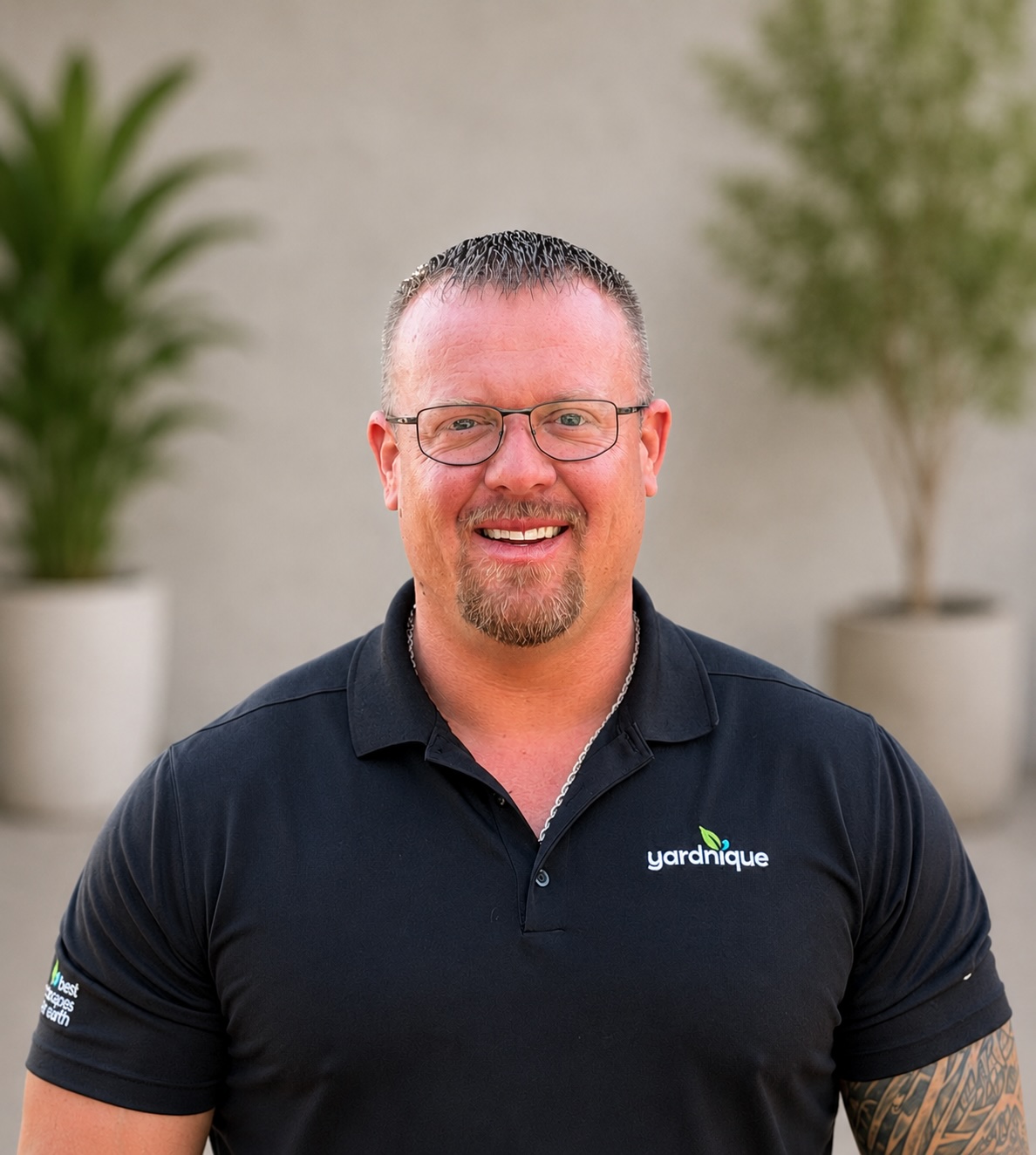
Don Waggoner
Director of Safety & Risk Management, Yardnique


Bronson Laney
Director of Safety, FirstFleet

Gautam Kunapuli
Director of Safety AI, Motive